
Want A Lift?

Telegram Compromised

Heinlein Postscript

Cultivate Truth And Justice

Health Promoting Herbs and Spices
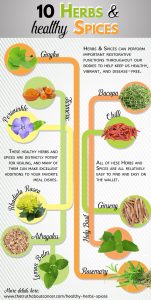
They’re perhaps most prized in modern times for their ability to add a flavorful punch to food. But what can herbs, spices, and botanical extracts offer us beyond just pleasurable tastes and aromas during mealtime? A whole lot, it turns out. The array of healthy herbs and spices that our plant world has to offer us expands our palates and perks up our dinner plates.
But even more importantly, they can also perform important restorative functions throughout our bodies to help keep us healthy, vibrant, and disease-free. Did you know that turmeric can prevent and fight cancer, mitigate radioactive exposure, protect against disease-causing inflammation, and bolster brain health? Or that astragalus has been shown to break down and eliminate tumors? Even chili pepper can stop damaging inflammation AND promote apoptosis. Check out the full article to discover the top herbs and spices you absolutely MUST have in your kitchen.
(Tom: And, as usual, 9 out of these 10, and a whole bunch more, can be found in my top nutrition bars and powders. So for a simple, easy way to keep your nutrient intake closer to optimal, check out https://www.healthelicious.com.au)
The Key To Recovery

…is knowing how you got into the hole you are in then knowing how to get out of it.
The World Needs All The Good You Can Do

They Are Wrong

The ‘hygiene hypothesis’ for autoimmune and allergic diseases: an update
According to the ‘hygiene hypothesis’, the decreasing incidence of infections in western countries and more recently in developing countries is at the origin of the increasing incidence of both autoimmune and allergic diseases. The hygiene hypothesis is based upon epidemiological data, particularly migration studies, showing that subjects migrating from a low-incidence to a high-incidence country acquire the immune disorders with a high incidence at the first generation. However, these data and others showing a correlation between high disease incidence and high socio-economic level do not prove a causal link between infections and immune disorders. Proof of principle of the hygiene hypothesis is brought by animal models and to a lesser degree by intervention trials in humans. Underlying mechanisms are multiple and complex. They include decreased consumption of homeostatic factors and immunoregulation, involving various regulatory T cell subsets and Toll-like receptor stimulation. These mechanisms could originate, to some extent, from changes in microbiota caused by changes in lifestyle, particularly in inflammatory bowel diseases. Taken together, these data open new therapeutic perspectives in the prevention of autoimmune and allergic diseases.
https://www.ncbi.nlm.nih.gov/pmc/articles/PMC2841828/