The smartest pest control in a garden isn’t a spray. It’s a plant so irresistible to the pest that it abandons your vegetables to feed on something you planted specifically to be destroyed.
You sacrifice one cheap, fast-growing plant to save an entire row of expensive crops. The pest gets what it wants. Your harvest stays clean.
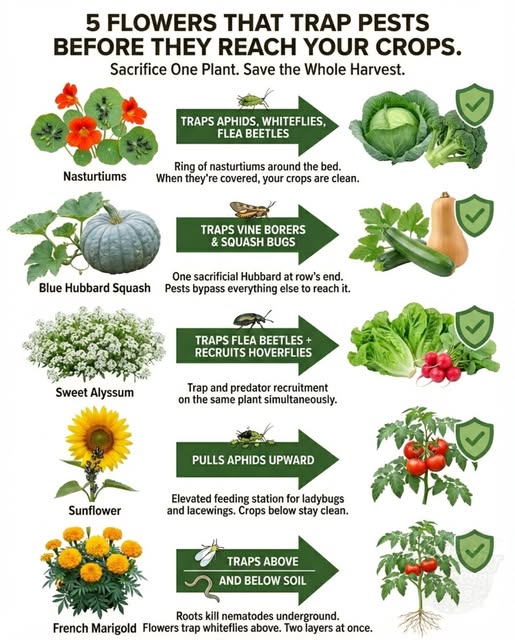
Nasturtiums are the easiest place to start. Aphids, cabbage moths, and flea beetles tend to prefer nasturtium foliage over most vegetable crops — the leaves are soft, thin, and easier to feed on than the tougher tissue of your brassicas. Plant a ring around the vegetable bed. When the nasturtiums are covered in aphids, your cabbages are clean. That’s the system working.
Trap plants worth adding to a vegetable garden:
– Nasturtiums around bed edges — draw aphids and leaf-chewing insects away from brassicas and cucumbers. Cheap, fast-growing, and the flowers are edible if the pests don’t get them first
– Blue Hubbard squash at the end of a squash row — vine borers and squash bugs strongly prefer it over most other squash varieties. One sacrificial plant absorbs the pressure so the rest of the row stays productive
– Sunflowers near tomatoes — aphids climb to the growing tip and cluster there, visible and exposed. Ladybugs and lacewings find them quickly. The sunflower becomes an elevated feeding station for beneficial insects while your crops below stay clear
– Alyssum between rows — attracts hoverflies whose larvae consume large numbers of aphids. The trap and the predator recruitment happen on the same plant
The plant you sacrifice saves the harvest you keep.