It’s not just what you eat; it’s when you eat it. Even within the same meal.
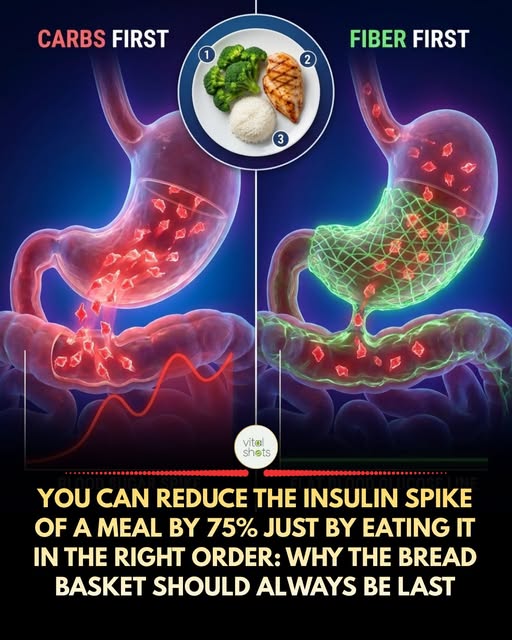
This is the biochemistry of Gastric Emptying. If you eat carbohydrates (bread, rice, fruit) first on an empty stomach, they pass through the pyloric valve into the small intestine almost instantly. Result: Rapid absorption -> Massive Glucose Spike -> Massive Insulin Spike -> Fat Storage -> Crash.
But if you use the “Fiber Firewall” strategy, you change the physics.
1. Fiber First (Vegetables): Fiber does not digest. When eaten first, it forms a viscous mesh/gel that coats the lining of the upper intestine. It physically blocks the absorption sites.
2. Protein/Fat Second (Meat/Eggs): Protein slows down gastric emptying. It tells the stomach: “Keep the door closed, we are working here.”
3. Carbs Last (Starch/Sugar): When the carbs finally arrive, they hit the fiber mesh. They enter the bloodstream as a slow trickle instead of a tsunami.
A study in Diabetes Care showed that eating vegetables and protein before carbs reduced post-meal glucose spikes by 73% and insulin spikes by 48%—comparable to the effect of some diabetes drugs.
You can eat the exact same calories, but the hormonal impact is completely different.
Vital Advice: The Restaurant Protocol:
Don’t touch the bread basket when you sit down.
Order a side salad or broccoli appetizer. Eat that first.
Eat your steak/fish.
Then eat the bread or the mashed potatoes. You will feel full sooner, and you won’t fall into a “food coma” afterward.
Source: Diabetes Care, “Food Order Has a Significant Impact on Postprandial Glucose and Insulin Levels”, Cornell University Study.