The Fudai Seawall
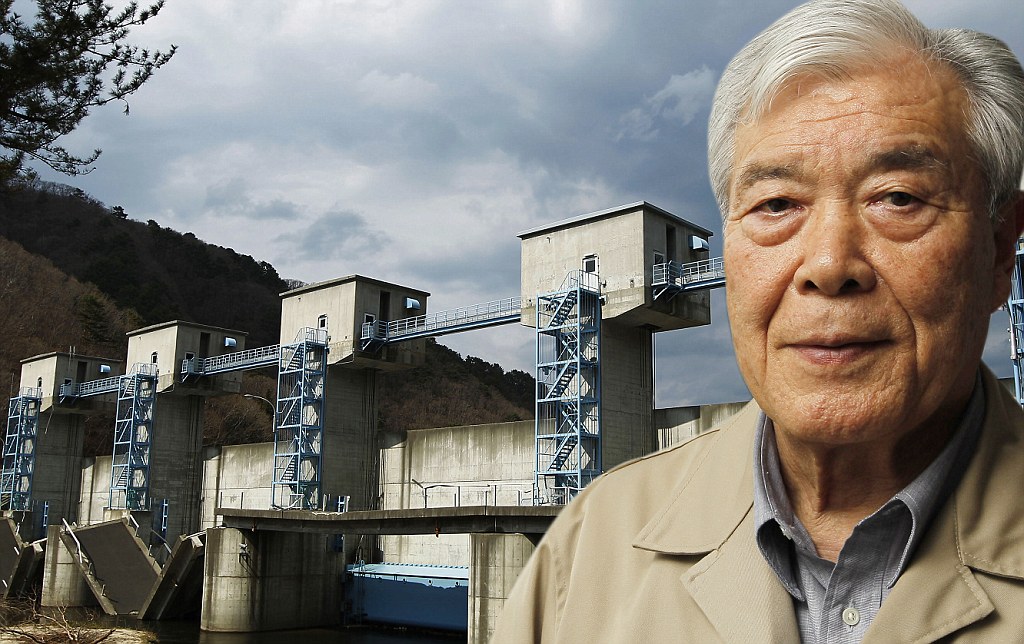
In the 1960s, Mayor Kotaku Wamura of Fudai, Japan, was widely seen as a man obsessed with a wasteful dream.
He had studied the history of the great tsunamis of 1896 and 1933 that had devastated his region. He was convinced that another would one day come and was determined to protect his people.
His solution was a massive, 51-foot-high seawall and floodgate system. It was an enormous undertaking for a small fishing village.
The project cost the equivalent of $30 million in today’s money. Many in his own community criticized the expense, calling it a foolish waste that diverted funds from more pressing needs.
The opposition Mayor Wamura faced wasn’t just quiet disagreement. He was openly mocked for his persistence on building the seawall.
His plan was far more advanced than just a simple barrier. It included a complex and costly floodgate system designed to close and seal the river mouth, a detail often overlooked.
This required immense public investment, delaying other village developments that residents felt were more immediate and necessary.
He had to personally persuade a reluctant town council, arguing that no matter the cost, they could not leave the next generation to suffer as the last one had.
He once said, “Even if you face opposition, have the confidence to push through. In the end, it will protect the people.” His conviction was proved right when it mattered most.
For 40 years, Kotaku Wamura served as mayor, and for decades after he left office, the wall stood as a silent, concrete giant. A monument to what many called one man’s folly.
Then came March 11, 2011. A catastrophic earthquake triggered the Tohoku tsunami, sending waves as high as 46 feet crashing into Japan’s coastline.
Town after town was wiped from the map. But in Fudai, the wave met Wamura’s wall. The water crested the barrier but the structure held firm, completely protecting everything and everyone behind it.
While neighboring towns suffered unimaginable loss, not a single life was lost within the protected zone of Fudai. The mayor’s controversial vision, born from studying the past, had saved them.
Meet Tom Woods

Tom Woods shared this email he received from Charlie:
The one email I received from Charlie Kirk, when he was just 18 (on the verge of 19), October 1, 2012:
Mr. Woods,
Your speeches on YouTube have inspired me to take action on a national stage. I am 18 years old and a recent high school graduate. So often in high school we are told what to think instead of how to think. For years I felt subject to the system, like a sheep getting ready for slaughter. Then my friend told me about your videos. I watched every single one, and I read two of your books. Upon reading your work and watching you speak I realized that freedom is the solution, not the problem, and our public school education system has done nothing more but perpetuate the problem and make it worse.
Inspired by your words, I started an organization Turning Point USA. Which has skyrocketed to the national stage. The basis of our group is to educate our peers about the generational theft that is taking place in this country….
I want to thank you for playing a important role in my life. I will continue to read your articles, and watch your videos for inspiration. One day I hope to meet you and thank you in person.
In liberty,
Charlie Kirk
(Tom: Charlie was spot on the money. Freedom IS the solution, NOT the problem.)
Ray Wallace and Judy Garland
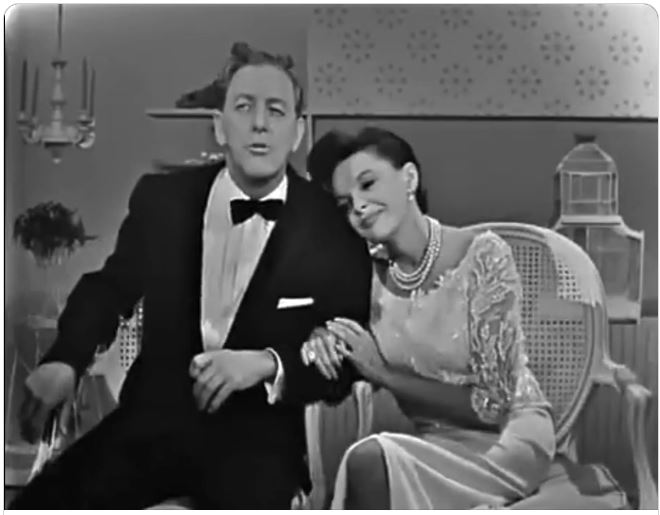
Ray Bolger was born Raymond Wallace Bolger on January 10th, 1904 in Dorchester, Massachusetts. He worked in the broadway and film industries from 1922-1985, but he is best known for one role, Scarecrow in The Wizard of Oz.
This clip is from an episode of “The Judy Garland Show” that aired on March 1st, 1964 and featured Ray Bolger as a guest. Ray and Judy looked back on the film, and their memories of making it together. Everyone is always remembering the negative aspects about the production of Oz, but when I see clips like this, I remember how much love there was amongst the cast, despite the challenges on set. They loved the film and the story then, as much as we do today. I’ll leave you with this quote from Ray Bolger to start your day, as it’s one of my favorites…
“I was brought up on the books of The Wizard of Oz and my mother told me that these were great philosophies. It was a very simple philosophy, that everybody had a heart, that everybody had a brain, that everybody had courage. These were the gifts that are given to you when you come on this earth, and if you use them properly, you reach the pot at the end of the rainbow. And that pot of gold was a home. And home isn’t just a house or an abode, its people, people who love you and that you love. That’s a home.” – Ray Bolger, 1964
Noone There To Tell Him It Was Impossible

You gotta watch this. Even if only to see the fist pump when he does it!
Hell yeah!
Kinzang Lhamo

Picture this: the marathon is over, the champions have already claimed their glory, the crowd has begun to settle. And then, slowly but surely, one last runner makes her way into the stadium. Her name is Kinzang Lhamo, a runner from Bhutan, a country tucked away in the Himalayas, thousands of miles from Paris. She wasn’t racing for gold, and she knew it. But what she carried in her steps that day was something far heavier—and far more beautiful—than a medal.
By the time she appeared, the finish line had already seen its victors cross nearly an hour and a half earlier. Most athletes would have crumbled under that weight of time, the spotlight long gone, the race feeling endless. But Kinzang pressed forward, step after grueling step, until she reached the stadium. And to her surprise, what awaited wasn’t silence or pity—it was a standing ovation. Thousands rose to their feet, not because she had won, but because she hadn’t given up.
Her words afterward cut deeper than any highlight reel: “My country did not send me 5,000 miles to start the race; they sent me 5,000 miles to finish the race.” In that moment, the world saw what sport is really about—not records, not medals, but resilience.
She finished in 3:52:59, far from her personal best. But somehow, it didn’t matter. What mattered was that she refused to surrender. What mattered was that she kept running long after the cameras shifted away from the front. And by the time she crossed that line, she had transformed what could’ve been seen as defeat into one of the most inspiring stories of the Paris Games.
Because sometimes, the greatest victories don’t come with medals—they come with courage, applause, and the reminder that finishing, no matter how late, is a triumph in itself.
Elizabeth Packard
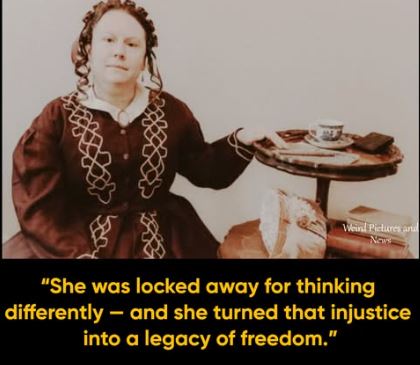
In 1860, Elizabeth Packard was a wife and mother of six when her husband did the unthinkable: he had her committed to an asylum.
Not because she was violent. Not because she was unstable. But because she questioned his strict religious views.
At the time in Illinois, a husband could institutionalize his wife without trial, evidence, or her consent. And inside the asylum, Elizabeth discovered the horrifying truth: many of the women locked away were not “insane” at all. They were wives who resisted, daughters who defied, women who refused to be silent.
Elizabeth did not break. She wrote in secret, observed carefully, and waited for her chance.
After three long years, she stood before a jury, defended her right to her own thoughts — and won.
But she didn’t stop there. Elizabeth published her story, exposed wrongful confinement, lobbied lawmakers, and helped change the laws so no woman could so easily be silenced again.
Elizabeth Packard’s courage cost her nearly everything, but it gave countless women the protection she herself had been denied.
Looking For Truth

Kindness Travels Through Time
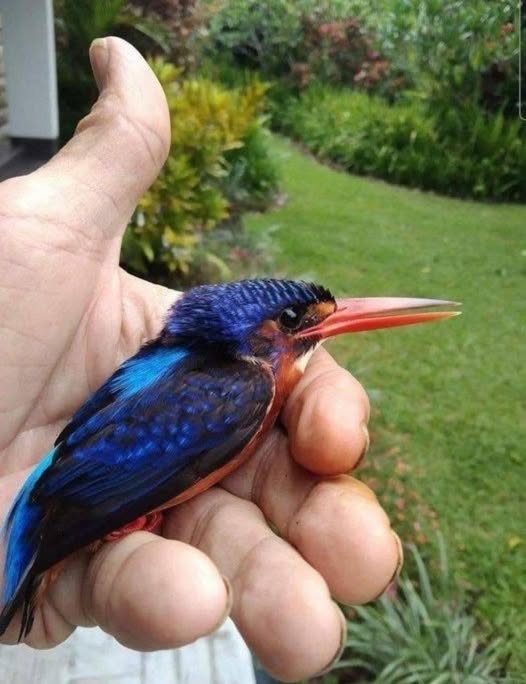
This wild Kingfisher’s grandparent, I found in the garden, nearly dead, some years ago. Nursed him back to health, and set him free. The next morning, the family swooped down, past me, in gratitude.
A couple of years later, I awoke to find the next generation, a parent of this bird, waiting for me on the terrace, his wing seemed broken. I picked him up and examined him. He never flinched, and stared deeply into my eyes. A thorn had locked his wing from operating. I pulled it out, and set him free. Without fail, he passes my window every day at the same time, crying out to me.
This baby, sat in the tree, eye to eye with me, then flew directly to my hand, and sat there for several minutes, before flying away.
Intuition, compassion, good intent, those essences of love, was all we had. Pure, unspoken.
An energy that has no end, and passes silently onward, much further than we can imagine.
You Don’t Stop Having Fun