How Vaccine Brain Injuries Were Rebranded and Erased From Memory

Vaccine Brain Injuries

  • For over a century, vaccination has been repeatedly linked to severe neurological injuries including brain damage—with many modern studies showing a 3-10 fold increase in common chronic illnesses.
  • To dodge this massive liability, all research into vaccine injuries (and many other catastrophes like Agent Orange) was suppressed so that health authorities could claim there was “no evidence” of vaccine harm.
  • Another scheme was to redefine the brain injury as “autism” rather than encephalitis (which the US government was legally required to provide injury compensation for).
  • Previously, children with significant vaccine brain damage were referred to as “mentally retarded.” However, after a multi-decade campaign cancelled “retarded” they were instead diagnosed as autistic—a vague term which blurs severe and minor disability together, thereby effectively concealing the severe cases from the public’s awareness.
  • This article will reveal the manipulative techniques and wordplay that have been used to conceal vaccine injuries from the public’s awareness, as now is the time when we can at last end this atrocity.

https://open.substack.com/pub/amidwesterndoctor/p/how-vaccine-brain-injuries-were-rebranded
Laughter, The Best Medicine

Laughter The Best Medicine

  • Laughter therapy reduces anxiety and increases life satisfaction, giving you a natural way to calm your mind and feel more fulfilled
  • Spontaneous laughter lowers cortisol, your main stress hormone, by about one-third, protecting you from stress-related problems like weight gain, weakened immunity, and heart disease
  • Studies show laughter therapy improves sleep, mood, and even reduces inflammation, making it a powerful tool for both mental and physical health
  • Older adults who laugh more often are less likely to develop disability, depression, or insomnia, helping them stay independent and resilient
  • You can use laughter like medicine by scheduling daily laughter sessions, sharing humor with others, and mixing structured approaches like laughter yoga with spontaneous laughter

https://articles.mercola.com/sites/articles/archive/2025/10/18/laughter-therapy-health-benefits.aspx

Doctors

When I went to the scientific doctor. I realised what a lust there was in him to wreak his so-called science on me and reduce me to the level of a thing. So I said: “Good-morning!” and left him. – D. H. Lawrence

Tylenol/Panadol: From Painkiller to Empathy Killer

(Tom:
1. Paracetamol and acetaminophen are the same medication: Known as paracetamol in Australia and acetaminophen overseas.
2. In Australia the equivalent to Tylenol is Panadol.)

Empathy-Numbing Drugs

Last week’s historic announcement from HHS and President Trump connecting Tylenol use with the autism epidemic reignited longstanding concerns over Tylenol’s toxicity. For decades, the focus has been on liver damage and accidental overdoses. But the deeper story—the one still hiding in plain sight—is more disturbing: even a single dose of acetaminophen (Tylenol’s active ingredient) measurably blunts human empathy, dulls positive emotions, and increases risk-taking behavior.

This isn’t just a matter of personal health. It’s a social and spiritual crisis. If one-quarter of U.S. adults are taking Tylenol weekly, we may be medicating away our collective capacity for compassion.

Tylenol Blunts Emotions—Good and Bad

In a landmark 2015 Psychological Science study, titled “Over-the-Counter Relief From Pains and Pleasures Alike,” researchers at Ohio State University gave healthy adults a single standard 1,000 mg dose of acetaminophen (Tylenol) and then exposed them to emotionally charged images—ranging from disturbing to uplifting.

The outcome was unambiguous:

  • Disturbing images were rated less negatively.
  • Uplifting images were rated less positively.
  • Across the board, participants reported feeling less emotional arousal, even when viewing the most extreme stimuli.

Brain research helps explain why: acetaminophen dampens activity in the anterior insula and anterior cingulate cortex—regions responsible for processing both physical pain and emotional resonance. These are the same circuits that allow us to feel empathy and to be moved by joy, awe, or sorrownihms703262.

The authors concluded:

“Acetaminophen attenuates individuals’ evaluations and emotional reactions to negative and positive stimuli alike… Rather than being labeled merely a pain reliever, acetaminophen might be better described as an all-purpose emotion reliever.”

https://open.substack.com/pub/sayerji/p/tylenol-from-painkiller-to-empathy

(Tom: I can personally attest to the emotion numbing effects of common medications. In 1995 I was prescribed asthma medication and thereafter felt a noticeably reduced ability to experience emotions. It wasn’t until I did a detox in 2010 that I felt the lid had been lifted off my universe.)

Pfizer’s Birth Control Shot Used by 25% of U.S Women Linked to Disabling Brain Tumors

Birth Control Shot Brain Tumours

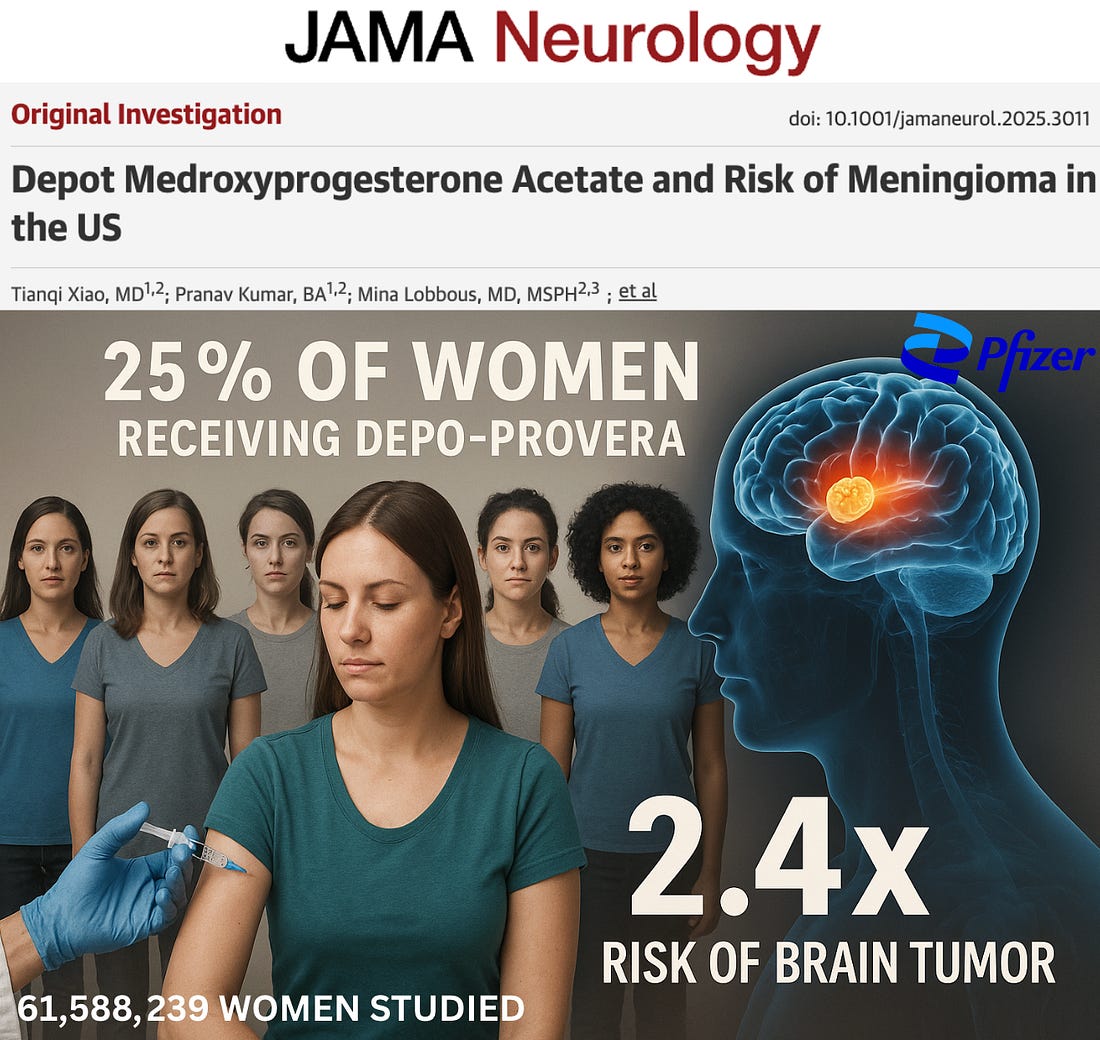
For decades, Pfizer has marketed its injectable birth control Depo-Provera as a convenient, long-acting option for women. What few were told — and what new research now confirms — is that this hormone shot doubles the risk of developing brain tumors.

The latest study, published in JAMA Neurology by researchers from the Cleveland Clinic and Case Western Reserve University, examined over 61 million U.S. medical records spanning two decades. Among these, women who used Depo-Provera — formally known as depot medroxyprogesterone acetate (DMPA) — were found to have a 2.4-fold higher risk of developing meningioma, a slow-growing but potentially disabling brain tumor.

Depo-Provera has been used by roughly 1 in 4 sexually active women in the United States — a staggering figure given the now-documented neurological danger. The study found the highest tumor risk in women who started injections after age 31 or continued for more than four years.

Though meningiomas are often labeled “benign,” their growth can compress vital brain structures, leading to vision loss, cognitive decline, seizures, and paralysis.

https://open.substack.com/pub/petermcculloughmd/p/new-study-pfizers-birth-control-shot