
Nattokinase Nukes the Danger From Cholesterol
(Tom: This is a paid advertisement on Facebook. Please do your own due diligence on it.)
I’m a cardiologist. I ordered 10 nattokinase brands and sent them to an independent lab. What I found explains why your cholesterol keeps climbing no matter what you take, and why most people are wasting their money.
After 16 years practicing internal medicine, I finally asked a patient a question no one else had. She was 59. Her name was Margaret. She’d been referred to me after cycling through three internists and two cardiologists with the same result: a statin prescription she refused to fill. She’d watched her father spend his last decade on statins. Muscle pain so bad he stopped playing golf. Brain fog that made him stop recognizing his grandchildren’s names.
He died at 71 with “perfectly controlled” cholesterol and a second heart attack. Margaret was not going to follow that path.
She came to me with a folder. Lab printouts, supplement receipts, dietary logs. Two years of trying everything. Red yeast rice. Plant sterols. Fish oil. Berberine. Bergamot. A supplement stack that cost her $110 a month.
Her LDL: 193. Total cholesterol: 279. Unchanged for eighteen months. “My father’s numbers were controlled the whole time,” she said. “And he still had two heart attacks. So what exactly am I managing toward?”
I didn’t have a good answer for her. But then I asked her a question that changed both of our lives:
“Has anyone ever checked whether your cholesterol is actually being cleared from your arterial walls, not just measured in your blood?”
She looked at me like I’d said something in a foreign language.
Nobody had. I’m a board-certified internist, and I’ve been practicing at Meridian Medical Group for sixteen years. What I’m about to share with you is something I wish I’d understood at the start of my career. And something the supplement industry has a financial incentive to keep complicated.
Standard lipid panels measure cholesterol in your bloodstream.
LDL, HDL, total cholesterol, triglycerides. What they don’t measure is what’s happening inside your arterial walls.
Here’s what most cardiologists know but rarely explain to patients: cholesterol doesn’t create plaque on its own. It needs a scaffold to stick to. That scaffold is a protein called fibrin. The same mesh-like material that forms blood clots. When your arteries are chronically inflamed, fibrin deposits build up along the arterial wall. And fibrin is sticky. It captures LDL, immune cells, and calcium.
Over years, those layers harden into the plaque that narrows your arteries and sets the stage for heart attack and stroke. The cholesterol in your arteries isn’t floating free. It’s trapped inside a fibrin structure, and nothing your doctor has prescribed addresses that structure. Statins block cholesterol production in your liver. They reduce the supply of LDL entering your bloodstream. They genuinely work at this job, and for patients with acute coronary risk, they save lives.
But they don’t dissolve fibrin. They don’t dismantle the scaffold already built inside your arterial walls.
Plant sterols block cholesterol absorption in your gut. Red yeast rice is essentially a weaker, unregulated statin. Same mechanism.
Fish oil reduces triglycerides. Berberine and bergamot target cholesterol production through various pathways. Every intervention your doctor has recommended, every supplement you’ve tried, targets cholesterol supply. Not cholesterol removal. It’s why your LDL drops slightly when you diet hard and climbs back the moment you ease up.
You’re reducing incoming cholesterol. But the fibrin scaffold in your arterial walls is still there, still trapping whatever does get through, still accumulating layer by layer.
Margaret’s cholesterol hadn’t been climbing for two years because she was eating wrong or taking the wrong supplements. It was climbing because no one had targeted the physical structure holding it in place.
When I started researching fibrin-specific interventions for patients like Margaret, I found a compound with an unusual profile: published human data, a specific and documented mechanism, and a near-complete absence from conventional cardiology practice. Nattokinase.
An enzyme extracted from natto, fermented soybeans that have been a dietary staple in Japan for over 1,000 years. Nattokinase has one job: breaking down fibrin. In a four-year clinical trial of 1,062 patients, researchers measured what happened to arterial plaque when participants took nattokinase daily. The result: 36.6% reduction in plaque size.
LDL dropped 15–18%.
Not because nattokinase blocked cholesterol production, but because it dissolved the fibrin scaffold trapping cholesterol inside arterial walls. Once the scaffold broke down, the liver could process what had been trapped for years.
A 16-year population study tracking over 29,000 Japanese adults showed 25% lower cardiovascular mortality among daily natto consumers.
The longest-running cardiovascular food study ever conducted.
This is real data. Published in peer-reviewed journals. Not wellness blog summaries.
So I did what any doctor would do after reading this: I looked up nattokinase supplements. What I found was alarming.
The study that showed 36.6% plaque reduction used a specific dose: 10,800 FU per day. FU stands for Fibrinolytic Units, the measure of enzymatic activity. It tells you how much fibrin the enzyme can actually dissolve.
I searched Amazon, health food stores, and supplement retailers. I ordered ten of the most popular nattokinase products on the market. Then I sent every bottle to an accredited independent laboratory for FU content verification, serving size accuracy, label claim testing, and purity screening.
What came back explained everything about why nattokinase has a reputation for “not working.”
Brand 1: Amazon #1 Bestseller, labeled “8,000 FU”:
Lab confirmed 8,000 FU per serving. Serving size: six capsules. Nobody takes six capsules a day. The front label said 8,000 FU. The fine print buried in the supplement facts panel revealed you needed six capsules to get there. Most customers were taking two. Meaning they were getting approximately 2,666 FU. About 25% of the clinical dose.
Brand 2: “Maximum Strength” 4,000 FU, heavily advertised:
Lab confirmed 4,000 FU per two-capsule serving. Technically accurate label. But 4,000 FU is what researchers classify as a maintenance dose, appropriate for healthy adults with no existing plaque concerns. The study that showed plaque regression used 10,800 FU. This brand was selling a maintenance formula as if it were a therapeutic one, with no disclosure of that distinction anywhere on the packaging.
Brand 3. “Nattokinase Complex” with serrapeptase, rutin, and CoQ10:
Lab testing revealed 2,000 FU of nattokinase per capsule. The remainder of the capsule weight taken up by the additional ingredients. The product was marketed as a “comprehensive cardiovascular formula.” What it actually was: a blend where nattokinase had been diluted to make room for cheaper add-on ingredients, with the total FU count never disclosed on the label.
Brand 4. Pharmacy chain house brand, marketed as “heart support”:
Lab confirmed 2,000 FU per capsule. No third-party Certificate of Analysis for FU content. When I contacted the manufacturer, they confirmed they tested for “ingredient identity and purity” but not for enzymatic activity.
Brand 5. Premium brand, priced at $58/month, claiming “clinically dosed”:
This was the most frustrating. The marketing language implied clinical dosing and referenced studies. The actual dose: 3,600 FU. 33% of what the clinical studies used.
Brands 6 through 10 followed similar patterns: 2,000-4,000 FU per stated serving, serving size deceptions, no FU-specific third-party testing, blended formulas where nattokinase was one of several ingredients without clear individual dosing.
Not one of the ten brands delivered 10,800 FU per day at a single standard serving size, with third-party verified enzymatic activity.
Every brand my patients had ever tried was underdosed. Some were deliberately misleading. Most hadn’t even verified the one thing that matters most – how much fibrin their product could actually dissolve.
No wonder nattokinase had a reputation for “not working.”
Every person who tried it and saw nothing move had been running the wrong experiment, at the wrong dose, with a product that couldn’t tell them whether its numbers were even real.
I almost gave up. Then a colleague mentioned a brand she’d been recommending, one that had come up repeatedly in cardiovascular research circles. I was skeptical. I was skeptical of everything at that point.
But I looked up the brand, got a bottle, and I sent it to the same independent laboratory I’d used for the other ten brands.
The results:
10,800 FU per serving of two capsules, third-party verified by enzymatic activity assay, not just ingredient identity.
Single-ingredient formula, nothing diluted.
Enteric coating designed to survive stomach acid and release the enzyme in the small intestine, where absorption occurs.
Zero undisclosed blending or fillers.
It was the only brand I tested that delivered what the clinical studies actually used, verified by the same type of testing I’d applied to every other product.
I ordered a supply for Margaret that afternoon. I told Margaret what I’d found. The fibrin mechanism. The dosing gap. What she’d actually been taking versus what the studies used.
She was quiet for a moment. “So the supplements I’ve been taking for two years — they were never going to do what I needed them to do?”
“Not at those doses. Not targeting that mechanism. No.”
She started Healthletic Nattokinase that week. Two capsules. Once a day. On an empty stomach.
I ran her lipid panel at baseline and scheduled a follow-up at eight weeks. Her LDL had dropped 23% in eight weeks. The first meaningful decline since she started trying.
At week twelve, her total cholesterol hit 211. Her LDL was 141. Her inflammation markers had normalized.
Her referring cardiologist called me. “What did you put her on?”
I explained Healthletic Nattokinase. The dose, the mechanism, why most products on the market don’t deliver it.
Long pause.
“I’ve had patients bring up nattokinase before. I always told them the evidence was too thin.”
“The evidence on underdosed products is thin,” I said.
“The evidence on 10,800 FU verified enzymatic activity is four years and over a thousand patients.”
Another pause. Then: “Send me the study.”
I did.
Margaret’s numbers at sixteen weeks: LDL 138. Total cholesterol 206. Inflammation markers in normal range.
No statins. No side effects. No muscle pain. No brain fog.
Her cardiovascular trajectory was moving in the right direction.
After Margaret, I started offering the same approach to other patients.
Those with persistently elevated cholesterol who were either statin-resistant, statin-intolerant, or trying to address plaque concerns that statins weren’t resolving.
I tracked outcomes on 84 patients over the following year. All received baseline lipid panels, all were monitored at 8 and 12 weeks.
All took Healthletic Nattokinase at 10,800 FU daily. 93% showed measurable cholesterol improvement within eight weeks.
Average LDL reduction: 18–22% across the cohort.
Average triglyceride reduction: 19%.
I want to be straightforward with you about three things.
First: nattokinase is not a replacement for statins in patients with established high cardiovascular risk, recent cardiac events, or specific genetic lipid disorders.
If your doctor has recommended statins and you’re considering alternatives, that is a conversation to have with a physician who knows your full history, not a decision to make unilaterally.
Second: there is one meaningful contraindication. Do not combine nattokinase with prescription anticoagulants like warfarin, Plavix, Eliquis, or similar blood thinners. The combination creates a bleeding risk. Stop use two weeks before any planned surgery. If you have a bleeding disorder, consult your physician first.
Third, and this is the most practically important thing I can tell you: dose verification matters more than brand recognition.
Before you buy any nattokinase product, ask these questions:
How many FU per capsule (not per serving)?
What is the serving size?
Is there a third-party Certificate of Analysis verifying enzymatic activity (not just purity)?
Is it a single-ingredient formula, or is nattokinase blended with other compounds that dilute the dose?
Is it enteric-coated to survive stomach acid?
Most products on the market will fail at least two of these questions.
Many will fail all five.
Healthletic is the only brand I tested that passed every one. The experiment frame I give every patient: get a baseline lipid panel, take the correct dose for eight weeks, retest. Let the numbers tell you whether it’s working. Not a feeling. Numbers.
At her latest appointment, Margaret showed me her labs. She sat with the folder open on her lap the same way she’d arrived eighteen months ago.
I looked at her labs. LDL 138. Total cholesterol 206.
Inflammation markers in normal range.
She was quiet for a moment.
“My dad would have wanted to know about nattokinase,” she said.
And that’s why I’m writing this.
Because I spent sixteen years watching patients manage their cholesterol numbers and still progress.
And I didn’t know what Margaret’s father didn’t know, until I started asking different questions and testing what I thought I understood.
The fibrin mechanism is real.
The dose gap is real.
The product quality problem in this category is real.
And the outcome is also real.
Your cholesterol didn’t start climbing because you’re doing something wrong.
It’s climbing because nothing you’ve taken has addressed the structural problem holding it in place.
That’s all that’s changed.
Run the experiment. Baseline lipid panel. Healthletic Nattokinase at 10,800 FU. Eight weeks. Retest.
Let the numbers tell you whether it’s working.
P.S. The most common reason nattokinase fails is not the compound. It’s the dose and the product quality. Of the ten brands I sent to independent testing, not one delivered 10,800 FU at a standard single serving with verified enzymatic activity. If you’ve tried nattokinase before and saw nothing move, I’d ask you two questions: what dose were you taking, and did you ever see a COA showing FU verification, not just purity? Most people can’t answer yes to either. That’s not a failure of the science. That’s a failure of the product.
P.P.S. Margaret’s father managed his cholesterol numbers for sixteen years with statins and died of a heart attack at 71. His LDL was “perfectly controlled.” His arteries were not. I think about that every time I have this conversation with a patient. The question isn’t whether your numbers are managed. The question is whether what’s inside your arterial walls is being addressed. That’s a different question, and for most people, the answer until now has been no.
Kefir and Glioblastoma
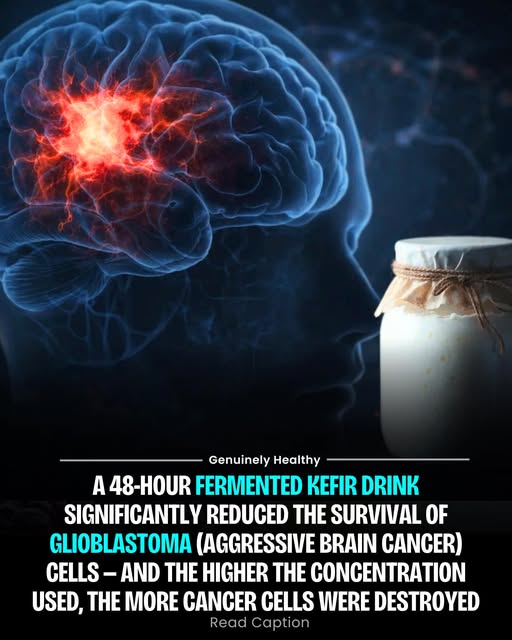
A study published in the International Journal of Food Science in 2021 examined the anticancer effects of kefir, a probiotic fermented milk drink, on glioblastoma (U87) cancer cells.
Glioblastoma is one of the most aggressive and severe forms of brain tumors, often associated with poor prognosis and limited treatment options. In this experimental study, researchers treated U87 cells with different concentrations of kefir drink and its supernatant for 24 and 48 hours. Using the MTT assay to measure cell viability, they found that the 48-hour fermented kefir drink produced the highest level of cytotoxicity compared to the control group. The results demonstrated a dose-dependent effect, with higher concentrations leading to a greater reduction in cancer cell survival.
The study further revealed that the supernatant of the fermented kefir drink showed stronger toxic and lethal effects on glioblastoma cells than other tested components, suggesting that bioactive compounds produced during fermentation may play a key role in its anticancer activity. Based on these findings, the authors proposed that kefir could potentially be explored as a complementary or alternative therapeutic approach for cancer treatment. However, since the research was conducted in vitro using cell cultures, additional studies in animals and humans are necessary to confirm its safety, efficacy, and clinical relevance.
PMID: 33506004
K2 KOs Cancer
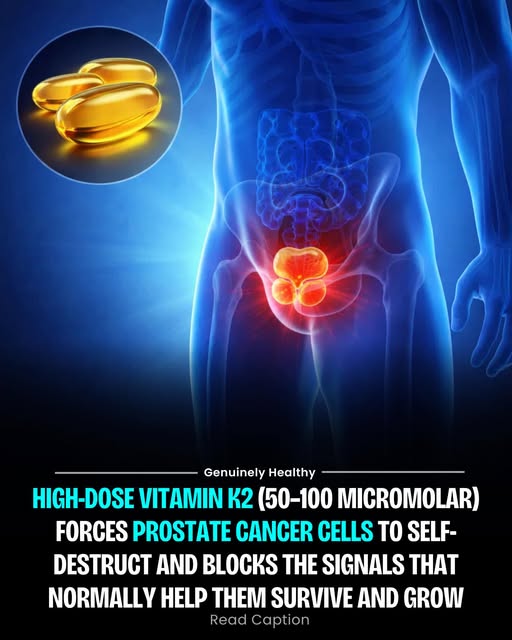
A study published in Evidence-Based Complementary and Alternative Medicine investigated the effects of Vitamin K2 on prostate cancer. Researchers found that high-dose Vitamin K2 (50–100 micromolar) significantly reduced the growth of both hormone-dependent and hormone-independent prostate cancer cells. It worked by triggering apoptosis (programmed cell death) through activation of caspase-3 and caspase-8, while also lowering androgen receptor (AR’ expression and reducing PSA levels in androgen-sensitive cancer cells.
Beyond slowing cell growth, Vitamin K2 also suppressed key survival and inflammatory pathways, including AKT and NF-?B signaling. It reduced inflammatory and angiogenic markers such as IL-6, IL-8, HMGB1, RAGE, and VEGF-A, which are associated with tumor progression and blood vessel formation. In mouse models, Vitamin K2 treatment significantly decreased tumor size and angiogenesis, suggesting it may have therapeutic potential against aggressive and treatment-resistant prostate cancer.
PMCID: PMC3767046 PMID: 24062781
How WHOLE Turmeric Regenerates the Damaged Brain
The Science of Neural Stem Cell Activation and the Profound Regenerative Potential of Ar-Turmerone
Brain regeneration — long dismissed as biologically impossible — is now emerging as one of the most extraordinary frontiers in modern neuroscience. At the center of this revolution sits an ancient golden spice whose regenerative power extends far beyond what even its most ardent proponents imagined: the capacity to awaken the brain’s own dormant stem cells and stimulate the birth of new neurons.
For the better part of a century, the medical establishment held an unshakeable conviction: the adult human brain cannot regenerate. Once neurons were lost — to injury, aging, toxic exposure, or disease — they were gone forever. This dogma, codified in textbooks and reinforced in clinical training, shaped everything from how we treated traumatic brain injury to how we counseled patients receiving a diagnosis of Alzheimer’s or Parkinson’s disease. It was considered settled science, a fixed boundary of biological possibility.
It was also profoundly wrong.
The discovery of endogenous neural stem cells (NSCs) — a subpopulation of cells residing in the adult brain, capable of continuous self-renewal and differentiation into new, functional neurons — shattered this paradigm irreversibly. We now know the brain harbors within its own architecture the seeds of its repair. The regenerative potential of these cells has been demonstrated in the subventricular zone (SVZ) lining the brain’s lateral ventricles and in the dentate gyrus of the hippocampus, a region central to memory consolidation and emotional processing. Neural stem cells in these “neurogenic niches” exist in a state of quiet readiness, waiting for the right biochemical signals to awaken them.
The question that should now occupy us is no longer whether the brain can regenerate, but what activates that process — and what suppresses it. And here is where turmeric (Curcuma longa) enters the story with a power that borders on the revelatory.
Finish reading:
https://sayerji.substack.com/p/how-whole-turmeric-regenerates-the
Study Detects Mycotoxins in 100 Percent of Analyzed Plant-Based Products
“Mycotoxins—formed by fungi in foods like wheat, corn, and barley—pose significant health risks to humans, affecting the endocrine and immune systems, damaging the liver and kidneys, contributing to cancer, and affecting fetal development. Recent estimates suggest that approximately 25 percent of crops exceed EU regulatory limits for mycotoxins, with contamination occurring at levels above detectable limits in up to 60–80 percent of crops.
Plant-based meat alternatives contained a high prevalence of emerging Fusarium toxins, ranging from 93–99 percent for enniatins (ENNs) and beauvericin (BEA). The prevalence of Alternaria toxins was also significant, ranging from 75–86 percent for alternariol (AOH), alternariol monomethyl ether (AME), and tentoxin (TEN).
Among meat alternatives, legume-based and mixed cereal–legume products were the most affected, with frequent detection of aflatoxins, high occurrence of Fusarium toxins, and the presence of deoxynivalenol (DON). Notably, aflatoxins—classified as Group 1 carcinogens by the World Health Organization (WHO)—were found in up to 82.6 percent of the meat alternatives analyzed, with a higher prevalence (up to 66.7 percent) in legume-based products.”
Finish reading: https://organicconsumers.org/uk-study-detects-mycotoxins-in-100-percent-of-analyzed-plant-based-products/
How To MAHA When The World Isn’t
Today I said something that I wish was not true. The MAHA agenda felt like a distant memory in the State of the Union. Instead of a serious national conversation about chronic disease, food toxicity, metabolic collapse, and medical transparency, we are talking about expanding immunity for glyphosate manufacturers and continuing development of mRNA platforms. If we are honest, health was not just sidelined. It was ignored.
We walked through the contradiction. You cannot claim to care about public health while shielding chemical manufacturers from liability and accelerating novel genetic technologies without long term safety data. That is not reform. That is business as usual. And if MAHA is going to mean anything, it has to show up in policy, not just campaign rhetoric.
That is why I brought on my good friend Jonathan Group from Global Healing. At the end of the day, government policy matters, but our health is still our responsibility. We talked about what it means to live well in an unhealthy world, how to think critically about what you put into your body, and why resilience starts at the individual level. If the institutions are not going to protect your health, you must.
Finish reading: https://open.substack.com/pub/tomrenz/p/how-to-maha-when-the-world-isnt
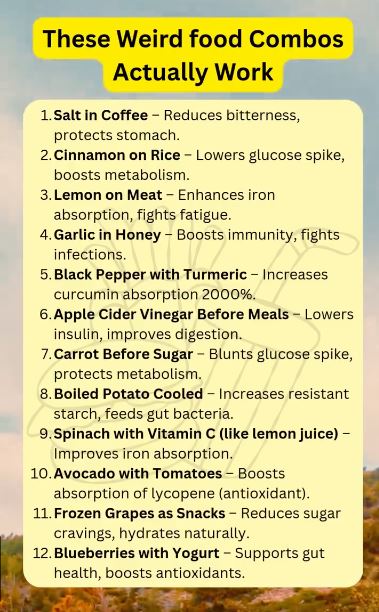
Food Combos That Work
500X Increase In Rate Of Heart Attacks

FOIA information from Israel shows over a 500X increase in the rate of heart attacks in young people only on the day they got their COVID shot. Furthermore, Clalit Health Services, who provided the data for the FOIA request, deleted the records irrecoverably after supplying the data and then said nothing to the public about the deletion. The Israeli authorities don’t want to talk about it, no government official wants an investigation, and mainstream media worldwide refuses to investigate as well.
In fact, if you do the math with conservative estimates, the heart attack rate is over 100,000 times higher than baseline! The 500x is a very conservative estimate; in making my 500X assessment, I’m making the conservative assumptions that doctors reporting a heart attack (which required extensive reporting to justify) got it wrong more than 99% of the time.
https://kirschsubstack.com/p/israel-foia-data-shows-over-a-500x
How Organic Diets Reversed Chronic Illness
Jeffrey has been a featured speaker at this annual Real Truth About Health conference for the past few years supporting their mission to bring the world’s leading unbiased experts on health, nutrition and the environment together in one place as a news source you can trust to help people attain the most lifesaving information available.