FDA: Vaccines Don’t Have to Prevent Infection or Transmission

Vaccines don’t have to prevent infection or transmission to be cleared in the United States, the country’s top regulatory agency said in a new document.
“It is important to note that FDA’s authorization and licensure standards for vaccines do not require demonstration of the prevention of infection or transmission,” Dr. Peter Marks, a top official at the U.S. Food and Drug Administration (FDA), said in the document.
Marks was writing as he rejected nearly all recommendations from a group of experts that advised the FDA to update the labels for the Pfizer and Moderna COVID-19 vaccines.
Vaccines are traditionally known as drugs that prevent an illness. The U.S. Centers for Disease Control and Prevention (CDC) for years said a vaccine is a product that “produces immunity” while vaccination is an injection of an infectious organism “in order to prevent the disease.” The agency changed its definitions after people correctly noted that COVID-19 vaccines do not prevent infection.
The Coalition Advocating for Adequately Labeled Medicines, a group of experts, had called for the FDA to make clear that the COVID-19 vaccines don’t prevent infection or transmission.
“There is a widespread (but inaccurate) notion that efficacy against infection and transmission have been established by substantial evidence, and that these vaccines contribute to herd immunity,” the group said, pointing to claims from President Joe Biden, the head of the CDC, and Dr. Anthony Fauci that vaccinated people would not get sick or infected.
Biden, for instance, falsely said in 2021 that “you’re not going to get COVID if you have these vaccinations.”
“To remedy this situation, language clarifying that phase III trials were not designed to determine and failed to provide substantial evidence of vaccine efficacy against SARS-CoV-2 transmission or death must be added to labels,” the coalition said. SARS-CoV-2 causes COVID-19.
While it’s uncommon to include in product labeling what a product has not been proven to do, there are cases where it’s necessary due to inaccurate assumptions, the coalition said. They pointed to the FDA stating that the influenza medicine Tamiflu “has not been shown to previous serious complications of influenza” after the drug’s manufacturer said it reduced complications by nearly half.
Marks rejected the request, writing that the petitioners included “selected statements by U.S government officials suggesting that vaccination against COVID-19 may prevent infection or transmission” but omitted statements from Fauci and others that later acknowledged vaccines don’t prevent infection or transmission.
“In responding to your Petition, we are not agreeing or disagreeing with any of the statements that are selected in the Petition,” Marks said. “Rather, we are observing that the statements referenced by the Petition do not demonstrate a commonly held belief that the clinical trials provided substantial evidence of efficacy against SARS-CoV-2 transmission. We are not convinced that there is any widespread misconception about this.”
The head of the CDC, Dr. Rochelle Walensky, is among those maintaining to the present day that the vaccines at one point completely prevented transmission and symptomatic illness.
Trial data showed high efficacy against symptomatic illness but not 100 percent efficacy. Real-world data has shown lower effectiveness. The trials were not designed to measure transmission, the FDA has said in various documents.
Authorization Standards
Marks also said that the FDA can authorize or approve a vaccine even if there’s no “demonstration of the prevention of infection of transmission.”
“A vaccine can meet the licensure standard if the vaccine’s benefits of protecting against disease outweigh the vaccine’s risks for the licensed use,” he added. “There is no requirement that the vaccine also prevents infection with the pathogen that can cause the disease or transmission of that pathogen to others.”
Emergency use authorization (EUA) can be granted “without any evidence that the vaccine prevents infection or transmission,” he also said.
EUAs were given to the Pfizer and Moderna COVID-19 vaccines in late 2020 due to a March 2020 declaration by then-Health Secretary Alex Azar under the Public Readiness and Emergency Preparedness (PREP Act) Act. The vaccines were later approved, though the FDA reverted to emergency authorization this month when it switched all existing COVID-19 vaccines from the companies to the updated, unproven bivalent formulations.
Linda Wastila, a professor in the Department of Practice, Sciences, and Health Outcomes Research at the University of Maryland School of Pharmacy, said she was surprised by Marks’ assertion.
“I am totally flabbergasted that the FDA responded that proof of prevention of infection and transmission is not necessary for an EUA vaccine,” Wastila, who is part of the coalition, told The Epoch Times via email. The comment “makes me wonder if the FDA has ANY standards of safety and efficacy of the EUA vaccines,” she added.
Under the PREP Act, an emergency authorization can be given for a product used to diagnose, treat, or prevent a disease or condition when officials conclude that the product “may be effective” in diagnosing, treating, or preventing the disease or condition and “the known and potential benefits of the product, when used to diagnose, prevent, or treat such disease or condition, outweigh the known and potential risks of the product.”
That assessment is based on “the totality of scientific evidence available … including data from adequate and well-controlled clinical trials.”
No clinical trial efficacy data has been made public for the bivalent vaccines.
The FDA did not respond to a request for comment. Marks noted that the FDA cleared the vaccines “for active immunization to prevent coronavirus disease 2019 (COVID-19) caused by SARS-CoV-2.”
“The vaccines are not licensed or authorized for prevention of infection with the SARS-CoV-2 virus or for prevention of transmission of the virus, nor were the clinical trials supporting the approvals and authorizations designed to assess whether the vaccines prevent infection or transmission of the virus,” he said.
Lack of Safety Data
Other proposed changes that were rejected, included making clear that the FDA authorized a new Pfizer vaccine formulation with a different buffer without requiring studies to evaluate the efficacy or safety.
Kim Witczak, founder of Woodymatters and another member of the coalition, criticized the response letter.
“Honest communication and transparency is key to trusting our regulatory agencies. However, the FDA’s response to the citizen petition shows they are not really interested in transparency and sharing more information with the public,” she told The Epoch Times in an email. “With an experimental rushed product, safety is paramount and the public deserves the good, the bad and ugly in real time.”
The FDA only accepted a single proposal. It added some data from a trial to the labeling for the new Pfizer bivalent vaccine.
Before this month, the labels did not include any data from trials, because the FDA authorized the new vaccines as boosters without any trial data.
After the fall 2022 authorizations, Pfizer and Moderna announced that trials showed the bivalent triggered higher levels of neutralizing antibodies than the old vaccines. Antibodies are thought to protect against COVID-19. Pfizer said the data showed a favorable “safety profile” while Moderna said that “no new safety concerns were identified.” The coalition said the labeling “should be updated to reflect current data.”
While granting authorization for the bivalents as regular shots, the FDA updated the health care provider and recipient fact sheets for Pfizer’s bivalent to include the safety data Pfizer announced. But it did not include any immunogenicity data or any data on Moderna’s vaccine.
“FDA has not conducted an evaluation of the data that is referenced in the press release,” Marks said.
Many Insomniacs Remain Conscious During Sleep
- Up to 70 million Americans have a sleep disorder, the most common of which is insomnia; 10% of American adults struggle with chronic insomnia and 30% report occasional or short-term insomnia
- Research finds you can remain consciously aware even while your brain and body are sleeping
- Insomniacs who report being awake even when their brain wave patterns indicate they’re sleeping have increased activity in brain areas associated with conscious awareness during the dreamless phase of sleep
- If you struggle with insomnia and frequently feel you’ve not slept a wink, processes involved in reducing your conscious awareness during sleep may be impaired. Practicing mindfulness is thought to target these processes and may help improve your sleep experience
- Sleeping pills are very limited in their effectiveness and have serious side effects. Safe and natural sleep aids include melatonin, 5-HTP, valerian, chamomile tea
Originally published April 19, 2018.
According to the American Sleep Association,1 up to 70 million Americans have a sleep disorder, nearly 40% unintentionally fall asleep during the day at least once a month and nearly 5% have nodded off while driving at least once. Insomnia is the most common sleep disorder, with 10% of American adults struggling with chronic insomnia and 30% reporting occasional or short-term insomnia.
Interestingly, insomniacs will often insist they’ve not slept a wink all night, even though they’ve actually been sleeping. Researchers have now discovered there’s a reason for this discrepancy in experience, and it has to do with consciousness. In a nutshell, even though the brain is sleeping, insomniacs remain consciously aware, and therefore believe they’ve not slept at all.
Many Insomniacs Remain Conscious Even When Asleep
Daniel Kay, a psychology professor at Brigham Young University in Utah who led the study,2 told Medical News Today,3 “… [Y]ou can be consciously aware and your brain [can] be in a sleep pattern. The question is: What role does conscious awareness have in our definition of sleep?” Traditionally, it’s been believed that sleeping involves the absence of conscious awareness, but Kay’s team was able to conclude that this is not categorically true.
To investigate the role of consciousness during sleep, the team analyzed the sleep patterns and subjective experience of 32 people with insomnia and 30 who reported sleeping well.
Once the participants were deemed to be asleep, based on their brain patterns, a radioactive tracer was injected into their arms. Using brain imaging, the researchers were able to examine neurons that remained active during sleep, and their exact locations. The following morning, the participants were asked about their subjective experience of their sleep. Medical News Today explains the results:
“The study found that people with insomnia who reported that they had been awake, even when the polysomnography showed otherwise, had increased activity in brain areas associated with conscious awareness during the dreamless phase of sleep — that is, nonrapid eye movement sleep …
[I]t is normal during the process of falling asleep for the brain to send inhibitory neurons that make people less and less consciously aware until they’ve reached a state of deep sleep. However, what the findings of the new study suggest is that people with insomnia may not feel as though they’re asleep until their brain experiences a greater inhibitory activity in areas that are linked to conscious awareness.”
Normal Sleepers May Not Get as Much Sleep as They Think
As noted by the authors,4 “Brain activity in the right anterior insula, left anterior cingulate cortex, and middle/posterior cingulate cortex may be involved in the perception” of insomnia. People who reported sleeping well turned out to have increased activity in the same areas of the brain as insomniacs. The reason for this is because your brain goes through “an inhibition process” when you fall asleep, gradually lowering your conscious awareness.
While insomniacs require a greater level of inhibition before their consciousness recedes, many good sleepers report falling asleep long before their brainwaves indicate that they’re actually sleeping. This is basically the reverse situation of insomnia: Good sleepers lose conscious awareness at a very low level of inhibition, making them believe they fell asleep much faster than they actually did, based on their brain patterns.
Mindfulness Recommended for Insomniacs
So, if you struggle with insomnia, frequently feeling you haven’t slept a wink, what can you do? Kay says, “In patients with insomnia, processes involved in reducing conscious awareness during sleep may be impaired. One of the strategies for targeting these processes may be mindfulness. It may help the patients inhibit cognitive processes that are preventing them from experiencing sleep.”
Practicing “mindfulness” means you’re actively paying attention to the moment you’re in right now. Rather than letting your mind wander, when you’re mindful, you’re living in the moment and letting distracting thoughts pass through your mind without getting caught up in their emotional implications.
You can add mindfulness to virtually any aspect of your day — even while you’re eating, working or doing household chores like washing dishes — simply by paying attention to the sensations you are experiencing in the present moment.
The idea is to reach a place of “restful” or “concentrated” alertness, which enables you to let negative thoughts and distractions pass by you without upsetting your calm and balance.
For instance, focusing your mind on your breath is one of the most basic, and most rewarding, relaxation and meditation/mindfulness strategies there is.
Common Factors That Keep You Awake
Aside from the possibility that you’re simply misperceiving your inability to sleep, certain environmental factors can make it more difficult to fall asleep. This includes such things as:5
- Your pillow being too hot — A cool pillow, and more importantly the room temperature overall, will decrease your core body temperature, which induces drowsiness. In one study, insomniacs equipped with a cooling cap fell asleep within 13 minutes — three minutes faster than normal sleepers — and remained asleep 89% of the night. Reader’s Digest6 suggests placing your pillow in the freezer for a few minutes before bed to cool it down.
- Starting a new medication — A number of different drugs can cause insomnia, including blood pressure medications, antidepressants and steroids. Oftentimes, this side effect can be ameliorated by changing the time at which you take the drug. Beta-blockers, prescribed for high blood pressure and/or arrhythmia, for example, are typically best taken in the morning instead of at night.
- Pets — As much as you love your fur babies, if they’re hogging your bed or filling it with hair, consider keeping your pets out of your bed. According to one Mayo Clinic study,7 while some find their pets help them sleep better, approximately 20% of pet owners admitted the animal disrupted their sleep in one way or another.
- Cold feet — While cooling your head induces sleep, cold feet can keep you tossing and turning. The solution: Wear socks to bed.
- Exhaustion — While exhaustion is frequently confused with tiredness, the two are not the same. When exhausted from stress or overwork, your brain tends to be on high alert. This “cognitive popcorn” can make it difficult to fall asleep, no matter how exhausted your body is. Rather than falling into bed right away after a long day, try winding down, allowing your mind to settle before trying to fall asleep.
When Anxiety or an Overactive Mind Keeps You Awake
Researchers at the American Academy of Sleep Medicine discovered that how you cope with stress might have an even greater impact on your sleep than the number of stressors you encounter.
They also found that mindfulness therapies worked best for suppressing the “mental chatter” that inhibits the onset of sleep. Lead author Vivek Pillai, Ph.D., wrote,9 “While a stressful event can lead to a bad night of sleep, it’s what you do in response to stress that can be the difference between a few bad nights and chronic insomnia.”
Avoid Sleeping Pills for Insomnia
To learn more about the ins and outs of sleep, and lots more tips and strategies to improve your quality and quantity of your rest, please see “Sleep — Why You Need It and 50 Ways to Improve It.” Whatever you do, avoid sleeping pills. Not only do they have extremely limited benefits, the side effects can be quite severe. Take Belsomra, for example, a next-gen type sleeping pill that acts on a neurotransmitter called orexin “to turn down the brain’s ‘wake messages.'”
The company’s own clinical trials showed the drug allowed people to fall asleep an average of six minutes sooner than those taking a placebo, and stay asleep 16 minutes longer.
More than 1,000 consumer complaints against Belsomra have been filed with the U.S. Food and Drug Administration, with complaints ranging from lack of effectiveness and next-day drowsiness to sleep paralysis, heart problems and suicidal ideation. One in 5 reports claim the drug made them the opposite of sleepy.10
Other research has found sleeping pills like Ambien, Lunesta and Sonata reduce the average time it takes to fall asleep by about 13 minutes compared to placebo, while increasing total sleep time by about 11 minutes.11 Interestingly, participants believed they had slept longer, by up to one hour, when taking the pills. This is thought to be due to anterograde amnesia, which causes trouble with forming memories.
When people wake up after taking sleeping pills, they may, in fact, simply forget they’d been unable to sleep. Sonata is also associated with addiction.12 Studies have also shown that use of sleeping pills increase your risk of death and cancer.13 To learn more about the hazards of sleeping pills, see Dr. Daniel Kripke’s e-book, “The Dark Side of Sleeping Pills.”14
Natural Sleep Remedies
Fortunately, there are far safer options. While you work on addressing the root causes of your sleep problems, temporarily using a natural sleep aid may help you get to sleep easier. Following are a handful of alternatives:
•Melatonin — In scientific studies, melatonin has been shown to increase sleepiness, help you fall asleep more quickly and stay asleep, decrease restlessness, and reverse daytime fatigue. Melatonin is a completely natural substance, made by your body, and has many health benefits in addition to sleep. Start with as little as 0.25 milligrams (mg) and work your way up in 0.25 mg increments until you get the desired effect.
•5-hydroxytryptophan (5-HTP) — One of my favorite sleep aids is 5-HTP. 5-HTP is the hydroxylated form of tryptophan. It easily passes your blood brain barrier when it is converted to serotonin (thereby giving mood a boost) and then to melatonin (enhancing sleep).
I believe this is a superior approach to using melatonin. In one study, an amino acid preparation containing both GABA (a calming neurotransmitter) and 5-HTP reduced time to fall asleep, increased the duration of sleep and improved sleep quality.15
•Valerian root — Studies have found valerian root helps improve the speed at which you fall asleep, depth of sleep (achieving deep sleep 36% faster16) and overall quality of sleep. Start with a minimal dose and use the lowest dose needed to achieve the desired effect, as higher dosages can have an energizing effect in some people. Typical dosages used in studies range between 400 mg and 900 mg, taken anywhere from 30 minutes to two hours before bed.
•Chamomile tea — This herb is typically used in the form of infusions, teas, liquid extracts or essential oils made from the plant’s fresh or dried flower heads. It has sedative effects that may help with sleep, which is why chamomile tea is often sipped before bed.
Extracts from: https://articles.mercola.com/sites/articles/archive/2023/04/26/insomniacs-remain-conscious-during-sleep.aspx
Lumbrokinase and Nattokinase

A one-year controlled clinical trial of lumbrokinase supplementation in 192 patients showed a reduction in arterial plaque and a 4.7% reduction in the risk of stroke with no significant adverse effects.
https://allergyresearchgroup.blog/enzymes-from-the-earth-lumbrokinase-nattokinase-and-heart-health/
Good For Days

Buyer Beware! Again.

If you have to study every single label to work out whether supermarket food is actually safe to eat is it REALLY worth it?
Here is another little example of the dangers lurking on supermarket shelves and on the small print on their labels.
These “Extra Special” and “Unwaxed lemons” seem at first glance to be healthy and very good for you. We all know about the health power of lemons right? They describe it as “Perfect for zesting” and that’s why it’s unwaxed as who would want to zest a waxed lemon?
But Zoom in and you see that the label displays in very small print “treated with Imazalil, Fludioxonil and Pyrimethanil”. It doesn’t tell you anywhere on the written copy about this warning just in tiny writing on the photo of the label.
So what are Imazalil, Fludioxonil and Pyrimethanil? They are chemical fungicides basically to prevent mould and add to shelf life. A quick search on the web reveals this
Imazalil
The side effects listed in our database mainly concern respiratory problems and muscular coordination although it is a suspected carcinogen and a probable endocrine disrupter.
Fludioxonil
List of known side effects · Liver necrosis, centrilobular hypertrophy, increased serum cholesterol and 5 ‘nucleotidase. Nephropathy, (Nephropathy is the deterioration of kidney function. The final stage of nephropathy is called kidney failure, end-stage renal disease, or ESRD. According to the CDC, diabetes is the most common cause of ESRD.)
Pyrimethanil
Pyrimethanil produces thyroid follicular cell tumors in rats and enhancement of hepatic thyroid hormone metabolism.
So I have to ask the question. Does it really sound “perfect for zesting” to you?
You would think zesting the rind and peel of something with these ingredients on it would be the last thing a supermarket would promote to its customers right?
#ditchthesupermarkets you owe them NOTHING!
Maybe it’s time to look for healthier food sourcing options to limit your toxin intake.
In the UK there is http://www.goodfoodproject.co.uk
Natural Painkillers

Saw this and wanted to ask you, love to hear from you if you have experienced relief with any of these.
Five Steps To Better Wellness
I received this in the body of an email from Dr Shulze and I thought it a great simplicity to orient anyone wanting to improve their health.

The sequence aligns with that I have seen from other health professionals.
Nourish the Cells
Eliminate Waste
Bolster the Immune System
Detox the Toxins
Address Specifics
Here’s the link to Dr Shulze’s site: https://www.herbdoc.com/products
And here’s the link to my products: https://www.healthelicious.com.au/Price_List_Tab.php
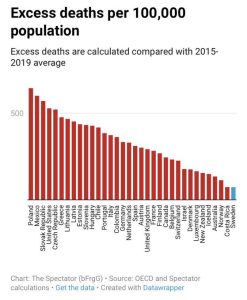
NZ Excess Deaths

US Beef producers concerned over mRNA vaccine news

Story at-a-glance
- Pork producers have been using customizable mRNA-based “vaccines” on their herds since 2018, without telling the public
- All customized mRNA “vaccines” are untested. Only the mRNA platform itself has been approved
- According to the National Cattlemen’s Beef Association, “there are no current mRNA vaccines licensed for use in beef cattle in the United States.” However, a lobbyist for the association claims to have “double-vaccinated” his own herd with an mRNA “vaccine” against bovine respiratory disease
- Iowa State University began trialing an mRNA “vaccine” against bovine respiratory syncytial virus October 1, 2021
- Missouri House Bill 1169 would require labeling of products that can alter your genes. Big Ag lobbyists strongly oppose it
Last week, I reported that pork producers have been using customizable mRNA-based “vaccines” on their herds since 20181 — without telling the public. This issue really only rose to the surface after attorney Tom Renz started promoting new legislation in Missouri (House Bill 1169,2 which he helped write) that would require labeling of mRNA products.3 In an April 1, 2023, tweet (and no, this was not an April Fool’s joke), Renz stated:4
“BREAKING NEWS: the lobbyists for the cattleman and pork associations in several states have CONFIRMED they WILL be using mRNA vaccines in pigs and cows THIS MONTH. WE MUST SUPPORT MISSOURI HB1169. It is LITERALLY the ONLY chance we have to prevent this … NO ONE knows the impacts of doing this but we are all potentially facing the risk of being a #DiedSuddenly if we don’t stop this.”
The Transhumanist Agenda and Its Focus on Food
Within days, alternative media was abuzz with this story and Renz started making the rounds sharing evidence that shows the U.S. government has been working on the integration of vaccines into foods for at least two decades. In an April 2, 2023, interview with Naomi Wolf, Ph.D., Renz said:5
“[Bill] Gates, the WHO [World Health Organization], a ton of these universities: they’re all talking about including mRNA vaccinations as part of the food. They’re going to modify the genes of these foods to make them mRNA vaccines.”
Industry Doesn’t Want You to Know What They’re Doing
The pushback by Big Ag lobbyists against this bill to require industry transparency on this important issue has been enormous, and one potential reason for that is because they’d have to admit that all sorts of foods may have been vaccinated with mRNA vaccines, have genetic modifications, or be modified to serve as vaccinations for humans.
Not only might this destroy Big Ag, but it would also seriously impact any surreptitious attempts by Big Pharma to use the food supply as a tool to distribute vaccines unbeknownst to consumers.6 In short, Renz suspects the globalists’ transhumanist agenda is being secretly pushed forward using gene therapy in food production.
I can’t help but wonder whether the industry simply doesn’t understand how mRNA gene therapy in livestock might affect consumers, or whether they want to conceal the fact that they’re using gene therapy because they DO know it can also affect humans.
Globalists like World Economic Forum founder Klaus Schwab have openly admitted that they intend to alter humanity — both on the genetic level and through the incorporation of artificial intelligence and nanotechnology into the human body.
And, using COVID-19 as the cover, they managed to turn the entire world population into test subjects for this dangerous experimentation. As noted by Renz in the Real America’s Voice interview above, we know for a fact that the mRNA COVID shots have no beneficial impact in terms of preventing COVID infection.
mRNA ‘Vaccines’ in Livestock Are Untested
If the mRNA COVID shots don’t prevent infection, why would we assume mRNA shots for viral and bacterial infections in swine work any better? One of the most disturbing aspects of using mRNA “vaccines” in swine is the fact that all of them are by definition untested. As explained by Merck on its website, its “custom swine vaccine,”
Sequivity, is not a vaccine but, rather, a platform that allows for the endless customization of “mRNA vaccines.” The customized mRNA shots that are created using it are completely untested. Here’s how it works:7
- A pathogen is collected and sent to a diagnostic lab.
- The gene of interest is sequenced and sent electronically to Sequivity analysts.
- A synthetic version of the gene of interest is synthesized and inserted into the RNA production platform.
- The RNA particles released from incubated production cells are harvested and formulated into a customized “vaccine.”
As noted by Zoetis, the largest producer of veterinary drugs and vaccines:8 “Sequivity has safety and efficacy studies based on the platform with a historical initial isolate, not likely the isolate that customers would be requesting in their product.”
What was that initial isolate? Will mRNA against a bacterial disease affect the animals in the same way that mRNA against a viral infection does? What “genes of interest” are being chosen? If spike proteins are selected, might they be as pathogenic as the SARS-CoV-2 spike protein?
In CAFO environments with high populations of animals, won’t mutations become rampant as the bacteria and viruses are subjected to constant “customized” vaccination pressure to adapt and become more dangerous? These are just some of the questions that need answers.
At the end of the day, the fact that mRNA shots can be endlessly customized without safety testing shows just how broken the U.S. Department of Agriculture and the Food and Drug Administration are.
There’s simply no way they can guarantee that customized mRNA shots are safe. The fact that the platform itself works and allows for this customization does NOT prove the safety and effectiveness of the shots being cooked up. Approval of the platform also does not prove the food is safe for consumption after it’s been treated with mRNA.
Cows Milk Used to Immunize Mice
As reported by Dr. Peter McCullough,9 Chinese researchers have demonstrated that food can indeed be turned into a vaccine.10
“The nation’s food supply can be manipulated by public health agencies to influence population outcomes … Now an oral route of administration is being considered specifically for COVID-19 vaccination using mRNA in cow’s milk.
Zhang and colleagues have demonstrated that a shortened mRNA code of 675 base pairs could be loaded into phospholipid packets called exosomes derived from milk and then using that same milk, be fed to mice.
The mice gastrointestinal tract absorbed the exosomes and the mRNA must have made it into the blood stream and lymphatic tissue because antibodies were produced in fed mice against SARS-CoV-2 Spike protein (receptor binding domain) …
[G]iven the damage mRNA vaccines have generated in terms of injuries, disabilities, and deaths, these data raise considerable ethical issues. The COVID States project has shown that 25% of Americans were successful in remaining unvaccinated.
This group would have strong objections to mRNA in the food supply, particularly if it was done surreptitiously or with minimal labelling/warnings …
For those who have taken one of the COVID-19 vaccines, having milk vaccines as an EUA offering would allow even more loading of the body with synthetic mRNA which has been proven resistant to ribonucleases and may reside permanently in the human body.
These observations lead me to conclude that mRNA technology has just entered a whole new, much darker phase of development. Expect more research on and resistance to mRNA in our food supply. The Chinese have just taken the first of what will probably be many more dangerous steps for the world.”
Will Beef Be Treated With mRNA Too?
At present, there’s no evidence to suggest beef cattle are being treated with customizable mRNA “vaccines,” either in Europe11 or the U.S. The National Cattlemen’s Beef Association has also denied it, saying “there are no current mRNA vaccines licensed for use in beef cattle in the United States.”12,13
That said, the Cattlemen’s Association previously confirmed they do, eventually, intend to use mRNA shots in cattle,14,15 which might affect both dairy and beef. Time will tell whether public outrage will halt such plans. Clearly, the Cattlemen’s Association is concerned about internet rumors that it’s already in use.
April 3, 2023, Texas Department of Agriculture commissioner Sid Miller issued a statement promising to conduct a risk assessment of the technology before its adoption:16
“Since news of the development of mRNA vaccines and mRNA-related treatments for livestock came to the attention of the Texas Department of Agriculture, we have been working towards developing a fact and science-based assessment of the risks associated with this technology.
Our analysis will include the clinical research, the structure of existing Texas law, and the public policy, economic, and production impact of the different policy prescriptions we may adopt. I aim to ensure that Texas agriculture remains safe, trusted, healthy, and wholly uninfected by dangerous or unproven technology.
I personally take this issue very seriously. No political hot takes. Just a well-reasoned and well-researched proposal based on a wide range of input from stakeholders, scientists, agriculturalists, and other experts. We are looking at this issue at TDA and will share your concerns. Please stay tuned …”
Confusion Caused by Cattlemen’s Association Lobbyist
What’s causing significant confusion on this issue is a statement made by National Cattlemen’s Beef Association lobbyist Shannon Cooper17 before the Missouri House.18 Cooper told the House members he had recently “double-vaccinated” his herd with “vaccinations that have this mRNA.” According to Cooper, the mRNA “vaccine” given was for bovine respiratory disease.
Is he confused? Did he mistakenly believe the vaccine he gave had mRNA in it? Or is the National Cattlemen’s Beef Association incorrect in stating there are no approved mRNA vaccines for cattle in the U.S.? Or, are experimental mRNA shots being used without approval? Who knows at this point?
What we do know is that mRNA “vaccines” against bovine respiratory disease are being developed. Iowa State University began trialing an mRNA “vaccine” against bovine respiratory syncytial virus October 1, 2021.19 The project end date is listed as September 30, 2026.
According to the trial submission, mice would be used to establish proof of concept. Cows would be used in year two of the trial. Assuming they’re on schedule, that means cows will be experimented on somewhere in late 2023 and/or 2024.
Is mRNA Jabbed Livestock Safe to Eat?
Considering health authorities insist the COVID shots are safe, it’s no wonder they also insist there are no problems associated with eating mRNA-treated meat. But can we trust them? What about the cells now highjacked by the foreign mRNA instruction to create novel proteins? Are these proteins safe to consume? How long are the nano-lipid particles preserved in the tissue?
Livestock such as swine are routinely vaccinated against several diseases,20 and many of these vaccines must be administered at specific times to ensure there’s no residue left in the meat. So, just when are swine receiving these customized mRNA shots? And could there be mRNA vaccine remnants in the pork you buy?
Vaccines are nearly always given in the hindquarter of the animal, and according to mRNA jab developers, the mRNA remains at the injection site. This theory has long since been proven false, as the mRNA in the COVID jab gets has been shown to be distributed throughout the human body.
But it makes sense that the mRNA might be more concentrated at the injection site. In livestock, this could be bad news, seeing how the hindquarters are usually where the prime cuts of meat come from.
So, knowing whether there’s any mRNA left in the animal at the time of slaughter is important. At present, we have no way of knowing this. We don’t even know exactly how long the synthetic lipid-enveloped mRNA stays in the body.
We also don’t know how long the antigen produced by the animal’s cells in response to a customized mRNA shot sticks around, and whether ingesting that antigen might have repercussions for human health.
Stanford researchers found the spike protein produced in response to the COVID shot remains in the human body for at least 60 days,21,22 and the spike protein is what’s causing most of the health problems associated with the jab. Could the same be true for mRNA jabs used in animals? Hogs can be killed anywhere from the age of 6 weeks to 10 months, which doesn’t allow a whole lot of time for the mRNA and/or antigen to get flushed out.23
Notorious Industry Mouthpiece Defends Livestock mRNA Jabs
Aside from the many open questions, the fact that notorious Big Pharma mouthpieces are the ones cited by media, ensuring us that mRNA jabbed animals are safe to eat is yet another red flag. In this case, we have Dr. Kevin Folta insisting the mRNA is harmless.
Folta, a University of Florida horticulture professor, is a longtime advocate for genetically modified organisms (GMOs). He has also advocated for the safety of glyphosate, and in 2015, he was caught lying about his financial ties to Monsanto. Now, he’s taken up the advocacy for mRNA shots in livestock. As reported by Cowboy State Daily:24
“Lawmakers in Arizona, Idaho, and Missouri have introduced legislation related to the use of mRNA vaccines in food. The Arizona bill only restricts labeling such food as organic. The Idaho bill amends state law to prohibit the sale of such foods unless conspicuously labeled that the presence of the vaccine is in the food.
The Missouri bill requires a conspicuous ‘Gene Therapy Product’ label. Dr. Kevin Folta told Cowboy State Daily the proposed ‘gene therapy’ label is inaccurate.
It ‘means they have no idea what they are trying to regulate,’ Folta said, because ‘there is no integration into the DNA. It’s a transient set of instructions, like a USB drive. Not a hard drive’ … Messenger RNA occurs naturally as part of the function of cells in the body. ‘mRNA is everywhere, and you cant live without mRNA,’ Folta said …
Folta said that the vaccines can’t get into the food people eat. ‘mRNA is an extremely unstable molecule. That’s why it works. It’s very temporary. So when an animal is slaughtered or when a plant dies, mRNA is the first thing to go,’ Folta said.”
Many of you will know exactly what’s wrong with Folta’s arguments that mRNA is “everywhere” and therefore harmless, and that its activity is temporary because it’s so unstable. The mRNA in the shots is synthetic and does NOT break down the way normal mRNA does.
He is clearly misleading people, and it’s hard to believe it’s not intentional, considering the fact that everyone who knows even the slightest bit about mRNA jab technology knows the synthetic mRNA has been designed to prevent rapid breakdown and is further stabilized by the nanolipid. So, Folta’s arguments are null and void from the get-go.
Final Thoughts
Moving forward, it’s going to be extremely important to stay on top of what’s happening to our food supply. Many of us were surprised to realize mRNA shots have been used in swine for several years already. Soon, cattle may get these customizable mRNA shots as well, which could affect both beef and dairy products.
For now, I strongly recommend avoiding pork products. In addition to the uncertainty surrounding these untested mRNA “vaccines,” pork is also very high in linoleic acid, a harmful omega-6 fat that drives chronic disease. Hopefully, cattle ranchers will realize the danger this mRNA platform poses to their bottom-line and reject it. If they don’t finding beef and dairy that has not been “gene therapied” could become quite the challenge.
Will Harris, from White Oak Pasture in Bluffton Georgia, is a rancher who has already come out against mRNA “vaccines” in cattle. An April 10, 2023, White Oak Pastures tweet stated:25
“There is talk about domesticated food animals soon being vaccinated with mRNA. We want our customers to know that we will not vaccinate our animals with mRNA vaccines. We believe there is a time and place for vaccinations, but they must be used sparingly.
If livestock are raised in an environment where they can express their natural instincts, they probably wont need many (if any) vaccines. We hope to one day move away from all vaccines on our farm — we are close, but not there yet.
Everyone should know that over 80% of the antibiotics produced today are consumed by domesticated food animals … It would only make sense that in order for vaccine companies to move from ‘very profitable’ to ‘obscenely profitable’ would be to capture the animal agriculture market.
I’m not sure that this would ever pass legislation, but law or not, Big Ag is highly influenced by Big Pharma. The multinational meat companies would certainly choose to mandate this if there was an opportunity for a shared profit.
In closing, please know: We don’t believe in a blanket, one-size-fits-all approach to our health or our livestock. We will not add vaccinations for our livestock — we are moving in the other direction hoping to give fewer. (And, we already give very few).
If this is adopted and there is a ‘panic’ for food from livestock that hasn’t had the MRNA vaccine, we will choose to honor the demand from our loyalty members and employees first. If you are not a part of that group, we cannot guarantee we will have any product for you.
We are certainly not trying to promote panic — but, we do intend to notify our customers of how we will operate in times of growing demand. We screwed up during the pandemic — we won’t do that again.”
Sources and References
- 1 YouTube Global Ag Media 2018
- 2 Missouri House bill 1169
- 3 Conservative Treehouse April 9, 2023
- 4, 14 Twitter Tom Renz April 1, 2023
- 5 Daily Clout April 2, 2023
- 6 Tom Renz Substack April 2, 2023
- 7 Merck Animal Health, Sequivity
- 8 ZoetisUS.com Product Comparison Chart
- 9 Peter McCullough Substack April 7, 2023
- 10 bioRxiv December 20, 2022
- 11 Vaccines December 2021; 9(12): 1403, Section: 5.6. mRNA Vaccines
- 12 NCBA Statement April 6, 2023
- 13 Southeast AgNet April 10, 2023
- 15 Agri-pulse June 22, 2022
- 16 Texas Department of Agriculture April 3, 2023
- 17 Missouri Times Lobbyist Profile
- 18 Twitter Tom Renz April 10,k 2023
- 19 Iowa State University Novel mRNA Vaccine for Bovine Respiratory Syncytial Virus
- 20 Swine Vaccine Protocol
- 21 Cell January 24, 2022; 185(6): 1025-1040.E14
- 22 Clark County Today February 14, 2022
- 23 FAO Meat Cutting
- 24 Cowboy State Daily April 5, 2023
- 25 Twitter White Oak Pasture April 10, 2023
https://nexusnewsfeed.com/article/climate-ecology/beef-producers-panic-over-mrna-vaccine-news/