

Spike Detox
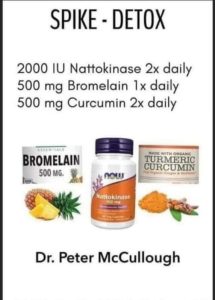
Because pepper increases the absorption of turmeric by 47 fold I would add some pepper to the protocol.
Post Covid Jab Recovery Protocol
To aid those tricked/coerced into getting the jab/those suffering post exposure to the jabbed, I have done my best to compile a Jab Recovery Protocol from the various sources I have seen recently: https://www.tomgrimshaw.com/tomsblog/?p=35644
First Rule of Died Suddenly

Double Blind, Peer Reviewed and Mammograms. The Emperor Has No Clothes.
The medical profession use a procedure called double blind clinical trials to test substances against a control, often a sugar pill.
What is double blind? It is when neither the person administering the pills not the one taking them know which they are ingesting, the control or the tested substance.
Why do that? Because they understand that if a person knows what they are receiving it will affect the outcome of the trial.
How will it affect the outcome? Because many a person thinking they are taking something that will/might benefit them will be benefited from it.
Is this a case of “mind over matter”? You’re not supposed to ask that question! That is the elephant in the room the medical profession have been studiously ignoring for over 100 years now. They know the mind has an influence but have never isolated it. They persist with the obviously incorrect theory that structure governs function when it can, and has been, proven that the opposite is true, function governs structure.
Here’s an easy test you can do for yourself. Watch a portion of a horror movie until your heart palpitates and your palms go sweaty. Was there any alteration in the structure of your body that caused those two changes? Was there a change in the temperature of the room? No?
But there was in your mind. The function of your mind, engineered to respond to danger, altered the workings of the body. Function governs Structure.
Here’s another sacred cow that needs to be excommunicated from your thinking. The scientific alter of peer reviewed.
I was reading a great post from someone on the subject and commented to him that what he wrote was spot on and that I have a bunch more posted on my blog. He said he couldn’t find it so I went trawling. If you are interested, this is the list of links I sent him.
All These Destructive Things Were Peer Reviewed
Peer Review Conflict Of Interest
Medical Journals Corrupt To The Core!
“Who’s looking out for scientific integrity?”
Big Pharma researcher admits to faking dozens of research studies for Pfizer, Merck
Big Pharma researcher admits to faking dozens of research studies for Pfizer, Merck
How Big Pharma Hijacked Evidence-Based Medicine
94 Percent of Medication Not Supported by High-Quality Evidence, Harms Underreported: Study
94 Percent of Medication Not Supported by High-Quality Evidence, Harms Underreported: Study
From an article I wrote called ‘How I Arrived At My Current Viewpoint’:
Viewpoint: Do not trust a single thing that even a peer-reviewed scientific experiment claims to prove without verifiable evidence from another trusted source. Bear in mind this survey merely reports what is admitted to. The real figures are most likely much higher.
Data: “1.97% of scientists admitted to have fabricated, falsified or modified data or results at least once –a serious form of misconduct by any standard– and up to 33.7% admitted other questionable research practices.
In surveys asking about the behaviour of colleagues, admission rates were 14.12% for falsification, and up to 72% for other questionable research practices… …misconduct was reported more frequently by medical/pharmacological researchers than others.”
88 Simple Truths About the Virus, the Pandemic and Everything in Between
88 Simple Truths About the Virus, the Pandemic and Everything in Between
Don’t Think For Yourself. Trust Me, I know Best.
In the process of looking for those articles I came across this one I thought to reshare with you:
This morning I received yet another example of how mainstream medicine are more and more having to acknowledge that their techniques of cutting, burning and drugging to suppress symptoms are failures. Here is an excerpt from the article.
“For more than 30 years, government health organizations and the cancer societies have pushed the idea that early detection and treatment increases your odds of surviving cancer. The messages are everywhere. They urge us to check for prostate, breast, colon, skin cancer and more.”
“Logically, it makes sense that the earlier you discover a cancer, the more likely you will be alive in five years. This has driven millions of people to their doctors’ offices for screening and it has poured billions of dollars into the coffers of the cancer industry.”
“But does it save lives? And do the risks outweigh the benefits? Apparently, the answer to both of those questions is no.”
“The studies show that people are not living longer after they get cancer. While they might live longer after their diagnosis, that is because we are diagnosing the disease much earlier. In fact, the age-adjusted mortality rates for all forms of cancer combined have steadily increased over several decades.
Orthodox medicine is losing the war on cancer.”
“In the last month, the British government’s National Health Service (NHS) and the American Cancer Society (ACS) both have stated that they are updating their public health messages regarding cancer screening.”
“For decades, these organizations were among the staunchest defenders of screening. The organizations now admit that they overstated the benefits of screening. Even worse, they intentionally downplayed the risks.”…
…“It is clear that early detection, combined with conventional cancer treatments just are not working. And this has been clear for quite some time. In May of 1986, the New England Journal of Medicine commented on the state of modern cancer treatment, stating, “The main conclusion we draw is that some 35 years of intense effort focused on improving treatment must be judged a qualified failure.”
“Their report concluded, “we are losing the war against cancer” and argued for an emphasis on prevention. Here we are, nearly 25 years later and that emphasis is still not there.”
“According to the International Agency for Research in Cancer, our lifestyle and environment is the cause of up to 90% of human cancer. That clearly means that we can avoid it. Yet, less than 10% of the National Cancer Institute budget is set aside to study the environmental causes of cancer. Less than 1% is budgeted for nutrition studies.”
“Why?”
“Because treating disease is enormously profitable. Preventing it is not. And whether the “screening” involves cancer, cholesterol, diabetes, or any number of other markers and diseases, the objective is the same. The goal is not to “prevent” disease. The goal of orthodox medicine is to detect the symptoms earlier so that more “treatments” can be given.”
Copyright © 2009 Fourth Avenue Health Group, LLC, located at 245 NE 4th Avenue, Delray Beach Florida 33483, is a subsidiary of Early to Rise. All rights reserved. Total Health Breakthroughs is published weekly as a free email subscription service by Fourth Avenue Health Group, LLC.
Part of the email I received is posted here: http://www.totalhealthbreakthroughs.com/?s=Beating+Cancer%3A+Does+Early+Detection+Help%3F.
TG/HDL Ratio
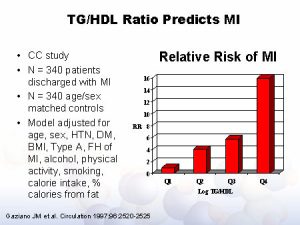
Alan Watson posts: Participants with the highest Triglycerides (TG) & lowest HDL (Q4) were 16 times more likely to have a heart attack than those with lowest TG/highest HDL (Q1). Why, then, do most MDs focus only on LDL levels that only weakly predicted risk?
Marion Holman replies: The only reason the Triglyceride:HDL ratio is a good predictor of CVD is because it is a surrogate marker for predicting Insulin Resistance. Insulin Resistance, Inflammation & Infection can induce an imbalance in glucose metabolism that generates chronic hyperglycemia, which in turn triggers oxidative stress and causes an inflammatory response that leads to cell damage. Insulin resistance can also alter systemic lipid metabolism which then leads to the development of dyslipidemia and the well-known lipid triad: HIGH levels of plasma Triglycerides, (2) LOW levels of HDL, and (3) the appearance of small dense LDL-C.
Dr Toni Mark MD

Pilot warns of airline industry disaster due to Covid vaccines
CAPTAIN Shane Murdock says the air industry is ‘poised on the precipice of disaster’. A pilot for more than 40 years and a qualified air accident investigator, he has found official data that back up his claim of impending global catastrophe. He adds: ‘When correlated, the data indicate there is an enormous problem that is having, and will have, a significant impact on aviation safety worldwide. There is enough evidence to be sending out red flags.’
Pilot warns of airline industry disaster due to Covid vaccines
And The Rest Is?

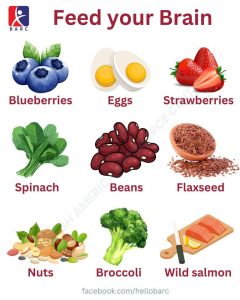
Brain Food
The Biology of Carbon Dioxide
STORY AT-A-GLANCE
- Carbon dioxide (CO2) is a driver of energy production, as it improves the delivery of oxygen into your cells. CO2 also helps protect against the harmful effects of lipid peroxidation
- CO2 and lactate have opposing effects. Lactate is the byproduct of metabolizing glucose without oxygen in the cytoplasm. So, where lactate causes problems, CO2 has beneficial effects
- Elevated lactate production is a common theme in diabetes, Alzheimer’s, heart failure, shock and general aging. It promotes inflammation and degrades mitochondrial function. Conversely, low CO2 concentrations have been linked to epileptic seizures, muscle spasms, inflammation, hypothyroidism, stroke and clotting disorders
- All these issues, whether caused by elevated lactate or low CO2, can be successfully treated with CO2 therapies of various kinds, such as CO2 baths (where CO2 is pumped into the tub, much like bathing in carbonated mineral water) or adding CO2 into standard hyperbaric treatment
- Simpler ways to raise your tissue content of CO2 include breathing into a paper bag, having an adequate supply of calcium, and supplementing with salt, baking soda or carbonated beverages
In this 2010 interview, the late Ray Peat, a biologist and physiologist who specialized in the bioenergetic theory of health,1 reviewed some of the key benefits of CO2 and how it works within the human body. This article is a summary of the key points made in that interview.
I apologize for the video quality. The video was recorded 13 years ago, and appears to have been shot on a cell phone. In 2010 the cameras were not very good. However, the audio is fine, and more importantly, this information is really hard to come by since Peat is no longer with us. Only 2,000 people had viewed it when I first saw it.
I watched it four times as it is so good. I’m convinced optimizing your carbon dioxide (CO2) level is one of the most important strategies you can do to slow down degeneration due to aging.
On that point, I will be interviewing one of the leading breathing experts in the world, Peter Litchfield, Ph.D., who will educate us on why most breathing techniques don’t work, as they don’t address the underlying triggered breathing habits that lower CO2.
CO2 Is Crucial for Optimal Health
CO2 is typically thought of as nothing more than a harmful waste product of respiration, and a “pollutant” that endangers the earth by raising global temperatures.
The reality is that CO2 is a driver of mitochondrial energy production, and it improves the delivery of oxygen into your cells. It’s also essential for most life on Earth, plants in particular. In fact, CO2 appears to be a more fundamental component of living matter than oxygen.2 All of this was well-known in decades past, but somehow knowledge about the beneficial effects of CO2 has been suppressed over time.
Importantly, CO2 allows for more efficient energy production in your mitochondria, which is why people who live or spend time at higher altitudes tend to be healthier and have fewer chronic health problems such as asthma. The reason for this is because the pressure of CO2 relative to oxygen is greater at higher altitudes.
A Simple Biohack to Boost CO2
According to Forbes Health, biohacking is “a term used to describe various tips and tricks for enhancing the body’s ability to function at peak performance — and maybe even extend one’s lifespan.”
A biohack for mimicking being at a higher altitude in order to boost CO2 is to breathe into a paper lunch bag for a minute or two. The bag should not be too small or too large (an ideal size is 6 inches by 15 inches, or 15 centimeters by 38 centimeters). Breathe into the bag with your mouth and nose covered until you feel better.
With each exhale, you expel carbon dioxide. By rebreathing the carbon dioxide inside the paper bag, you effectively raise your carbon dioxide level. According to Peat, breathing into a paper bag a few times a day has been shown to bring blood pressure down by as much as 30 points, and stabilize it there after a few days of repetition.
CO2 and Lactate Have Opposing Effects
As explained by Peat, CO2 and lactate have opposing effects.3,4,5 So, where lactate causes problems, CO2 has beneficial effects.
For example, elevated lactate production is a common theme in diabetes, Alzheimer’s, heart failure, shock and general aging. It promotes inflammation and degrades mitochondrial function. Conversely, low CO2 concentrations have been linked to epileptic seizures, muscle spasms, inflammation, hypothyroidism, stroke, and clotting disorders.
According to Peat, all these issues, whether caused by elevated lactate or low CO2, can be successfully treated with CO2 therapies of various kinds, such as CO2 baths (where CO2 is pumped into the tub, much like bathing in carbonated mineral water) or adding CO2 into standard hyperbaric treatment.
Simpler ways to raise your tissue content of CO2 include breathing into a small paper lunch bag a few times a day as detailed above, having an adequate supply of calcium, and supplementing with salt, baking soda or carbonated beverages.6
Peat tells the story of how he told an individual suffering from transient ischemic attacks who’d gone to the emergency room with stroke symptoms and paralysis on several occasions to drink a soda or carbonated water when the attacks occurred, as the bubbles in carbonated drinks are CO2 gas. “That worked for him,” he said.
CO2 Promotes Efficient Energy Production
Lactate is the byproduct of glycolysis, or nonaerobic respiration. It occurs when your mitochondria are compromised and are unable to metabolize glucose. Instead of pyruvate going to the mitochondria to be burned, it is oxidized to lactate in the cell’s cytoplasm. When this occurs in the presence of oxygen it is called the Warburg Effect, which is major pathway that cancer cells use.
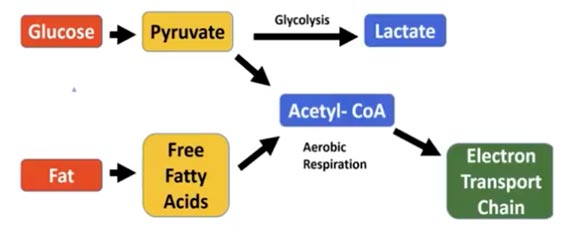
As illustrated in the graph below, glucose can be metabolized in two different ways. When fat intake is too high, glucose is burned though glycolysis, which uses no oxygen and produces lactate. This is a highly inefficient way to produce energy, as it generates only 2 ATP per glucose molecule. And, in the context of this article, no CO2.
When fat intake is in the sweet spot of 15% to 40%, and glucose intake is high enough, it can be burned for fuel in the mitochondria. This generates up to 38 ATP per glucose molecule. In this process, NADH and CO2 are also produced.7
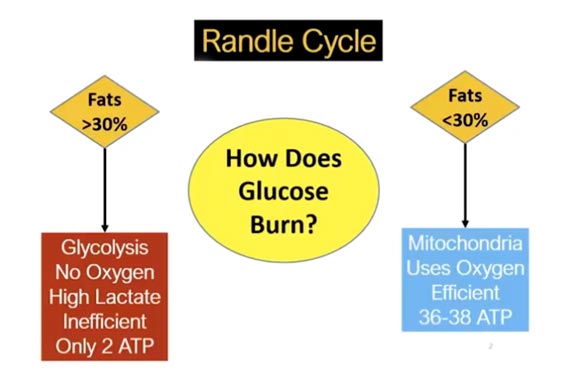
If fat intake is over 40% and the carb intake is below 200 grams per day, the glucose is burned in glycolysis in the cell’s cytoplasm, which produces lactate that suppresses glucose oxidation and shifts metabolism to the burning of fats instead.
Lactate also promotes inflammation and fibrosis. CO2, meanwhile, limits the formation of lactate, increases oxidation of glucose, helps trigger mitochondrial formation (i.e., boosts the number of mitochondria in your cells) and boosts cellular ATP concentrations.8
As explained by Peat, glycolysis products (pyruvate and lactate) compete with CO2 for binding sites inside the mitochondrion. Glycolysis decreases energy production by reducing CO2.
Energy Production Summary
In summary, two key points from all this are:
1.The most efficient way to generate cellular energy is to burn glucose in the electron transport chain of your mitochondria (aerobic respiration). In addition to generating up to 38 ATP molecules per glucose molecule (opposed to the two generated through glycolysis), it also generates an estimated 50% more CO2 than fat oxidation.9
In order for glucose to be metabolized in your mitochondria, your dietary fat intake needs to be sufficiently low so as not to inhibit the oxidation of glucose. While there’s no hard evidence on how much fat is too much, I suspect you need to restrict fat to 30% or 40%, depending on your individual needs, to optimize your glucose metabolism.
2.There are two possible energy states:
i.A glycolytic stress state in which energy production is reduced by the inhibition of CO2.
ii.An energy-efficient state in which CO2 is produced and lactate is suppressed.
CO2 Protects Against Lipid Peroxidation
CO2 also helps protect against the harmful effects of lipid peroxidation. Lipid peroxidation10 refers to a process in which free radicals and other harmful oxidants attack lipids (fats) that have carbon-carbon double bonds. Polyunsaturated fats (PUFAs) such as linoleic acid (LA) are particularly prone to this.
The key that many fail to recognize is that lipid peroxidation increases when CO2 levels are low, as CO2 protects the fats from damage. As explained by Peat, when CO2 is low, that’s when PUFAs increase their production of lipid peroxides11 (oxidation products of phospholipids).
Lipid peroxides degrade into reactive aldehydes such as malondialdehyde and 4-hydroxy-2-noneal (4-HNE), which damage DNA and proteins, causing them to malfunction. Lipid peroxidation is known to contribute to conditions such as cancer, atherosclerosis and neurodegenerative conditions, just to name a few.12
Peat cites one experiment in which they showed that when you raise the CO2 in human tissues to three times normal, the amount of lipid peroxides went to zero. So, CO2 has a potent anti-inflammatory effect and effectively protects against lipid peroxidation.
This is an important piece of information, as most people nowadays consume enormously excessive amounts of seed oils that are loaded with PUFAs, and thus have very elevated levels of stored LA in their cells.
As explained in “Linoleic Acid — The Most Destructive Ingredient in Your Diet,” LA is a primary contributor to chronic disease, as it causes mitochondrial dysfunction and promotes inflammation.
Augmenting CO2 in your tissues may be an effective way to limit LA-induced damage while you work to eliminate the excess LA from your tissues and replace it with healthy fats (which can take six or seven years).
How Lactate and CO2 Influence Stress
Peat also goes into an extended discussion involving many separate pieces to explain how lactate and CO2 influence the stress response and other parts of human biology that impact disease, including cancer.
For starters, the cytochrome oxidase enzyme — also known as Complex IV in the mitochondrial electron transport chain, which is what uses oxygen — governs your rate of oxygen consumption.
So, the more cytochrome oxidase you have, and the more active it is, the greater your oxygen consumption. Cytochrome oxidase is also responsible for increasing the total number of mitochondria within the cell as needed to accommodate for increased oxygen consumption.
When you saturate a cell with a very large amount of CO2, you rapidly increase the amount of cytochrome oxidase in the cell, and you boost its activity almost instantly. This shifts the oxidative balance of the cell towards the oxidized state, as electrons are being pulled out of the system. This lowers reductive stress in the cell, which is what you want to do.
In healthy cells, there’s a balance between NAD+ and NADH that is critical for energy production. Conditions like cancer or diabetes disrupt this balance, leading to excess lactate and reduced NAD+. Carbon dioxide is crucial because it prevents excessive lactate production, maintaining a healthy NAD+ to NADH ratio.
CO2 also influences the water balance in cells, supporting an oxidized cellular condition with lowered reductive stress that results in proper oxygen utilization. Hyperventilation, or over-breathing, which reduces CO2, typically leads to overproduction of lactate, contributing to stress and disrupting cellular balance.
CO2 in Emergency Care
Peat also discusses the role of CO2 in emergency care that has the potential to save your life or the life of someone you love. Stroke patients are typically ventilated with pure oxygen to prevent hypoxia-induced brain damage,13 but this isn’t the best way to help these patients.
A ventilation strategy called permissive hypercapnia appears to be far better. Permissive hypercapnia refers to a ventilation strategy employing partial pressures of CO2 that are higher than physiological norms. I have been encouraging those in the hyperbaric oxygen community to explore and adopt this strategy in their hyperbaric chambers. As explained by Peat:
“Quite a few people are now, just in the last few years, starting to talk about permissive hypercapnia … instead of ventilating someone to death [by] giving them pure oxygen. When people aren’t getting enough oxygen to the brain, they’ll give them pure oxygen and then hyperventilate them.
The idea is to shrink their brain by hyperventilating them, because it shuts down the blood circulation of the brain. But if they’re dying of a lack of oxygen to the brain, [that’s] not what you want to do …
I had mentioned [using carbonated beverages during ischemic stroke] in a nutrition class. I had said soda water, meaning carbonated water, but the next week, one of the students said that she had interpreted it as baking soda in water.
Basically, it’s the same idea, but she said she gave a spoonful of baking soda to her mother who had been half-paralyzed for six months, and 15 minutes after drinking just a glass of baking soda water the paralysis lifted and stayed away.”
The reason baking soda worked in this case is probably because CO2 is carried through your bloodstream by sodium bicarbonate (baking soda).14 Peat goes on to discuss how, in the past, firemen used to carry CO2 for the treatment of shock and respiratory arrest.
In the 1920s, Yandell Henderson, director of the Yale Laboratory of Applied Physiology, devised a system using oxygen with 5%, 7% or 10% CO2 added in. Fire departments all over the United States, and many hospitals, were using 5% CO2 to resuscitate babies that had stopped breathing and treat shock cases. It was also used post-operatively to aid in the recovery process.
The Green Agenda’s Flawed View of CO2
In closing, Peat also overturned key arguments of the green agenda by pointing out that during the Carboniferous period of Earth’s history, when plant and animal life was extraordinarily abundant, carbon dioxide levels were some 20 times higher than they are now, and temperatures were relatively stable.
“The expansion of vegetation will reflect infrared rays back into space,” he said, “so it’s sort of like the Earth has a thermostat that will regulate for huge changes in in CO2,” he said.
Even more importantly, nothing thrives in low CO2 environments — not plants, not animals or insects and, as evidenced by everything discussed above, not humans. If anything, the world may actually need a bit more CO2, seeing how CO2-deficiency states are rampant, forests are dying and plants aren’t growing very well. As noted by Peat:
“All animals and even plants suffer from a lack of carbon dioxide. If you lower it, even plants won’t do well … In the 1940s, people experimented with poisoning to death rats or mice with 50% carbon dioxide, keeping them dead for an hour and then reviving them, and they had no brain damage. If they gave them extra CO2, they weren’t damaged by the absence of oxygen. So, for primitive organisms, it’s more essential than oxygen.”
The increasingly erratic weather systems we’re now experiencing likely have little to do with the CO2 content of our atmosphere, and far more to do with a combination of decades-long weather manipulation15 and natural solar cycles.16,17
https://raypeat.com/articles/articles/mitochondria-mortality.shtml