
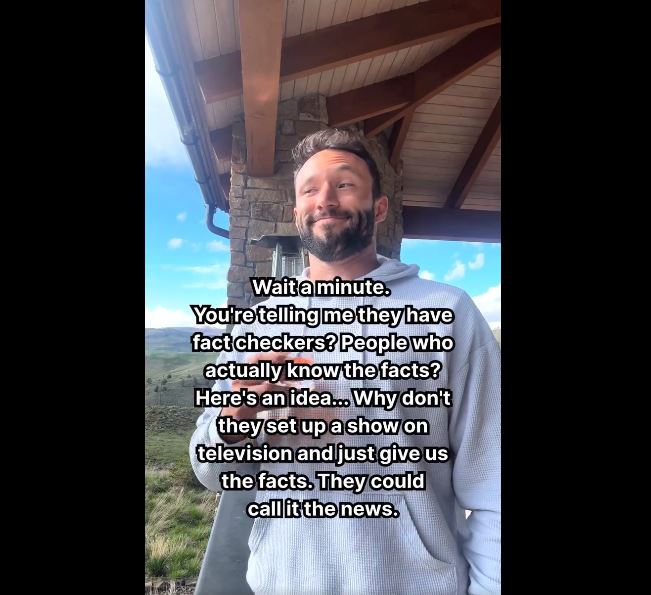
Dr Christiane On The News
Dr. Mary Bowden on Joe Rogan
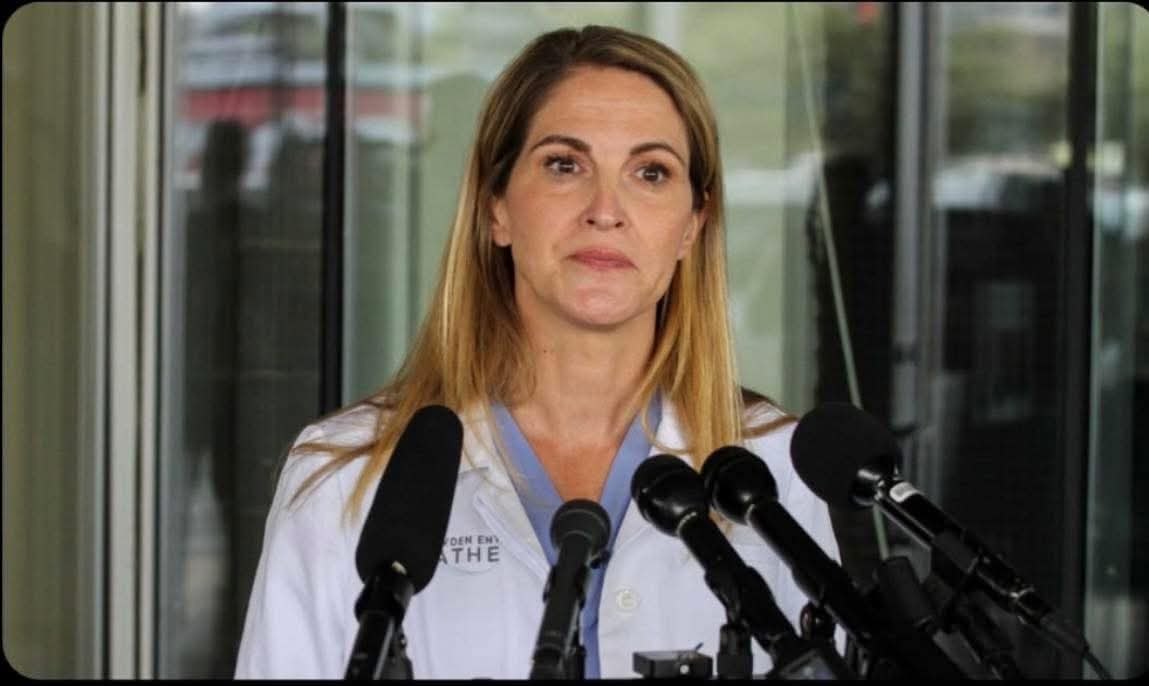
Joe Rogan just hosted the most censored doctor in America.
Dr. Mary Bowden exposed what really happened during COVID and the cover-up runs deeper than you think.
Here are 8 shocking takeaways they never wanted you to hear:
1. Hospitals were using morphine to kill without pain.
Dr. Bowden reviewed patient charts showing people with zero pain being given lethal doses of morphine and insulin.
This wasn’t treatment. It was quiet execution by protocol.
2. The Ivermectin smear campaign was planned.
The FDA called it a “horse dewormer” on the same day they launched an $11.5 billion COVID media fund.
Ivermectin won a Nobel Prize. It’s on the WHO’s essential medicines list.
Why was it really banned?
3. Monoclonal antibodies worked too well.
They saved lives – fast.
Some patients recovered within 24 hours.
So what happened?
The government seized control of supply and restricted access.
Not because they didn’t work but because they did.
4. Breathing treatments were banned.
Budesonide (a corticosteroid) helped patients breathe – safely and effectively.
Hospitals banned it, claiming it “spread the virus.”
Dr. Bowden resorted to treating patients in their cars.
5. Medical boards became weapons.
Doctors who challenged the narrative were hunted down.
Dr. Bowden is still fighting the Texas Medical Board-3 years later-for prescribing Ivermectin.
It was never about safety. It was about control.
6. Vaccine injuries are real and ignored.
Dr. Bowden sees 6+ new vaccine-injured patients every week.
Many have 10x higher antibody levels than the unvaccinated-4 years later.
98% of injury compensation claims are denied.
7. Canada offered death, not care.
Over 15,000 people died from “assisted suicide” in Canada last year.
Many were vaccine-injured and abandoned by the system.
Instead of help, they were offered death.
8. 500+ new mRNA shots are coming.
33 of them are “self-amplifying” designed to replicate inside your body.
No off switch. No way to stop them once injected.
Some are already approved in Japan and India.
And If you think this is the whole story, it isn’t.
This is just the beginning of what’s being covered up.
Click to view the video: https://www.youtube.com/watch?v=Ru7BIqXQZns
Change Your Operating Basis
by Julie Fratantoni, PhD who writes on Substack:
Next time you’re waiting in line: do nothing.
Just stand there.
In between meetings: don’t check your phone.
Sit in silence.
Let people think you’re a complete weirdo.
These small margins are important opportunities for your brain to rest, recharge, and consolidate information.
We’ve lost the ability to be bored, and with it, the space your brain needs to stay healthy.
I’m a cognitive neuroscientist and I write about small shifts like this that can make a huge difference for your cognitive health and longevity.
Quote of the Day
“The object of life is not to be on the side of the majority, but to escape finding oneself in the ranks of the insane.” Marcus Aurelius – Roman Emperor (121 -180 AD)
She’ll Be Right Mate
(It is more likely to be right if you plan for contingencies!)
(For my overseas readers:
The phrase “She’ll be right” meaning ‘don’t worry over it’, is widely used and understood in Australia and New Zealand, reflecting the laid-back and optimistic attitude often associated with their cultures.)
I was talking to my daughter on our Father’s Day outing and we had a conversation about promoting her husband’s business, Elscomm. They do computer support for small to medium sized businesses.
We were talking about getting more customers and we discussed direct sales and promoting through other people’s clients, like accountants. She spoke of offering a free service to attract the interest of prospective clients.
I suggested offering a security audit to discover any vulnerabilities to ransomware since it is a growing and expensive problem for even smaller businesses.
She surprised the heck out of me by saying they had already extensively surveyed that and it was a topic of almost total non-interest to business owners and managers.
She figured it was because people were so focused on running their business, so totally immersed in the production area they spent too little time managing their business. I think some people refer to it as the difference between working ON your business rather than working IN it.
I was thinking about it later and it occurred to me that it is probably symptomatic of a fairly common Australian attitude of, “She’ll be right mate.” said with an ever so slight pause after ‘right’ and before ‘mate’. Not enough of a pause to warrant a comma but not grammatically perfect without one.
This is an Australian/New Zealand expression commonly given by one bloke to another to encourage or support him when he is facing a challenging or difficult situation.
A shorter form of the encouragement similarly expressed elsewhere in the world as, “It’ll be all right in the end. If it’s not all right, it’s not the end.” (Aussies and Kiwis have a habit of shortening things.)
It is also used to encourage someone contemplating an act larrikinism or bravado. Sometimes heard in video compilations of blokes doing stupid things, just prior to something breaking or failing. I was reminded of that this week when I saw a meme that said, ‘When someone says, “She’ll be right mate.” It won’t be!’
Not the same as but in a similar vein to one bloke saying something can’t be done and his mate responding with, “Hold my beer!” as he accepts the statement as a challenge.
Like any characteristic, the laid back attitude of ‘she’ll be right’ can be over applied. With disastrous consequences. Merely hoping that things will turn out all right in the end without giving any thought to planning or preparation is a sure way to put yourself in what should have been an avoidable situation if circumstances deteriorate below what is normal or expected.
In fact I once came across a great concept that an emergency only becomes an emergency when it is not predicted and planned for. So spending a little planning time contemplating what could possible go wrong and working out what would keep the fat out of the fire in those situations is potentially a very good use of your time.
“What if interest rates go through the roof? How would I pay my mortgage?”
“What if rents went sky high such that I could not afford to live where I am?
“What if I lost my job. How would I earn a quid?”
In fact, I often use the “What if?” question with myself to query or challenge myself or the story being promoted in the media. As in,
“What if nearly everything we heard on the TV was merely propaganda in support of an agenda?”
“What if they leave out the bits that do not fit their agenda?”
“What if standard medical advice has nothing to do with helping the patient attain optimal health and everything to do with conforming what the higher ups have decided is best for their sponsors?”
And the more I read independent reports of various scenarios in the world that conflict dramatically with those in the main stream media, the more I am of the mind that these are some of the more important questions we should be teaching our kids to ask.
Seven fruits that may help lower cancer risk

Apples
Blueberries
Cherries
Citrus
Grapes
Pomegranates
Strawberries
Read the article for details: https://nexusnewsfeed.com/article/food-cooking/seven-fruits-that-may-help-lower-cancer-risk/
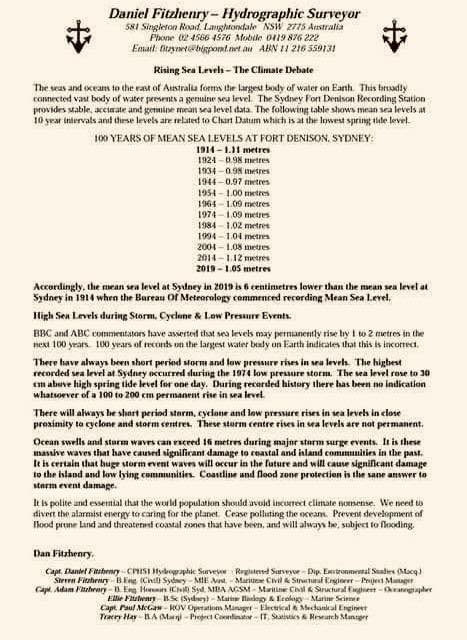
Actual True Data on Rising Sea Levels
THE CLIMATE REPORT FROM HELL
At the end of July, the U.S. Department of Energy published a report that sent the entire American climate-industrial complex into a frenzy. Titled “A Critical Review of the Impact of Greenhouse Gases on the U.S. Climate”, the report immediately provoked a fierce reaction from the climate movement’s mouthpiece, *The New York Times*: “The report is written by climate skeptics who undermine scientific consensus, an attack on all serious climate research. The five scientists behind the Department of Energy’s report falsify data and draw conclusions far removed from the UN’s climate warnings, which form the basis for the green transition.” This was followed by over 60,000 protest letters to the Department of Energy and a barrage of lawsuits from institutions like the Environmental Defense Fund and the Union of Concerned Scientists.
The report, authored by five prominent scientists, including former Obama administration Department of Energy research director Steven Koonin and Professor Judith Curry, is not a malicious attack on the UN’s climate scenarios but a sober, factual, and compelling presentation of 200 years of concrete measurements and documented observations of climate development in the U.S. To understand the outrage and fury of the American climate mafia, it’s crucial to note the movement’s fundamental creed, as outlined in a 2008 report by the U.S. Environmental Protection Agency (EPA), which declares that human-made greenhouse gases, particularly CO2, are dangerous to human life and health, recommending that emissions be reduced as much as possible.
However, the current Department of Energy report clarifies that elevated CO2 levels (which no one disputes) have increased plant growth and Earth’s green areas, accelerating productivity and crop yields in agriculture. It further concludes that existing climate models are burdened by unrealistic catastrophe scenarios, rendering them unreliable as forecasting tools. Thus, climate researchers exaggerate long-term trends in extreme weather in the U.S. The frequency and intensity of tornadoes, floods, and droughts have not increased abnormally. The climate movement and media wrongly and without evidence attribute extreme weather to increased atmospheric CO2. The report does not deny that CO2 emissions may affect the climate but calls for scientific documentation of their interaction with the sun’s influence on Earth, cloud formation, and movements in wind and ocean currents, which have been the dominant climate drivers for billions of years.
The rage and hysteria surrounding the climate report have reached new heights because the throne of the climate activists’ doomsday empire is beginning to wobble. More and more scientific heavyweights are emerging as doomsday deniers, most recently Nobel Prize-winning physicist John Clauser, who has presented analyses concluding that “there is no climate crisis.” The climate-industrial complex, encompassing universities, media, and nearly all politicians, has responded by academically exiling Professor Clauser, who is now barred from speaking, lecturing, or debating in Western democracies. The same applies to the report’s co-author, Dr. Judith Curry, who has been bullied out of her professorship at the Georgia Institute of Technology. She has dared to present facts showing that deaths from extreme weather have decreased more than 100-fold and that humanity has experienced cultural and technological flourishing during Earth’s warm periods. Since 1850, the planet has warmed by 1.3 degrees Celsius, which has only had positive effects on human life and welfare. Professor Curry is not afraid to state that climate science no longer rests on serious research but has become pseudoscience, driven by careerism, funding, income, and tenure in academia. If you align with the doomsday narrative, you get a career and success. If not, you’re finished. Curry calls for open and unbiased scientific debate: “Disagreement is the salt of science,” she says.
With the current Department of Energy climate report, she has sparked that debate, but it has been met only with hatred, condemnation, and rejection. The sober and unbiased climate debate is struggling, not least because climate activists sense that voters in Western democracies are beginning to realize they’ve been misled and deceived by the golden promises of the green transition.
Europe is being driven into decline compared to the U.S., China, and India as a result of the green assault on our societies. Today, Germany and Spain derive about 55 percent of their energy from wind and solar. Germany has shut down its nuclear power plants, and Spain is in the process of doing the same. This trend is evident across the EU. The result is energy shortages, sky-high energy prices, and massive imports from Russia, which can finance its entire Ukraine campaign with the influx of energy euros.
In 2008, the economies of the Eurozone and the U.S. were at similar levels. Today, U.S. GDP per capita is nearly double that of Europe. While the U.S. extracted shale gas and invested in innovation and growth, Europe chose to tax itself into an economic slowdown. Europe’s technological elite companies are Siemens, Vestas, and Ørsted. The U.S. has Apple, Google, Microsoft, Amazon, Nvidia, and Open AI. The four largest U.S. companies are worth more than all 402 companies on the MSCI Europe stock index combined.
When European politicians twenty years ago wholeheartedly embraced Al Gore’s doomsday narrative, predicting six-meter sea level rises, no more snow or ice, and famine, it was because the doomsday story offered new opportunities to control the electorate. If a better climate depends on individual citizens’ diets, clothing, transportation patterns, and energy consumption, then it must also be true that a government for the sake of the climate can micromanage its citizens’ behavior from cradle to grave. And so they do. The commitment to the doomsday doctrine has given politicians their wildest dream on a silver platter: the nanny state.
We need a popular uprising to restore common sense, healthy skepticism, and judgment in the climate debate. The first politicians are beginning to slip out the climate backdoor. We must hope that the courageous and sober report from the U.S. Department of Energy motivates many more to follow suit. We need to turn the climate narrative around. Otherwise, only poverty and hardship await us.
By Asker Aamund.com 20/08/25 (translated from Danish)
Dr David E Martin On The WHO
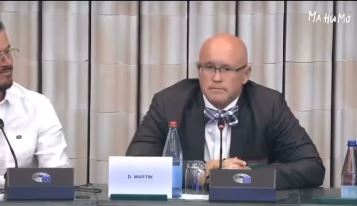
This is the same organisation to which we have just ceded authority in the case of a pandemic.
Click to view the video: https://x.com/its_The_Dr/status/1970302239991316594s
The Cholesterol Killing Conspiracy: How Big Pharma’s $200 Billion Lie Is Killing Us
The Multi-Billion Dollar Deception That Turned Our Most Vital Molecule Into Public Enemy #1
What if everything you’ve been told about cholesterol is not just wrong, but deliberately inverted? What if the very substance demonized by a trillion-dollar pharmaceutical empire is actually essential for your survival—and lowering it is slowly destroying your brain, immune system, and will to live?
For over five decades, we’ve been sold the greatest medical lie in human history. The cholesterol hypothesis—the idea that dietary cholesterol and blood cholesterol are the primary cause of heart disease—has generated over $200 billion in statin sales while systematically poisoning an entire generation.
Read the article: https://sayerji.substack.com/p/the-cholesterol-conspiracy-how-big