Keto Diet Cautions

Keto Diet

  • While short-term ketogenic diets may aid weight loss, new research links prolonged ketosis to liver stress, impaired insulin secretion, and cardiovascular problems
  • Long-term fat reliance increases circulating free fatty acids, burdening the liver, disrupting glucose regulation, and weakening metabolic flexibility — key factors in overall energy stability and heart health
  • Elevated liver enzymes and triglyceride levels on keto indicate hepatic overload. This signals that the body is struggling to manage excess fat turnover and oxidation
  • Treat keto as a short-term metabolic intervention, not a lifestyle diet. Gradually reintroduce whole-food carbohydrates to support steady energy, hormonal balance, and overall metabolic health
  • To support balanced metabolism and long-term liver and heart health, keep total fat below 30% of daily calories, eliminate seed oils from your diet, and consume sufficient dietary fiber

https://nexusnewsfeed.com/article/food-cooking/studies-raise-questions-about-keto-s-impact-on-liver-and-heart-health/

Lard vs Veg and Seed Oils

Lard vs Veg and Seed Oils

Stories of grandparents who cooked in lard, shared simple meals, and lived long lives can remind us of a time with fewer packaged snacks and sweetened drinks. Their plates were often filled with home-cooked stews, seasonal produce, and meals eaten slowly with family, which supported digestion and connection. That rhythm matters as much as the specific fat used in the pan.
Modern research shows that different fats have different effects, and context is everything. Lard from pasture-raised animals eaten with vegetables and beans is not the same as deep-fried fast food; vegetable oils are not equal either, especially when repeatedly heated. Ayurveda encourages warm, freshly prepared meals with stable cooking fats and plenty of spices like turmeric, cumin, and coriander.
Also focus on real food, gentle cooking methods, and mindful portions. Blending the wisdom of your grandmother’s kitchen with current nutrition science can help you craft meals that feel comforting and nourishing at the same time.

Jim Croce

Jim Croce and Family

He wrote a song about saving time for his newborn son. Three months after he died, it became #1 in America—and sounded like prophecy.
September 1971. Jim Croce held his newborn son for the first time, feeling the impossible weight of something so small. A.J. was tiny, perfect, and entirely dependent on a father who was rarely home.
Jim sat down with his guitar, thinking about all the moments he would miss—first steps, first words, bedtime stories. The road had always called him away. Music demanded everything. But now, holding this child, Jim wanted something music had never given him: time.
He began to write.
“If I could save time in a bottle…”
The melody came gently, like a lullaby. The words were a father’s wish—impossible and tender. He wanted to save every moment, to make days last forever, to somehow stop the clock that kept pulling him away.
“It was a prayer more than a song,” his wife Ingrid later said.
Jim Croce understood time’s cruelty better than most. He’d spent years chasing an impossible dream while time kept running out.
The Long Road Before the Music
For years before fame found him, Jim Croce lived the hard, ordinary life he would later sing about.
He hauled lumber. He drove trucks. He taught at small colleges. Anything to keep the lights on while pursuing music that nobody seemed to want.
He played in smoky bars where drunks talked over his songs. He packed up his guitar at 2 a.m. and drove home alone, wondering if any of it mattered.
“Every song I write is like a little movie,” he once said. “Only mine end in diners and bars instead of sunsets.”
His songs were filled with characters America would later love: dreamers in dive bars, hustlers with bad reputations, telephone operators connecting desperate calls, ordinary people living fragile lives.
But in 1972, something shifted.
When Lightning Finally Struck
You Don’t Mess Around with Jim hit the radio like a warm breeze through a cold life. America recognized something in him—that lived-in poetry of a man who’d seen the hard parts and still found something beautiful to sing about.
Operator (That’s Not the Way It Feels) broke hearts across the country.
Bad, Bad Leroy Brown made jukeboxes roar in every small town.
For the first time in his life, Jim Croce wasn’t just surviving. He was soaring.
But fame, for Jim, was no home. The stages were loud, the crowds were large, but he was tired. Tired of motel rooms. Tired of being away from Ingrid and A.J. Tired of missing his son’s childhood for three-minute songs.
He wrote letters home from the road: “I’m tired of being away from you and the boy. When this tour ends, I’m coming home for good.”
He was thirty years old and ready to trade stages for peace. Just one more tour. Then home. Then time—finally, enough time.
He Never Made It Home
September 20, 1973. Natchitoches, Louisiana.
Jim had just finished a concert at Northwestern State University. The crowd had loved him. He was exhausted but satisfied. One more show, then a few more, then home.
He boarded a small charter plane with five others—his guitarist Maury Muehleisen, their road manager, the pilot, and two others.
Minutes after takeoff, the plane struck a pecan tree in the darkness.
It fell from the sky.
Everyone aboard was killed instantly.
A silence followed that no radio could fill.
When Time Ran Out, The Song Began
“Time in a Bottle” had been recorded in 1972 but was never released as a single. It sat quietly on an album, a gentle song overshadowed by louder hits.
After Jim’s death, a movie director used the song in a television film. Radio stations began playing it. Listeners heard the lyrics differently now.
“If I could save time in a bottle…
If I could make days last forever…
If words could make wishes come true…”
Three months after Jim Croce died, “Time in a Bottle” reached #1 in America in December 1973.
The song he’d written for his son—a father’s wish for more time—became an anthem for everyone who’d ever lost someone too soon.
The lyrics, once a lullaby, now sounded like prophecy.
The Echo That Never Stops
Jim Croce never got more time. But somehow, he gave it to everyone else.
His songs play in kitchens where couples slow dance. They hum from car radios on long drives through small towns. They speak to anyone who’s ever wished for one more day, one more moment, one more chance to say what matters.
His son, A.J. Croce, grew up to become a musician himself—carrying forward the music his father left behind. The boy Jim wrote “Time in a Bottle” for now plays his father’s songs, keeping the melody alive.
Jim sang for the ordinary dreamer, the struggling artist, the father who wanted to come home. Though his clock stopped too soon, his voice kept ticking—soft, steady, eternal.
The Lesson in the Song
“Time in a Bottle” reminds us that we never have as much time as we think we do.
Jim Croce spent years struggling toward success. When it finally came, he was ready to leave it behind for something more important: being present for the people he loved.
He didn’t get that chance.
But his song became a gift to everyone who hears it—a reminder not to wait. Not to assume there will always be tomorrow. Not to trade what matters most for what merely seems urgent.
Jim Croce proved that a man doesn’t need a long life to leave a long echo—just a guitar, a few true words, and the courage to sing them before the music stops.
He wanted to save time in a bottle for his son.
Instead, he saved a moment for all of us—a three-minute reminder that time is the one thing we can never get back.
So we’d better use it while we have it.

Carole King

Carole King

Carole King once sat in a publisher’s office listening to a male executive explain why her name should appear second on a song she had written nearly alone, and she replied, “I am done letting anyone borrow my work without my permission.”

The executive laughed.

King stood up.

The Brill Building had just gained a problem it did not expect.

Before Tapestry made her a household name, King was the writer behind hits that other performers got credit for. Labels pushed the singers, not the writers. Publishers favored male composers. King turned out songs faster than most teams in the building, but her name rarely appeared in the spotlight. She received checks. Others received fame.

The quiet scandal started when one producer suggested that her songs would sell better if a man signed first on the sheet. King refused. He insisted. She left the room before he finished speaking. That small rebellion spread through the corridors. Several writers told her she was risking her entire career. King said she could not keep giving away her voice to people who never thanked her for it.

Her turning point came when she wrote a song that a major artist wanted immediately. The label demanded changes that would remove the emotional core of the lyrics. King rejected every note. The artist begged her to reconsider. King refused again. The label eventually caved. The song became a hit, and the artist publicly credited her as the creative center of the track. That moment changed her leverage overnight.

But the real battle came when she told industry leaders she intended to release her own album as a performer. Several executives told her bluntly that her voice was not marketable. They wanted her to stay behind the scenes. She recorded Tapestry anyway. She funded writing sessions herself. She insisted on producing decisions she was not invited to make. The project looked fragile to everyone but her.

When Tapestry exploded into a cultural phenomenon, executives who doubted her pretended they had supported her from the start. King saved the receipts. She told friends she remembered every meeting, every dismissal, every casual insult disguised as advice.

Years later, younger singer songwriters asked her how she survived an industry that tried to keep her invisible. King told them one rule.

“If you give away your voice, someone else will use it to build their name. So keep your voice.”

Carole King is celebrated for warmth, honesty, and timeless melody.

The truth carries more force.

She fought the system that tried to hide her, she won battles no one thought she could win, and she turned the quiet power of a songwriter into the loudest success the industry had ever seen.

Data on Mitochondria and Acid/Alkaline Balance

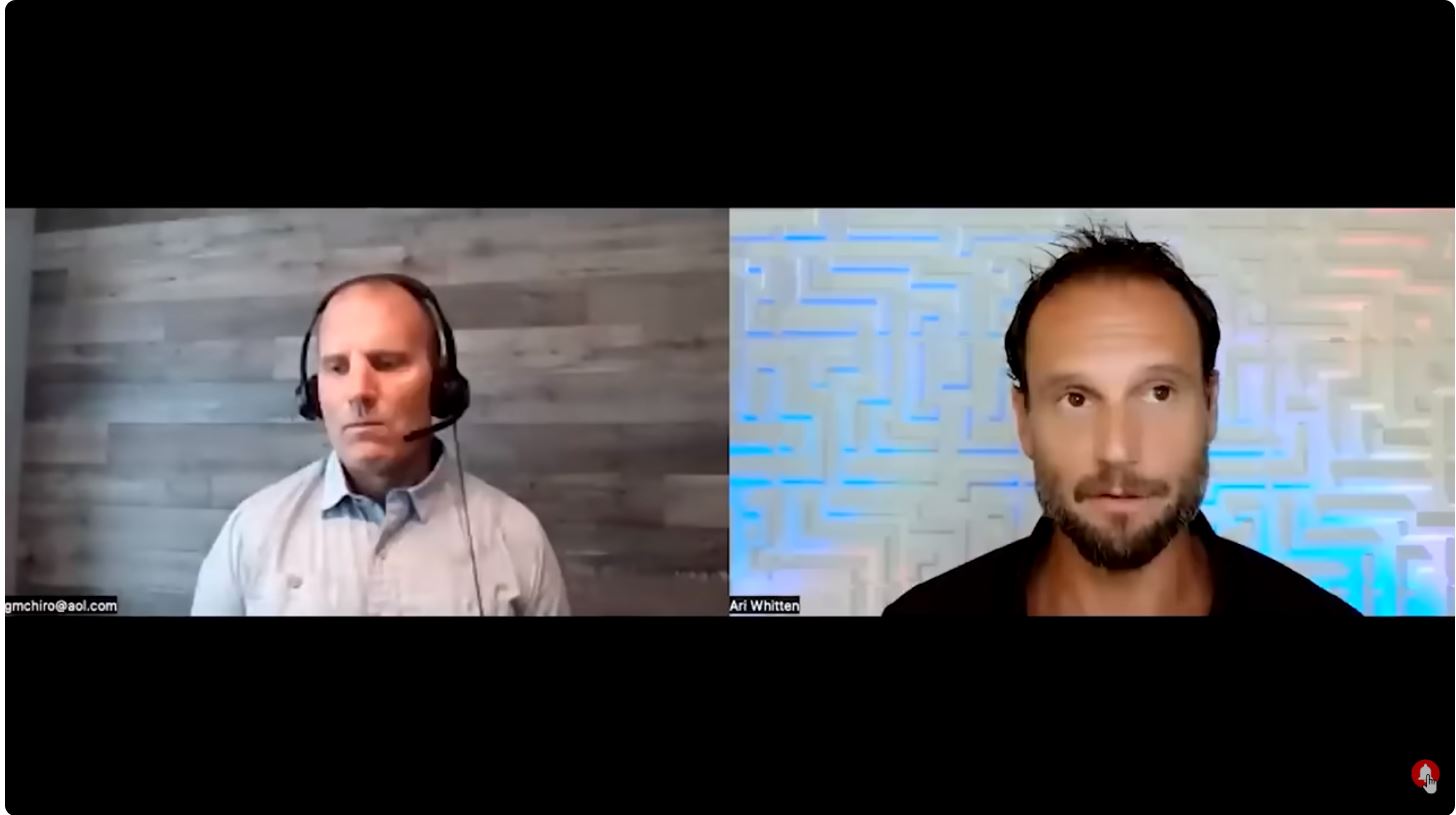
The video or transcript provides data I had not seen elsewhere on the full story of acid/alkaline balance:

Ari: You just reminded me of something when you mentioned acid acids and bases, something that I feel is almost never talked about. And it has this really interesting controversy around it, which is the idea of eating an acidic versus an alkaline diet. And sort of there’s a surface level conversation that I’ve noticed around this, which is certain people in the general public and certain diet book authors have promoted the idea that that animal foods and processed foods are generally acidic and that unprocessed plant foods, particularly fruits and vegetables, are very alkaline rising. And therefore we alkalise our body by consuming more of those foods and avoiding the acidic foods. And then there are people in evidence base circles, self-proclaimed evidence base circles who yeah, as you call them, evidence based Internet trolls who have said no, that’s a bunch of pseudoscience. All you natural health hippie types have got this all wrong. And actually the body maintains pH very precisely. No matter what you eat. And they will cite data to support that view. And they believe that the case, they rest their case. The idea of the acidic and alkaline stuff has been debunked.

But what’s interesting is actually there is this body of literature that most of those evidence based Internet trolls don’t seem to be aware of around something called potential renal acid load. And there are a number of studies where they’ve shown that sort of reconciling these two views that foods do seem to have an acidic or alkaline effect on the body. But the body also has buffering mechanisms to maintain pH in a very narrow range despite what we eat, but what we eat also taxes the buffering system in a particular way that can lead to consequences. I’ve actually been exploring the research on how this actually interplays with how we breathe and how we offload. And there’s an interplay of nutrition on breathing habits as well.

Watch video: https://theenergyblueprint.com/strengthen-your-mitochondria-dr-chris-masterjohn/

The Longevity Fuel: The Secrets to Fasting Plus The Most Rejuvenating Foods and Supplements on Earth

Here are some snippets I noted from the various health professionals who spoke on just the first half of presentation number 9 from the Zonia series.

Physical Body
Slouching increases cortisol and lowers testosterone.

Chemistry
How we fuel our body.

Emotional Journey to Health
Most of us are not kind to ourselves. We need to change how we treat ourselves.

Social Journey to Health
Find your tribe.

Spiritual Journey
Discover your basic purpose to empower your life.


Four Prime Areas:
Air
Water
Food
Sunlight

Also mentioned:
Grounding
Infrared Saunas
Gratitude
Setting intentions for the day.

Test your biological age versus your physical age.

Improve daily, incrementally.


Medication allows a person to suppress the symptoms of your body warning you to change your diet and regime. Hence the medical profession is actually forwarding an early demise. Without the medication to prescribe the doctors would have to be encouraging us to fix the underlying causes of disease.

The one proven way to longevity:
Moderate caloric restriction in the context of micro nutrient excellence.

If your diet is low on nutrients you become a calorie consuming monster!

Over-reliance on animal sources of protein (keto, carnivore etc.) leads to earlier death.

Animal protein instantly converts to IGF1 (Insulin Growth Factor) which increases the ability of cells to replicate, including cancer.

Plant proteins are rarely complete so the body does not convert them to complete protein unless it needs to. Therefore plant sources of protein do not automatically increase IGF-1.


Fasting:
Resets Immune System
Turns on Stem Cells
Helps With Mitochondrial Biogenesis

Sleep
Get 7-8 hours a night

Exercise
Best for mitochondria is HIIT (High Intensity Interval Training)

Supplements
NAD, POQQ, D-Ribose, Acetyl L-Carnitine

Detoxification
Supplements, Infra-Red Sauna penetrate deeper to internal organs to release toxins.


More than 20 grams a day of saturated fat increases inflammation.

We should aim for 40 grams a day of fiber. Helps feed the mitochondria and increase the production of butyrate.

To keep you gut intact, manage your stress. Stress increases cortisol which triggers adrenaline which goes through the enteric nervous system and attacks the brain and gut, increases gut permeability.

Exercise increases blood flow to the gut and helps maintain health.

Managing your weight is a great longevity strategy.
Minimise your visceral fat (around the organs). Visceral fat is an inflammatory engine that throws off adipokines, inflammatory compounds which lead to the gut breaking down.


You should be able to eat your skincare. To make your skin look better – eat berries, avoid sugar and gluten.


High amounts of sugar and seed oils adversely affect your sexual health. Sugar causes inflammation which nicks your blood vessels. The body makes more cholesterol to reduce the inflammation. Cholesterol is a starting molecule of hormones, including testosterone. Increased cholesterol will cause the doctor to prescribe statins to lower cholesterol which in turn reduces the production of testosterone.

Continued sugar consumption continues the inflammation and blood vessel damage but the body no longer has enough cholesterol to fight it so you develop heart problems.

Seed oils are the bandit twin of sugar. Seed oils are not native to our consumption but the body does what it can with what it is given. Our cells have a phospholipid bilayer that is constructed from the fats we feed it, good or bad. If you give it good fats it’s like the third pig in the three little pigs story. it builds strong, fully functioning cells. Give it seed oils and the cells more resemble the house made of straw, far more susceptible to damage when challenged.

Over time seed oils lower your tolerance to the sun, you can’t spend as much time in it.


Study published in the British Medical Journal in late spring 2021. The only change they made was to increased amount of Omega-3 fatty acids and reduced Omega-6 fatty acids. Within three months the participants went from 16 headache days a month to 9.


Fasting enables the mitochondria to go into repair mode. This process is critical to maintain mitochondrial health.


Only 7-8% of Americans are metabolically health. We really need 4 hours between meals for optimum digestion. Many people experience a relief of symptoms when they do this.

Our bodies like variety. There are benefits to not eating the same thing every day or following the same eating pattern every day. Mixing things up can be therapeutic. For instance one regime is eating during an 8 hour window and fasting for 16 hours for 5 days then doing a 24 hour fast then a higher than normal protein intake for day 7.

It is important to maintain our electrolytes during fasting to minimise deficiency which leads to headaches for instance.


Mold, sick or cancer cells can less easily tolerate fasting than normal cells.

Three months of doing a 24 hour fast once a week will yield similar results to a three to five day water fast.

Re the Mediterranean diet, the Orthodox Greek diet is fasting for 200 days a year. So maybe it’s not as much about what they eat but when they do and don’t eat.


Adaptogens are the most valuable herb in any culture in recorded history as they help counter the effects of stress.

One of the biggest accelerators of aging is allostatic load, when the mind can no longer counter the effect of chronic stress. The brain responds by making more stress hormones, reducing the signals to make sex hormones, reducing below adequate the level of growth hormones, the body becomes more insulin resistant.

Here’s Why Smart Parents Are Skipping College and Choosing This Instead

The Preparation

For the past few years, I’ve been on a journey that started with a single, terrifying question…

My son, Maxim, was 18. He’d just finished high school (home school), and he had no idea what to do next.

And frankly, neither did I.

The default path we’ve all been sold—go to college, get a degree, get a job—felt broken. It felt like a trap.

Rising costs, ideological indoctrination, and degrees that no longer guarantee competence or opportunity… it was clear that modern academia had failed.

And now, with the exponential rise of AI, going to college has become the single worst financial decision a young person could make today.

Think about it. By the time a freshman graduates in four years, AI will have completely disrupted the global workforce. They’ll be spit out into an even more AI-dominant world in 2029, saddled with $150,000 in debt, maybe more.

They’d be completely screwed.

So, what’s the alternative?

That’s the question that led my son and me, along with my mentor, the legendary Doug Casey, to create “The Preparation.”

It’s a 4-year process, a “right of passage,” that replaces classroom memorization with real-world experiences. It’s designed to build virtue, values, skills, connections, and confidence in a young man or woman to navigate an increasingly unstable and unclear future.

And as my friend Mike Dillard so eloquently put it, “It’s fucking brilliant.”

Instead of turning someone into a specialist with a singular career path, The Preparation is designed to turn them into a “generalist” with the knowledge, skills, real world experience and the contacts needed to adapt to a rapidly changing world.

Over the past two years, Maxim has been pioneering this model. He’s…

•Gotten his EMT or Emergency Medical Technician license…

•Worked as an apprentice to an Uruguayan gaucho…

•Worked with a geophysics crew for a gold exploration company…

•Learned how to sail in the Falkland Islands…

•Started an agricultural drone business…

•He as even learned to fly a plane…

And that’s just scratching the surface.

He’s done all of this by the age of 20.

This process is providing him with a lifetime of real-world experiences, contacts, and opportunities that most adults will never see. And the best part? He’s getting paid along the way.

But don’t just take my word for it. The response from people I deeply respect has been overwhelming.

James Altucher, the bestselling author of “Choose Yourself,” called it “mandatory listening (and reading)” and said, “This is exactly what young people should do now instead of college.”

Tom Woods, the NY Times bestselling author, said, “When I read The Preparation, my jaw was on the floor. I thought: this is exactly what young men need today. It’s practical, brilliant, and long overdue.”

And Glenn Beck dedicated an entire episode of his podcast to it, titled “How to Make Men DANGEROUS Again.”

Ultimately, your child’s education isn’t about what they learn. AI can teach them anything they want to know.

It’s about who they become.

Will they become another beer-drinking frat-boy, saddled with debt and stepping into a world that doesn’t need them?

Or will they become a true renaissance man or woman, capable of adapting to a world that needs their adventurous, adaptable spirit, and real-world experience?

If you have a child or grandchild, or know any young person trying to find their way, here are three things you can do right now:

1. Buy a copy of “The Preparation” here on Amazon. https://www.amazon.com/dp/B0FLRKZCKL

2. Subscribe to Maxim’s email newsletter to follow his journey as he documents this process. https://www.maximsmith.com/

3. Watch the fantastic interview with Glenn Beck here.
https://www.youtube.com/watch?v=FsHENFPGXF8

This is more than a book. It’s a new path forward.

I hope you’ll join us.

Key Ocean Current Faltering, Raising Risk Of “Ice Age”-Like Cooling

Gulf Stream

And just like that we’re free from climate hysteria and worried about a new “ice age”…Funny how that works, isn’t it? 

A new study in Communications Earth & Environment warns that a key Atlantic current could near collapse within decades, potentially triggering an “ice age” scenario and major sea-level rise, according to the NY Post.

The research, from the Chinese Academy of Sciences’ Institute of Oceanology and UC San Diego, focuses on the Atlantic Meridional Overturning Circulation (AMOC), the “conveyor belt of the ocean” that includes the Gulf Stream and helps keep Europe, the U.K., and the U.S. East Coast relatively mild.

The Post writes that the study argues that warming temperatures are melting the Greenland ice sheet, sending freshwater into the North Atlantic and slowing the AMOC. Researchers say they’ve detected a related “distinctive temperature fingerprint” several thousand feet below the surface.

“Here we identify a distinctive temperature fingerprint in the equatorial Atlantic that signals the Atlantic Meridional Overturning Circulation change,” they wrote, adding that its “robust physical mechanism and reliable detection make [this fingerprint] a valuable metric for AMOC monitoring in a warming climate.”

Using the MITgcm climate model and ocean data back to 1960, the team concludes the AMOC has been weakening since the late 20th century and could collapse before 2100. If that happened, Europe could face drastic cooling — possibly nearly 60 degrees — and drier conditions. As Jonathan Bamber told the Daily Mail, “Winters would be more typical of Arctic Canada and precipitation would decrease, also.”

Reuters notes the AMOC last collapsed before the Ice Age ended roughly 12,000 years ago.

https://www.zerohedge.com/markets/key-ocean-current-faltering-raising-risk-ice-age-cooling

Dark chocolate and berries can sharpen memory – if you eat them at the right time, study finds

Dark Chocolate

  • Flavanol-rich foods like dark chocolate and berries may enhance memory by aligning stress hormone activity with the brain’s optimal window for forming long-term memories, according to research from Japan’s Shibaura Institute of Technology.
  • Mice given flavanols one hour before learning tasks showed about a 30 percent improvement in recognizing new objects, linked to a surge of noradrenaline in the hippocampus and other alertness-related brain regions.
  • The mechanism involves the brain’s “alarm system,” the locus coeruleus, which releases noradrenaline to heighten attention and prioritize information for storage when activated by flavanols.
  • Researchers believe the effect comes from sensory signaling, not absorption, as the bitter taste of flavanols may trigger gut-to-brain nerve pathways that rapidly stimulate the brainstem and enhance memory processing.
  • While promising, the findings are preliminary—the doses were higher than typical human intake and the long-term safety and timing effects need confirmation in human studies before practical recommendations can be made.

https://nexusnewsfeed.com/article/food-cooking/dark-chocolate-and-berries-can-sharpen-memory-if-you-eat-them-at-the-right-time-study-finds/

Kevin Costner and Dances With Wolves

Kevin Costner

In 1988, Los Angeles. Kevin Costner walked into a studio conference room holding the script for Dances with Wolves and said, “This will cost twenty million dollars and I am directing it myself.” Executives stared at him like he had announced his own career funeral.
Costner had spent months hearing the same rejection. Too long. Too expensive. Too quiet. No one wanted a three hour Western told in Lakota with a first time director. Orion Pictures finally agreed, but only if he took three million dollars upfront and accepted personal financial risk. Costner signed without negotiating. His agent warned him that if the film collapsed, he would owe more than he earned in a decade.
Filming began in South Dakota in June 1989. A violent storm destroyed twenty miles of fencing and scattered the buffalo herd across the plains. Each animal cost fourteen hundred dollars per day. Costner climbed onto a horse at sunrise and spent hours with wranglers rounding them back into position. He returned to set covered in dust and told the crew, “We roll again. The story comes first.”
Production fell behind. Crew members quit. Investors threatened to pull financing. Cinematographer Dean Semler told Costner that waiting for perfect light would ruin the schedule. Costner looked at the ridge they needed and said, “Then the schedule breaks. Not the scene.”
The buffalo stampede became the breaking point. Remote cameras were buried in trenches so the herd could pass inches above them. Four cameras were crushed. The sequence cost two and a half million dollars. Costner refused to move back. He wanted to feel the ground shake because the audience needed to feel it too.
By the end of production, the film was twenty percent over budget and hanging on by a thread. In the final mix Costner watched every cut, every sound pass, every frame. At the first test screening in 1990, the audience stood in silence and then applauded for a full minute. The film earned more than four hundred twenty million dollars worldwide and won seven Academy Awards.
People said it was ego. Costner called it belief. “If you think something is worth doing,” he said, “you walk toward it until your legs give out.” That is why Dances with Wolves exists. He carried it when no one else would.