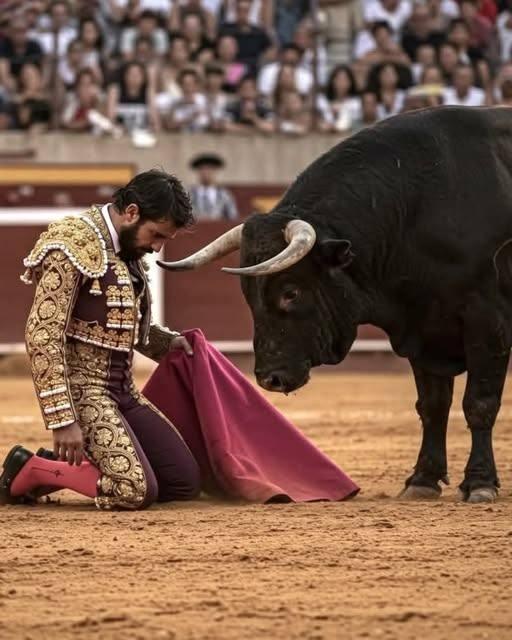
In the middle of a bullfight, matador Álvaro Múnera did something no one expected.
The crowd was roaring, the bull lunged with fury, and Álvaro raised his cape for the final strike. Then—he stopped.
Instead of finishing the fight, he lowered himself to the ground and simply sat. Silence fell over the arena.
Later, he explained: “I no longer saw danger in the horns. I only looked into his eyes. They weren’t filled with rage, but with innocence. He wasn’t attacking—he was pleading for his life. This wasn’t a fight… it was cruelty.”
In that moment, Múnera dropped the sword. He walked away from bullfighting forever.
But his transformation didn’t end there. Álvaro became an outspoken activist against animal cruelty. He spoke in schools, wrote, and joined organizations to defend animals.
He taught that empathy is stronger than tradition, and that true courage is refusing to harm—even when the world expects you to.
Critics called him a traitor to his culture, but he stood firm. Today, his story inspires thousands. The matador who once killed for applause now fights for compassion, showing that one moment of recognition—one glance into another being’s eyes—can change everything.