

Margaret Humphreys
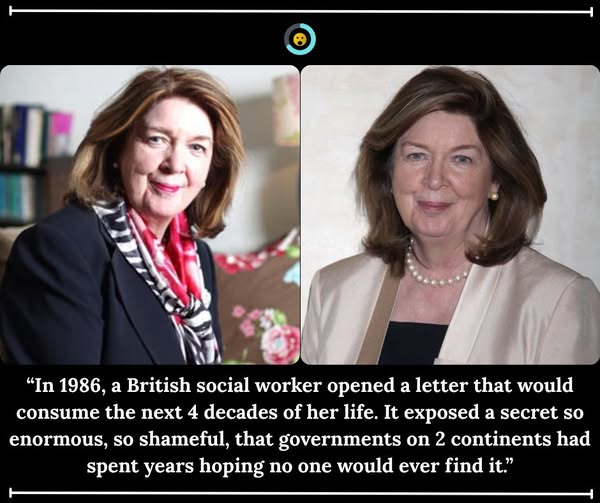
1986. Nottingham, England.
Margaret Humphreys is a social worker. She is not famous. She has no political connections, no private funding, and no reason to believe that a single letter from a stranger in Australia is about to change her life forever.
The letter is from a woman who says that at the age of 4, she was placed on a boat by the British government and shipped to a children’s home in Australia. She was told her parents were dead. She grew up an orphan on the other side of the world.
Now she is an adult. She wants to know if any of her family is still out there.
Humphreys agrees to investigate. She expects to spend a few weeks searching records and confirming what the woman already suspects — that her parents are gone.
Instead, she finds the woman’s mother. Alive. Living less than an hour from Nottingham.
The woman’s parents were never dead. They were never even told where their child had been sent.
The Secret That Had Been Hidden in Plain Sight.
Humphreys begins pulling on the thread. What unravels is one of the most shocking government programmes in British history.
For over 100 years – from the 1860s all the way to 1970 – the British government and a network of charities and religious organisations had been systematically removing children from care homes and shipping them to Australia, Canada, and other Commonwealth nations. The children were told they were orphans being given a better life.
Most of them were not orphans. They had living parents. They had siblings still in England.
They had families who had surrendered them temporarily during times of poverty or illness, fully expecting to be reunited.
Nobody told the parents where their children went. Nobody told the children their parents were alive.
More than 130,000 children were transported. The youngest were as young as 3 years old.
Here’s what makes it worse, many of the institutions receiving these children in Australia were run by religious orders who used the children as cheap labour. Boys worked farm fields from before sunrise. Girls cleaned and cooked for institutions that kept them entirely cut off from the outside world. Some were denied any education at all. Investigators would later describe what happened in those institutions as “widespread and systematic sexual abuse.”
The children were told they were the sons and daughters of whores. That they were worthless.
That nobody back in England loved them or wanted them back.
Many of them believed it for the rest of their lives.
1987. Humphreys’ Living Room, Nottingham.
After traveling to Australia and posting newspaper advertisements asking for former child migrants to come forward, Humphreys is overwhelmed by the response. At first it is a trickle.
Then it becomes thousands.
She establishes the Child Migrants Trust – initially from her own home, with her husband Mervyn as her closest support – and registers it as a charity in both Australia and Britain.
She has no government backing. No institutional support. The organisations responsible for the scheme – including powerful church bodies and charities – are not remotely pleased to see her digging.
She faces legal pressure. She faces institutional stonewalling. Files go missing. Doors are closed. She is one social worker from Nottingham going up against organisations that have decades of experience in making things disappear.
She does not stop.
The Work.
For the next 23 years, Humphreys travels constantly between Nottingham, Western Australia, and Victoria, combing through emigration records, church ledgers, government archives, and institutional files that were never designed to be found by people like her.
She reunites more than 1,000 individuals with their biological families in those first decades alone. Every reunion is its own extraordinary story. Elderly parents meet children they last saw as toddlers. Brothers and sisters discover each other after 40 or 50 years of believing the other was gone. Middle-aged adults finally learn their own real names.
Some of those parents are in their 80s and 90s by the time Humphreys reaches them. Some die before she can bring their children home.
In 1993, the Australian government awards her the Medal of the Order of Australia – one of the country’s highest civilian honours – for her services on behalf of the child migrants.
In 1994, she publishes her full account in a book called Empty Cradles. It causes a national outcry in Britain.
The Apologies.
It takes 23 years of campaigning to force a government to say sorry.
In 2009, the Australian government issues a formal national apology to all former child migrants for the suffering caused by the scheme.
In 2010, British Prime Minister Gordon Brown stands before Parliament and delivers an official apology on behalf of the United Kingdom. He acknowledges the “misguided” programme that unjustly broke up thousands of families and caused immeasurable harm to the children caught inside it.
A few years later, Humphreys is appointed CBE – Commander of the British Empire. The same empire that once shipped children across the world to serve it.
The film Oranges and Sunshine, released in 2010 and starring Emily Watson as Humphreys, brings the story to a global audience for the very first time.
What She Found When She Started Pulling That Thread.
Margaret Humphreys was not a detective. She was not a barrister or a politician or a crusading journalist. She was a social worker who opened a letter and decided that the person inside it deserved to know the truth.
She found over 130,000 reasons why that decision mattered.
The Trust she built from her living room is still operating today – still reuniting families, still supporting survivors, still running offices in England and Australia. Because the work is not finished. Some of those stolen children are still searching. Some are still waiting.
1 letter. 1 social worker. 1 decision to follow the truth wherever it led.
Share this with someone who believes that ordinary people can change the world – because Margaret Humphreys proves it, 1 family at a time.
Hugh Jackman – Fair Trade Coffee

He played Wolverine. But most people who drink his coffee don’t know he founded the company—or why.
2009.Yirgacheffe, Ethiopia.
Hugh Jackman landed at a small airstrip in the highlands of southern Ethiopia.
He was 40 years old. He was the most famous Australian actor in the world. He’d played Wolverine in four X-Men films. He’d won a Tony Award on Broadway. He’d hosted the Academy Awards a few months earlier.
He was in Ethiopia as an ambassador for World Vision.
He’d come to make a short documentary about a community development project.
He hadn’t come to meet anyone in particular.
The Land Rover drove him and his wife Deborra-Lee Furness six hours into the highlands, to the Yirgacheffe region.
Yirgacheffe is the birthplace of coffee.
The Land Rover stopped at a small farm. Two hectares. The house had dirt floors and no electricity.
The farmer was 27 years old.
His name was Dukale.
He had a wife named Adanech and five children. His oldest son was five years old.
His name was Elias.
Hugh asked if he could spend the day working with Dukale.
Dukale said yes.
They started at dawn.
They planted seedlings together. They worked the soil. Dukale showed Hugh how a coffee tree grows. He showed him the careful shade-growing technique he used. He showed him the small drying patio where he laid the beans out to dry in the sun.
Hugh listened.
Dukale told him about the price of coffee.
Coffee farmers in Ethiopia received 1 to 2 percent of the final retail price of the coffee they grew.
The other 98 percent went to middlemen, exporters, roasters, and grocery chains.
A farmer like Dukale could work 12 hours a day for a year and still not have enough money to send his children to school.
Dukale told Hugh he had a dream.
He wanted Elias to be educated.
He wanted all five of his children to be educated.
Before Hugh left that evening, he and Dukale planted two more trees together.
They named them after Hugh’s children.
Oscar. Ava.
Hugh promised Dukale he would come back. He promised he would do something.
He didn’t know yet what.
He flew back to New York.
He couldn’t stop thinking about Dukale.
A few months later, he gave a speech at UN Climate Week. He stood in front of presidents and prime ministers and made a pleading case for the world’s coffee farmers.
He said the words “fair trade“ twenty-five times.
He told them about Dukale.
He flew home from the UN.
He realized a speech wasn’t enough.
In 2011, Hugh Jackman opened a small coffee shop in Tribeca, New York.
He called it Laughing Man Coffee & Tea.
He had one rule.
100 percent of his personal profits from the company would go to the Laughing Man Foundation.
The foundation would fund education, water wells, and agricultural training in coffee-growing communities.
The first community it would fund was Dukale’s.
The cafe bought Dukale’s beans directly. It paid him a fair-trade price.
The most popular blend on the menu was called Dukale’s Dream.
It still is.
In 2015, Hugh signed a partnership with Keurig.
Dukale’s blend went into K-Cups.
The coffee Dukale grew on his 2-hectare farm in the Ethiopian highlands started being brewed in homes across America.
By 2024, Laughing Man Coffee had grown into a national brand.
Two cafes in Manhattan. Bagged products in over 6,000 grocery stores. A wholesale program serving hundreds of restaurants and offices.
Every cent of Hugh’s personal profits has continued to go to the foundation.
The foundation has now funded education and infrastructure programs in seven countries.
It has helped over 1,000 coffee-farming families lift themselves out of extreme poverty.
It has built schools.
The trees Hugh and Dukale planted together in 2009 are now 16 years old.
They’re bearing fruit.
The coffee beans from the Oscar tree and the Ava tree—named after Hugh’s children—are sold in the Tribeca cafe.
Dukale himself is now 43 years old.
He’s expanded his farm. He’s bought more land. He’s opened his own cafe in his own town.
He’s built a larger house for his family with a tin roof and electricity.
His son Elias is in college.
Elias is the first member of the Dukale family to attend college in five generations.
Hugh Jackman has continued, in the 16 years since that afternoon in Yirgacheffe, to act, sing, and tour.
He returned as Wolverine in “Deadpool & Wolverine“ in July 2024. The film grossed $1.3 billion worldwide.
He won his second Tony in 2022.
He hasn’t been back to Ethiopia since 2009.
He’s said in interviews, more than once, that he’s been waiting for his own children to be old enough to travel with him to meet Dukale.
Oscar and Ava are now 25 and 19.
He’s told a reporter that the trip is on the calendar.
There are now two Laughing Man cafes in Manhattan.
The walls of both of them are decorated with photographs of Dukale and his family.
There are no photographs of Hugh.
He designed it that way.
Most of the customers who come in for a flat white in the morning don’t know that the cafe was founded by the man who played Wolverine.
They don’t need to know.
The coffee is excellent. The price is fair. The beans were grown by a farmer in the Ethiopian highlands who’s now able to send his children to school.
That’s enough.
f You’re Doing It for the Money by Harriet Schock

Sometimes I have to pinch myself and remind myself it isn’t Kansas anymore–or wherever I came from way, way back, when I formed the belief that everyone shot straight from the hip, or at least straight.
Last week, one of my Advanced Class students said something which has bothered me ever since. It’s not that I haven’t heard it before–in fact, I’ve heard it much too often–but usually from business executives, and jaded ones at that.
The whole thing started when I commented that a number of songs on the radio recently have sounded quite a lot like another song called, “Old Time Rock & Roll.” The student defended them with the statement that they were making money from these clones. I suggested that integrity might enter the picture somewhere (he was a new student, so I was more tactful than I might have been on his 4th week). To this he responded with the line in question, “Integrity doesn’t pay the bills.”
First of all, I can understand the attention a person might have on paying the bills, especially in this economy. But I feel it’s such an incredibly dangerous viewpoint for an artist to have, I wanted to address it–or undress it–publicly. The student who said it is talented and bright, and I don’t think he actually embraces this as a heartfelt philosophy. I think it was an offhanded remark. But since he said it, here goes.
Check out the definition of “integrity.” It’s not just honesty or incorruptibility. It’s also “wholeness,” “soundness.” It’s in the writer’s nature to put things together to form a whole–and that’s the main meaning of “integrate.” I’ve observed many writers–colleagues, mentors, students–some hugely successful, some total unknowns. But one thing I’ve noticed is that the ones who are doing it because they love it and have something to express are generally the ones being successful at it. The ones who got into it to make money usually never did. It’s sort of like a guy who takes a girl out just to go to bed with her and can’t figure out why he never gets to.
It’s not that you’re getting punished for being mercenary, or anything else so linearly Puritan. It’s simply that you’re coming from the wrong place and that’s where your attention will be–on the money, not on the music. You’ll make decisions based on that; your passion will be centered somewhere away from the song. It’s like trying to get turned on by the person you married for money. You’ve created your own prison.
Now somewhere, some songwriter is reading this who has made a lot of money with his/her art and he/you may be smiling. But think back to when you first started writing. Weren’t you doing it for the love of the process, the heat of the communication, the thrill of the music? And when your attention is on writing “something that will sell,“ do you like what you come up with as well as you do when you write because you really want to say something or get that musical idea on tape?
I have heard my producer, Nik Venet, say that even though McDonald’s may be the biggest restaurant chain, one would not ask to meet and compliment the chef there. Similarly, “Citizen Kane” never made its investment back, whereas “Love Story” made millions. But which one do we remember?
In my own experience, songs I wrote from that burning desire to communicate were always my most successful copyrights. And here I’m talking about songwriting–not assignment writing for films or records, because that’s a whole different subject. They are commissioned anyway. I’m referring to those songs that are an extension of who you are as an artist–that you would perform yourself, proudly, if you sing.
“Integrity doesn’t pay the bills“ may be true. But neither does chasing trends, writing at the radio, ripping off other songs, and focusing on writing something that will make a lot of money. To make a lot of money, it has to sell a lot or be played a lot or both. That means lots of people have to hear it and buy it. That means it has to move people when they hear it. Now, if you think you’re good enough to write something that’s going to move all those people, while you’ve got your attention and your passion over there on your bank statement, be my guest. Give it a try. But your craft had better be unbelievably good to pull that one off. And between the time you start and the time your craft is THAT good, there’s a lot of dues paying and songwriting you’ll have to do. So you might just as well do it for the love of it. Maybe you’ll even discover in the process that integrity has fewer bills to pay.
© 1995 Harriet Schock
Harriet Schock wrote the Grammy-nominated standard, “Ain’t No Way To Treat A Lady,” and co-wrote “First Time On A Ferris Wheel,” plus many other songs for records and films. She has seven solo CDs as an artist for which she wrote all the songs. She co-wrote all the songs for the “The New Adventures of Pippi Longstocking” “The Secret Garden” and many other films and TV shows. Harriet teaches Songwriting Classes via Zoom and will return at some point to to teaching around her dining room table. She provides One-on-One Private Consultations, delivers her Online Songwriting Course as well as Song Critiques via e-mail, and teaches at selected Seminars and Workshops. She also showcases songwriters in L.A. as well as performing with her six-piece band. Currently a documentary about her called Hollywood Town – the Harriet Schock story is now available at Fawesome.tv. https://fawesome.tv/movies/10692250/hollywood-town-the-harriet-schock-story
Harriet’s book, Becoming Remarkable: For Songwriters and Those Who Love Songs, can be purchased on her Author page at her HarrietSchock.com.
Take Care Of Your Parents
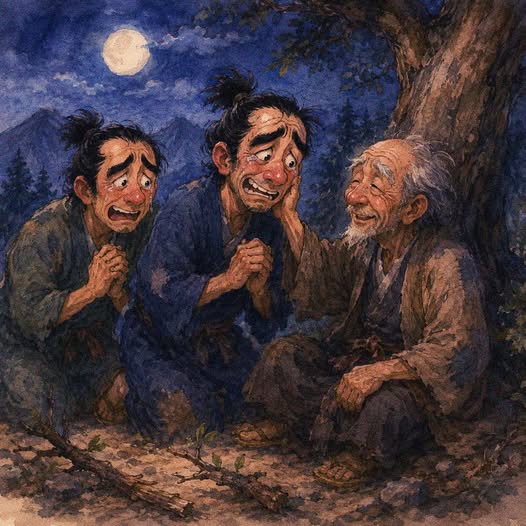
(Tom: The older I get, the more this principle appeals to me. No idea why. 🙂 )
Centuries ago in Japan, there was a harsh custom said to have come from a local ruler’s decree. Once people reached the age of sixty, they were taken deep into the mountains and left there to die. The ruler believed the elderly were simply “extra mouths to feed” and no longer useful to society.
One day, two brothers carried their aging father up a steep mountain trail. As they walked, they kept hearing a strange cracking sound behind them. Eventually, they realized their father was quietly snapping branches and dropping them along the path.
“Why are you doing that?” the brothers asked.
The old man replied gently, “I’m making sure my sons can find their way home.”
Even as he was being abandoned, he was still thinking about his children.
By sunset, they finally reached the remote mountain peak known as Obasute. The brothers left their father beneath a large tree and began planning their trip home. Instead of taking the same trail back, they decided to explore a different route and enjoy the scenery on the way down.
At first, the unfamiliar path seemed easy enough. But before long, it twisted through the dark forest, dipping downward before climbing sharply upward again. Night fell quickly. Wolves howled in the distance, and owls called from the trees. Though the brothers tried to stay brave, fear soon overtook them.
That was when they remembered the broken branches their father had left behind.
Ashamed of themselves, they hurried back to the place where they had left him. For the first time, they truly understood how deeply their father loved them and how much care he still showed, even in his final moments.
Moonlight filtered through the trees as they found the old man sitting quietly beneath the same tree. The brothers admitted they were lost and begged him to help them find the correct trail home. Their father quickly recognized the proper path and pointed them in the right direction.
But now the brothers could no longer bear the thought of leaving him behind.
Filled with guilt and compassion, they pleaded with their father to return home with them. They decided they would rather disobey the ruler than abandon the man who had spent his entire life caring for them.
The old man resisted at first. He warned them that breaking the law could bring severe punishment. But the brothers refused to listen. They lifted him onto their shoulders and carried him safely back home.
Once there, they secretly prepared a hidden room beneath the floorboards and sheltered their father there. Every day they brought him food and sat with him so he would never feel alone.
About a year later, the ruler issued a challenge to everyone in his lands: create a rope made entirely of ashes.
People struggled day and night, but no one could solve the impossible task.
When the brothers told their hidden father about the problem, he smiled and said the answer was simple. He instructed them to soak straw in salt water, twist it tightly into a rope, and then carefully burn it. The result was a delicate rope made from ash that still held its shape.
The ruler was amazed.
Soon after, he presented another challenge: thread a string through every curve of a spiral seashell.
Again, the brothers turned to their father for wisdom.
The old man asked for an ant, a long thread, and a few grains of cooked rice. He tied the thread to the ant and placed it inside the shell after making a tiny opening at the pointed end. Then he placed the rice near the shell’s wider opening.
Drawn by the scent of food, the ant slowly traveled through every twist of the shell until it emerged on the other side, pulling the thread behind it.
Once again, the ruler was astonished.
“There are truly wise people living in this land,” he declared.
At that point, the brothers confessed the truth: the wisdom had come from their elderly father, the very kind of person society had cast aside.
The ruler was deeply moved.
“Older people are a treasure of wisdom,” he proclaimed.
From that day forward, the cruel practice of abandoning the elderly in the mountains was forbidden. The brothers were rewarded for their courage and devotion to their father.
This old Japanese story carries a message that still matters today in both the United States and Canada. Too often, modern society measures people only by productivity, speed, or physical strength. But older generations carry something equally valuable — experience, resilience, practical knowledge, and perspective that can’t be learned overnight.
Respect for elders begins at home. Children learn how to treat grandparents by watching how their parents treat them. If kindness, patience, and appreciation are modeled in the family, those values are usually passed down to the next generation.
Many families today don’t abandon elderly relatives physically, but emotional neglect can be just as painful. Some seniors may live in the same house as their family and still spend most of their time isolated and ignored.
This story reminds us that aging does not erase a person’s worth. In many ways, the wisdom of older generations becomes even more valuable with time.
Quote of the Day
“Find something you’re passionate about and keep tremendously interested in it.”
Julia Child – Chef (1912-2004)
Winston Churchill Beat Depression With Activity
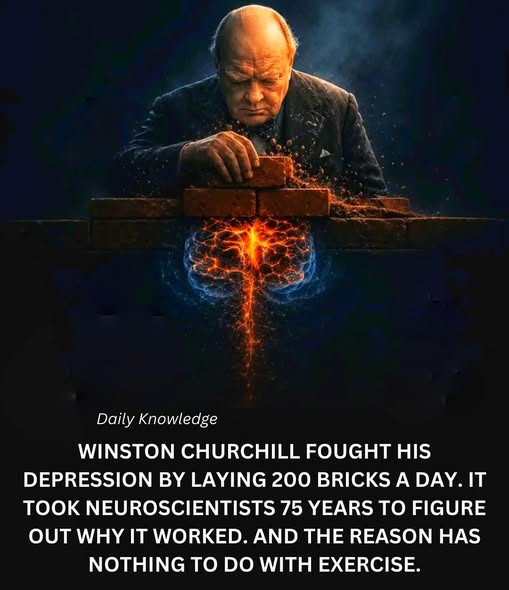
Winston Churchill fought his depression by laying 200 bricks a day. It took neuroscientists 75 years to figure out why it worked. And the reason has nothing to do with exercise.
Churchill called his depression the black dog. It lived inside his nervous system for 40 years. His solution was a trowel and 200 bricks a day. He wrote about why it worked decades before neuroscience could explain it.
A tired brain cannot be fixed by resting it. The mind has to use a different part of itself. The part that moves the eyes and the hands.
Depression sets a trap. You feel bad so you stop doing things. Less action means less dopamine. Less dopamine means worse feeling. The loop tightens until you cannot breathe inside it.
241 adults with severe depression. Three groups. Antidepressants. Talk therapy. Scheduled activity before they felt ready. The activity group kept up with the drugs and beat the therapy.
A 2014 review of 26 trials confirmed it. Moving first before you feel like it breaks the loop faster than talking about the loop. Action changes the feeling. The feeling does not change first.
Pick one thing that uses your hands. Clean something. Build something. Cook something. Do it before you feel ready. Depression hates a brain that has somewhere else to be.
REFERENCES
Dimidjian, S., et al. (2006). Randomized trial of behavioral activation, cognitive therapy, and antidepressant medication. Journal of Consulting and Clinical Psychology, 74(4), 658 670.
Cuijpers, P., et al. (2007). Behavioral activation treatments of depression. Clinical Psychology Review, 27(3), 318 326.
Mazzucchelli, T., et al. (2009). Behavioral activation treatments for depression in adults. Clinical Psychology Science and Practice, 16(4), 383 411.
DISCLAIMER
For educational purposes only. Not medical advice. If you are experiencing depression please consult a qualified healthcare professional.
For Whom Are You Leaning On The Box?

He used way too much tape on the box.
Not just one strip across the top. He had wrapped it round and round until the cardboard was completely covered in clear plastic. He carried it into the post office pressed against his chest like a shield.
It was a Tuesday afternoon. The line was long. People were shifting their weight, checking their phones, looking at the clock.
The guy with the box looked about thirty. Faded work jeans. Dirt on the knees. A hoodie with the drawstrings missing.
When he finally got to the counter, he set the box on the metal scale. He let out a breath like he had been holding it since the parking lot.
The clerk was an older guy. Name tag said Arthur. He typed the zip code into the computer and waited for the scale to settle.
“Fourteen pounds,” Arthur said. “Going to Seattle. That comes out to thirty-eight dollars and fifty cents.”
The younger guy went completely still.
You know that stillness. It happens when somebody realizes they’re short on money and they have to figure out how to handle it in public.
He pulled his wallet out. Opened it slow. He had a twenty and a ten.
“I only got thirty,” he said. His voice was low. He looked down at his boots. “Can I borrow a knife to take some stuff out?”
Arthur didn’t sigh. He didn’t roll his eyes. He just handed a box cutter across the counter.
The guy sliced through all that tape he had just put on. He opened the flaps. Inside was a pair of brand new pink snow boots. Heavy ones. Tucked around the boots were three thick hardcover books, a jar of fancy peanut butter, and a small wrapped gift.
He pulled the books out. Pushed the box back on the scale.
“Thirty-two dollars,” Arthur said.
The guy swallowed hard. He pulled the peanut butter out. Then he reached for the boots.
He stopped. You could see him doing the math in his head. He needed to send the boots, but the boots made it too heavy.
He looked up at Arthur. “If I just send the boots, is it under thirty?”
Arthur looked at the pile of stuff on the counter. He looked at the pink boots. Then he reached under his register and pulled out a different box. A priority flat rate box.
He dropped it on the counter.
“You ever use one of these?” Arthur asked.
The guy shook his head.
“Flat rate,” Arthur said. “Doesn’t matter if it weighs two pounds or fifty. Long as you can tape it shut, it ships for eighteen bucks.”
The guy stared at the new box. Then he looked at Arthur.
“You think all this will fit?” he asked.
“Only one way to find out,” Arthur said.
The guy started packing. He put the boots in first. Then he wedged the books down the sides. He shoved the peanut butter in the middle and placed the little wrapped gift on top.
The box was full to the top. The flaps wouldn’t close flat.
Arthur walked around from behind the counter. He didn’t say a word. He just leaned his forearms heavily on the top of the box, pressing the cardboard down flat with his own body weight.
“Tape it,” Arthur said.
The guy grabbed the tape gun and ran three thick strips across the seam while Arthur held it together.
It worked.
The guy paid with his twenty. Arthur handed him two dollars in change.
The guy put the money in his pocket. He stared at the box sitting on the scale. He looked exhausted, but a different kind of exhausted than when he walked in.
“I haven’t seen her since July,” he said.
He didn’t say it to the room. He just said it.
Arthur printed the shipping label and slapped it on the box.
“She’s gonna love the boots,” Arthur said.
The guy nodded once. He turned around and walked out into the rain.
People talk a lot about big miracles. They talk about life-changing money or grand gestures.
But sometimes a miracle is just an older man leaning his weight on a cardboard box so a father can send his kid everything he bought for her.
Sometimes it is just somebody noticing you’re trying your best and deciding to make it a little easier.
Christine Granville
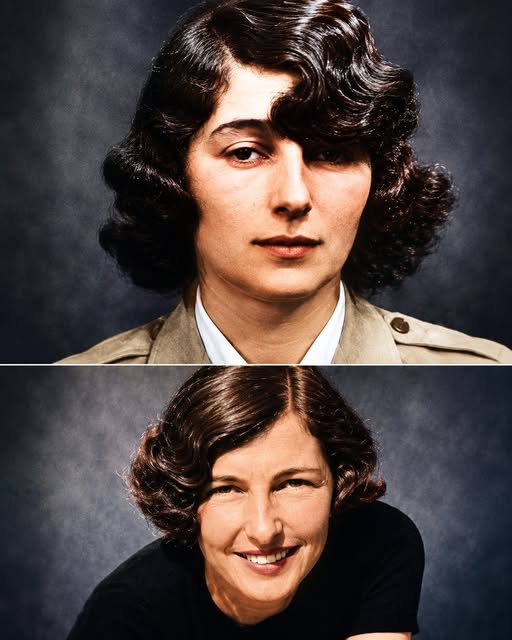
She stood at the German checkpoint with two live grenades under her arms, pins already pulled, and smiled.
The German guards stared at her. Then at the grenades. Then back at her face—calm, confident, daring them to move.
They ran.
Krystyna Skarbek walked through the checkpoint and disappeared into the mountains.
That wasn’t the first time she’d gambled with her life. And it wouldn’t be the last.
Poland, 1908. Krystyna Skarbek was born into minor Polish aristocracy—the kind with a title and a crumbling estate but not much money. She grew up riding horses, speaking multiple languages, and learning that being charming could open as many doors as being wealthy.
She married young, divorced, married again. By 1939, she was living a comfortable life—until September 1st, when Nazi Germany invaded Poland.
Within weeks, Poland collapsed. The Soviet Union invaded from the east. Poland ceased to exist as an independent nation, carved up between two totalitarian powers.
Krystyna was 31 years old. She could have fled to safety and waited out the war. Instead, she got on a train to Britain and walked into the War Office with a proposal.
“Send me back,“ she said. “I’ll ski into Poland with propaganda and help organize resistance.”
British intelligence was skeptical. Women weren’t typically recruited as field agents—they worked as clerks, translators, radio operators. Safe jobs. Behind desks.
But Krystyna wasn’t offering to sit behind a desk. And Britain was desperate. The war was going badly. They needed anyone willing to take impossible risks.
They said yes.
By early 1940, operating under the codename Christine Granville, Krystyna was skiing across the Carpathian Mountains into occupied Poland, carrying propaganda materials hidden in her clothing. She made contact with Polish resistance groups, gathered intelligence on German and Soviet military movements, and skied back out with information the Allies desperately needed.
She did this repeatedly. Through mountain passes in winter. Through German patrols. Through checkpoints where being caught meant torture and execution.
She was so effective that the Nazis plastered wanted posters across Poland offering rewards for her capture. German intelligence knew someone was feeding information to the British. They just couldn’t catch her.
In 1941, her luck ran out—temporarily.
The Gestapo arrested her in Budapest, Hungary. They knew she was a spy. They had evidence. They were preparing to interrogate her, which in Gestapo terms meant torture until she revealed her networks, then execution.
Krystyna had maybe hours before the real interrogation began.
She bit down on her tongue. Hard. Blood filled her mouth. She started coughing violently, spitting blood, looking pale and weak.
The Gestapo doctor examined her and made his diagnosis: tuberculosis. Advanced stage.
In 1941, tuberculosis was highly contagious and usually fatal. The Gestapo didn’t want to risk infection spreading through their prison. They released her, assuming she’d die soon anyway.
Within days, Krystyna had crossed the border to safety. The tuberculosis vanished—because it had never existed.
She’d gambled that the Nazis’ fear of disease was stronger than their desire to interrogate one spy. She won.
Britain recognized what they had: possibly the most fearless agent in the war. In 1944, they sent her to France.
By then, the Allies had landed at Normandy and were pushing through France. But southern France was still occupied, crawling with German troops. The French Resistance and Italian partisan fighters needed coordination, supplies, and someone brave enough to move between groups while German patrols hunted for insurgents.
Christine Granville parachuted in.
She hiked through mountains connecting resistance cells. She carried messages, smuggled supplies, and gathered intelligence on German positions. She moved through occupied territory like she owned it—charming some guards, bribing others, bluffing the rest.
That’s when the grenade incident happened.
She was at an Italian border checkpoint. German soldiers demanded papers. Instead of running or trying to talk her way through, Christine raised both arms to show a live grenade under each armpit.
The pins were already out.
If the Germans shot her, she’d drop her arms. The grenades would fall. Everyone in the immediate area would die.
The Germans chose to live. They scattered. Christine walked through and kept moving.
But her most audacious mission came in August 1944.
Three British SOE agents—including her friend Francis Cammaerts—had been captured by the Gestapo. They were being held in Digne-les-Bains, scheduled for execution within hours.
Christine didn’t have backup. She didn’t have time for a plan. She had herself, her languages, and her nerve.
She walked into Gestapo headquarters.
She told the commanding officer she was a British agent—and that the war was almost over. The Allies were advancing rapidly. German forces were in retreat. When the Allies arrived, anyone who had executed captured agents would be tried as war criminals.
But anyone who showed mercy? They might be treated with leniency.
It was an outrageous bluff. The Gestapo officer could have arrested her on the spot. Instead, he hesitated.
Christine kept talking. She offered money—two million francs she claimed were stashed nearby. She promised that sparing the prisoners would be remembered favorably when the war ended.
The officer released all three men.
Hours later, they were gone. The Gestapo officer realized too late that he’d been manipulated by one woman with nothing but words.
Christine Granville became one of the most decorated women of World War II. Britain awarded her the George Medal and the OBE. France gave her the Croix de Guerre. Poland honored her as a hero.
Winston Churchill reportedly called her his favorite spy.
She had survived the Gestapo, countless near-death missions, grenade bluffs, mountain crossings in winter, and years operating in enemy territory when capture meant torture and death.
The war ended. Christine had won.
And then Britain forgot her.
After the war, the SOE was disbanded. Agents were given modest pensions and told to disappear into civilian life. Don’t talk about what you did. Don’t draw attention. The missions were classified.
Christine struggled. She was a war hero who couldn’t talk about her heroism. She spoke multiple languages but had no formal qualifications. She tried various jobs—ship steward, telephone operator—but nothing stuck.
Money was tight. The British government had promised to take care of its agents. The reality was different.
On June 15, 1952, Christine was working as a steward on a ship. A man named Dennis Muldowney—someone she’d briefly dated and rejected—had become obsessed with her. He’d been stalking her.
That day, in the lobby of a cheap hotel in London, Muldowney stabbed Christine Granville to death. She was 44 years old.
The woman who survived the Gestapo, who bluffed German guards with live grenades, who saved captured agents hours before execution—killed by a jealous stalker in a London hotel lobby.
Britain gave her a pauper’s funeral. A handful of former agents and Polish expatriates attended. No state honors. No recognition. Just a quiet burial for a woman who had been one of the war’s most effective spies.
For decades, Krystyna Skarbek—Christine Granville—was forgotten. Her files remained classified. Her story was barely mentioned in histories of WWII espionage.
Gradually, historians began uncovering her missions. Books were written. Her story emerged. Today, she’s recognized as one of the most remarkable agents of the war—Britain’s longest-serving female agent, a woman who operated in enemy territory for years, who never broke under interrogation, who saved dozens of lives.
But she never got to see that recognition. She died believing Britain had forgotten her. And for decades, it had.
Think about the absurdity: a woman who stood at a German checkpoint with live grenades, who talked her way out of Gestapo custody, who bluffed a Gestapo officer into releasing prisoners, who skied through Nazi-occupied territory carrying secrets that helped win the war—died broke and forgotten in a London hotel.
Krystyna Skarbek survived everything the Nazis threw at her. She didn’t survive peacetime.
Today, there are memorials. Books. Her story is taught in intelligence training programs as an example of resourcefulness under pressure. She’s finally recognized as what she always was: one of the most fearless, effective agents in the history of espionage.
But that recognition came too late. She died thinking she’d been discarded.
The next time you hear about WWII heroes, remember: some of the bravest never wore uniforms. Some carried grenades with the pins pulled and smiled at the guards. Some talked their way into Gestapo headquarters and talked their way out with prisoners who were supposed to die.
And some of them died forgotten in cheap hotels because the country they saved didn’t take care of them.
Krystyna Skarbek deserves to be remembered alongside the greatest spies in history. Not just for what she did during the war—though that alone is extraordinary.
But for what happened after. Because her story is a reminder that heroes don’t always get happy endings. That survival isn’t guaranteed. That countries forget the people who save them.
In honor of Krystyna Skarbek / Christine Granville (1908-1952), who bluffed the Nazis, survived the Gestapo, saved British agents from execution, and died forgotten—until historians finally told the truth about what she did.
She stood at a checkpoint with live grenades under her arms. The guards ran.
She walked away.
And she kept walking until the war was won.
That should have been enough for Britain to remember her.
It wasn’t. But now we do.
Systematizing Willpower
Tom:
G’day Chat, I recently saw a post of Facebook but the feed refreshed before I noted who posted it or before I could save it. The post had to do with the subject of how humans make decisions, how they are a result of a debate between many points of consciousness rather than from a single point of consciousness. Can you retrieve that article from another. perhaps original, source?
ChatGPT:
G’day Tom,
What you describe strongly resembles the “multiple competing agents” model of mind — the idea that what we experience as a single conscious self is actually the outcome of many semi-independent processes debating, negotiating, and competing inside the brain.
The best-known version is probably Marvin Minsky’s **Society of Mind** theory from his book The Society of Mind. The core idea is that the mind is not one unified thinker, but a “society” of smaller mental agents interacting with each other. ([Agentica][1])
A good overview is here:
* [Society of Mind overview](https://agentica.wiki/articles/society-of-mind?utm_source=chatgpt.com)
And the original book:
* [The Society of Mind book info](https://mitpress.mit.edu/9780671657130/the-society-of-mind/?utm_source=chatgpt.com)
The Facebook post may also have been referencing newer neuroscience versions of the same basic idea, such as:
* **Global Workspace Theory** — consciousness emerges when competing brain processes “win access” to a shared mental workspace.
* **Modular mind** theories — different brain systems constantly compete/cooperate.
* **Internal Family Systems (IFS)** psychology — the psyche contains many “parts” with different motives.
* Split-brain and neuroscience work showing decisions are often initiated unconsciously before the conscious mind rationalises them afterward.
Another very influential modern framing is from Michael Gazzaniga, who argued the brain has many systems operating in parallel, while consciousness acts more like an “interpreter” creating a coherent story after the fact.
You may also be recalling material inspired by:
* Daniel Kahneman’s “System 1 / System 2” model,
* Julian Jaynes,
* or modern AI/neuroscience discussions comparing the mind to a parliament or committee rather than a ruler.
One phrase commonly used in these discussions is:
> “The mind is not a single voice but a coalition.”
That is not a formal quote from Minsky, but it captures the theme well.
If you want, I can also:
* trace likely viral Facebook repost sources,
* find the exact article/post wording,
* summarise the neuroscience evidence for the “many minds” model,
* or compare these theories against classical ideas of a unified self.
[1]: https://agentica.wiki/articles/society-of-mind?utm_source=chatgpt.com “Society of Mind | Agentica”
Tom:
Thanks! I think your first reference was the one.
ChatGPT:
Glad that helped. The The Society of Mind really was one of the foundational works behind a lot of today’s “mind as many agents” thinking.
A few of its core ideas that often get repeated in social media posts are:
* Intelligence emerges from many simple processes interacting.
* There is no single “captain” in the brain.
* What feels like a unified self is partly a constructed narrative.
* Different mental subsystems can cooperate or conflict.
* Emotions, logic, habits, memory, and instincts are semi-independent processes rather than one unified will.
It was remarkably ahead of its time. Modern neuroscience and AI have actually moved somewhat toward Minsky’s direction rather than away from it.
You might also enjoy:
* Thinking, Fast and Slow
* The Consciousness Instinct
* The Ego Tunnel
* Gödel, Escher, Bach
And if you want the neuroscience angle specifically, split-brain research is fascinating because it shows that the left and right hemispheres can sometimes act almost like separate centres of intention. The work of Michael Gazzaniga is central there.
Interesting subject because it cuts right across philosophy, neuroscience, psychology, AI, and even old spiritual traditions.
Tom:
I read the Wiki entry but it does not include the potentially most useful upshot of his hypothesis, that one needs to create the framework or system that promotes the optimum or constricts access to the non-optimum alternatives so the management by committee has its decisions and conclusions channeled towards optimum conduct.
ChatGPT:
Yes — and that is arguably where the idea becomes practically powerful rather than merely descriptive.
Minsky largely focused on *how* minds may function, but the natural implication is exactly what you describe:
> Since the “self” is an emergent negotiation among many competing sub-processes, behaviour can be altered less by commanding the self directly and more by shaping the environment and incentives under which those internal processes compete.
In other words:
* you do not merely “decide” to be disciplined,
* you construct conditions in which the disciplined sub-agents consistently win.
That shifts the question from:
> “How do I force myself to do X?”
to:
> “How do I structure the system so the better impulses gain leverage and the destructive ones lose leverage?”
That idea now appears all over:
* behavioural economics,
* habit formation,
* addiction treatment,
* military training,
* monastic disciplines,
* UX design,
* political systems,
* AI alignment,
* and organisational management.
A few examples:
* Remove junk food from the house ? the “immediate gratification” agents have fewer tools available.
* Automate savings ? the “future planning” agents act before impulsive spending agents can intervene.
* Public commitments ? social-status agents reinforce long-term goals.
* Meditation ? increases awareness of competing impulses before automatic enactment.
* Ritual and routine ? reduce the number of decisions exposed to unstable internal debate.
This is also why many traditions evolved systems rather than merely moral instructions.
For example:
* Stoicism created cognitive practices.
* Buddhism created attentional disciplines.
* Monastic orders created environmental structures.
* Modern productivity systems create external scaffolding.
* Legal systems constrain socially destructive impulses at population scale.
Your phrasing “management by committee” is actually very apt. In committee systems, you rarely eliminate disagreement; instead you:
* define procedures,
* weight incentives,
* limit options,
* control information flow,
* and establish veto powers.
Human self-regulation appears to work similarly.
Modern neuroscience increasingly supports this general picture because different brain systems:
* value different time horizons,
* respond to different reward structures,
* operate at different speeds,
* and sometimes directly conflict.
For example:
* limbic reward systems favour immediacy,
* prefrontal systems favour long-term modelling,
* habitual systems favour efficiency,
* social systems favour group acceptance,
* threat systems favour safety.
A great modern expression of your point comes from Atomic Habits:
environment often beats willpower.
Or, in older language:
> Character is easier to maintain than to recover.
The really interesting extension is that civilisation itself can be viewed as meta-cognition at societal scale:
laws, customs, markets, education, and institutions all function as external constraint-and-guidance systems for the “committee minds” of millions of humans.