

Occupy The Beauty Of Life

Pyramids
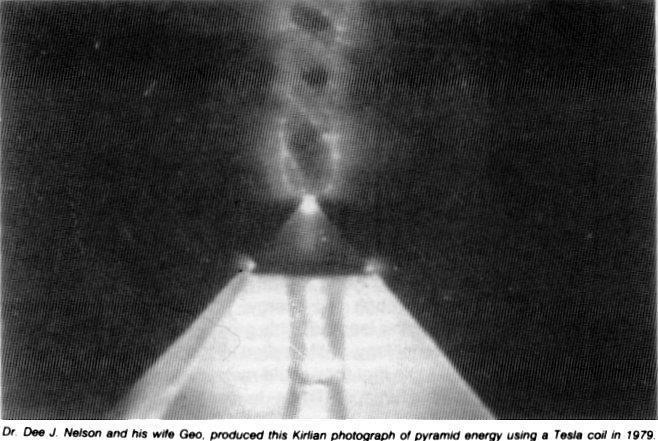
Pyramids are geometric healing machines which harness natural energy as seen here using Kirlian photography. This energy allows them to do what we would call “miracles”. For instance, Karel Drbal was awarded Czechoslovakian patent number 91304 for his “Cheops Pyramid Razor Blade Sharpener” in 1959 when he discovered that his razor blades would sharpen themselves when put into a pyramid shaped container. This was proved in 2001 by Dr. Krasnoholovets when scanning-electron microscope photography confirmed that the molecular structure of the razor-blade was actually changing.
Many pyramids were build in Russia and the Ukraine by former workers of the military industrial complex of the Soviet Union after the fall of the Iron Curtain, were countless studies were done. Today there are more than 50 built worldwide out of PVC plastic and fiberglass. Below is a list of findings that were discovered through pyramid experiments. These experiments were scientifically controlled, and conducted by professors from the Russian Academy of Medical Science, the Russian R&D Institute of Pediatrics, the Gubkin Moscow Academy of Oil and Gas, and the All-Russian Electrotechnical Institute just to name a few.
These incredible studies have found:
– storing a medical drug in the pyramid (venoglobin) caused the drug to becomes 3 times more effective
– when mice were given the same dose of the same carcinogen, 60% of the mice who were put into the pyramid survived whereas only 7% of the mice in the control group survived. Poisons and viruses became less harmful and toxic
– when built over an oil caused 30% increase in oil production with cleaner oil
– seeds kept in the pyramid for a period of time before being planted experienced a 20-100% increase in crop productivity
– animals experience a higher blood cell count, and food tasted better and was preserved longer in a pyramid
– water purifies itself when put inside of a pyramid
– ozone holes above the pyramid healed themselves, new streams developed, and supposed extinct flowers began growing around the area of the pyramid
– the molecular structure of rocks changed when put into the center of the pyramid and became white at the top. This was repeated 40 different times with 40 different rocks.
– prison cells that were build out of granite rocks that were left inside a pyramid resulted in improved behaviour and reduced criminal activity
Life apparently has an energy that supports its own existence, and this energy appears to be harnessed by the pyramid. Perhaps it acts like a funnel for universal energy to flow through. Is this why ancient may was obsessed with building pyramids and carving them into mountains wherever they could? Where did they get this information? And why aren’t we using this technology today to help the planet?
http://www.gizapyramid.com/
http://www.gizapyramid.com/DrV-article.htm
Diet Soda Dangers
“Have a Coke and a smile” was a near omnipresent slogan back in the early 1980s. But when it’s diet soda that’s being regularly consumed, a frown might be a more likely outcome than a smile. That’s because a recent study has found a link between drinking diet soda or diet fruit drinks and an increased risk of developing depression.
http://www.jonbarron.org/article/diet-soda-dangers
15 year old invents New Method of Diagnosing Cancer
Jack Andraka is a fifteen year old freshman in high school. He developed a paper sensor that could detect pancreatic, ovarian and lung cancer in five minutes for as little as 3 cents. He conducted his research at John Hopkins University. This research could change the face of cancer and promote early detection. To think that scientists spending millions of dollars to find more about cancer, a 15 year old finds out by doing a science fair project!
Jack’s method is 168 times FASTER, 26000 times CHEAPER, 400 times MORE SENSITIVE, has 90% SUCCESS RATE. He has been selected as the Intel 2012 ISEF winner and has won awards at multiple national and international math competitions. Jack is on the national junior whitewater kayaking team and enjoys playing with his dog and folding origami.
http://www.social-consciousness.com/2013/02/fifteen-year-old-invents-cancer-diagnosing-method.html
Dear Friend of Whales, Dolphins and other Sea Creatures…
31 MILLION incidents of harm is not coexistence it is unilateral destruction!
Please join me in doing something about stopping this travesty.
Dear Friend of Whales, Dolphins and other Sea Creatures,
Despite the outcry of 625,000 of us who signed the previous petitions and are passionate about saving the last of the endangered whales, as well as thousands of other whales, dolphins and sea creatures, the Department of Fisheries/NOAA has decided to allow the US Navy to proceed with their plans to decimate our ocean populations with sonar sounds, exploding bombs and sinking of ships. In the Navy’s estimation there will be 31 million incidents of harm over the next 5 years to our ocean friends. The harm can range from disrupting their migratory patterns, ability to get food, communicate with their young, permanent hearing loss or bleeding to death. This figure is staggering!
This is our last opportunity to have our voices heard; to let them know we are not going to quietly go away, and that we are aware of their irresponsible decision. Our strength lies in our numbers when we act together. If each one of us shares this information with a few friends, we can create a groundswell of people willing to say “that’s enough”!
Please sign this petition, post it on social media sites and get at least 3 or more of your friends to sign. We need to make this a major media event. If we stand by and do nothing we may loose a vital part of our natural ocean species. Is one click of your mouse too much to ask to save our oceans? Department of Fisheries/NOAA is accepting comments only until March 11, 2013. Please act now by clicking on the link to add your voice.
http://signon.org/sign/stop-us-navy-plans-to-1?mailing_id=8845&source=s.icn.em.cr&r_by=2197384
Thank you,
Lyndia Storey, Kim McDermott, Lance Leonard, Wes Jordan
The Whale and Dolphin Watch Team
How To Avoid Alzheimer's and Dementia
Just listened to a sales pitch for Dr Russell Blaycock’s Wellness Report. He provides a lot of good data (much of it I have heard before from other sources) on how to avoid Alzheimer’s and dementia in his sales pitch.
http://w3.newsmax.com/blaylock/video_brain_alz.cfm
Stop Buying Foods Containing Palm Oil!
Check this out:
http://www.saynotopalmoil.com/
Timing of first menstrual cycle may be predictor of cardiovascular disease risk in women
The timing of the first menstrual period is a predictor of weight gain and heart attack risk factors. The earlier a girl has her first period predicts greater weight gain. Other studies have also found an increased risk of breast cancer with early menstrual cycles. The early menstrual cycles appear to be linked with an increased exposure to hormones including estrogen mimicking hormones like phthalates and BPA
http://www.stonehearthnewsletters.com/timing-of-first-menstrual-cycle-may-be-predictor-of-cardiovascular-disease-risk-in-women/womens-health-menstruation/
Low vitamin D levels linked to high risk of premenopausal breast cancer
http://www.sciencedaily.com/releases/2013/01/130124183446.htm
http://www.sciencedaily.com/releases/2013/01/130124183446.htm