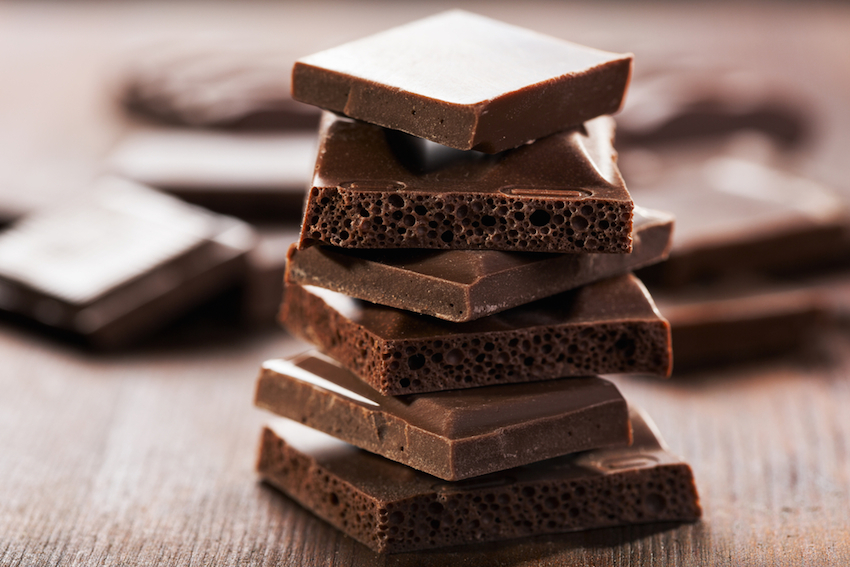
Are you an ice muncher? A chocolate vacuum? A slave to the salty chips? Coffee-holic? Listening to your cravings before you munch away on a poor food choice is super important to our overall health as cravings are often a major indicator of a nutritional deficiency and you may be surprised to find that a healthy alternative may be close by.
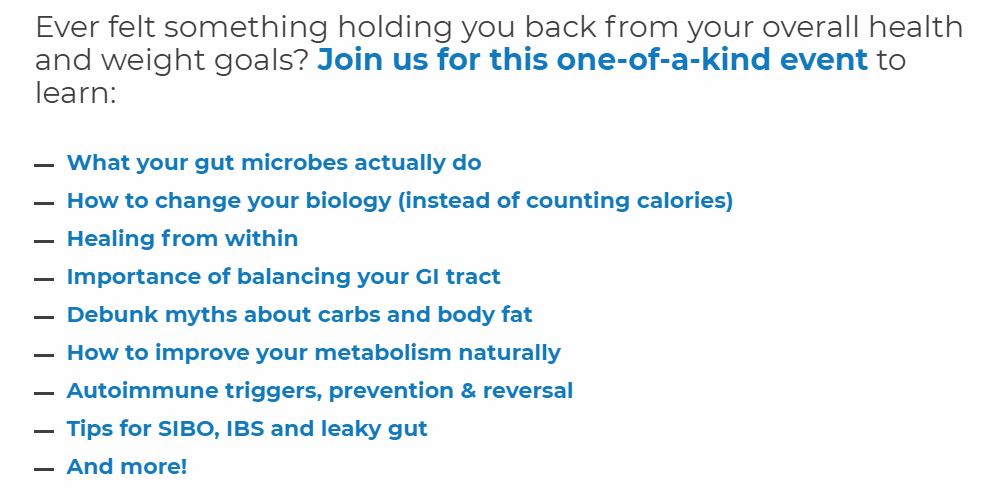
Researchers are increasingly convinced that important hidden players lurk in your bowels: trillions of gut microbes. Keeping them happy is the elusive secret to weight control, increased energy and brain function, and the key to preventing (and reversing) diseases to live healthier and happier lives.
The Slim Gut Summit will share the latest research, practical healing steps, everyday habits and activities that cause your gut to function sub-optimally. And, it also teaches effective and simple tips and tools to help your body to find its natural weight setpoint and, more importantly, benefit from less inflammation, balanced hormones, more energy, better brain health and more!
If you have been on my mailing list for anylength of time you will know I use and sell a water filter that removes the nasties, ionaizes, alkalises the water and adds hydrogen. Today I received this in an email. If you want to take your water quality up a notch, come back to me!
Here’s a weird one for you.
When my good friend and fellow filmmaker, Trevor King, was filming interviews last year for his docu-series, Live Longer, Feel Better!, an unusual pattern started to emerge. He began to notice something unexpected was mentioned in dozens of interviews.
Many of the world-famous doctors and experts he was interviewing would talk about the benefits of drinking a certain kind of water, freshly infused with a common element.
Then he started to see these machines in their homes too…
People like Ty Bollinger from The Truth About Cancer, Robert Scott Bell, Dr. Joe Mercola, Dr. Daryl Giofre, Dr. V from Breast Cancer Conqueror, Dr. Tony Jiminez. It was a common thread that tied them all together. Almost like a secret society — they knew something the rest of us didn’t. 🙂
That weird something? Hydrogen.
They all talked about the amazing benefits of using it regularly.
And all they had to do was drink the water from this “fountain of health” as one of them called it. Trevor himself tasted the water in Ty Bollinger’s home near Nashville, and said it tasted incredible. Like water SHOULD taste, if you know what I mean. I actually tasted the water in Ty Bollinger’s home also, and I had the same eye-opening experience that Trevor had.
Here’s some things you may not know about Hydrogen and Hydrogen water:
The Molecular Hydrogen machine has been classed as a medical device in  Japan for many years, where it’s known as “Shin'nooru solution”

“The most exciting and profoundly effective anti-oxidant available today” – Dr Joseph Mercola

Hydrogen Water has restored the natural growth of brain cells in certain studies (think dementia)

Drinking hydrogen water has been shown to decrease cholesterol and improve glucose tolerance in a human study (think diabetes)
In one study, 20 patients with early rheumatoid arthritis drank half a litre (17 ounces)  per day of hydrogen water for 4 weeks. By the end of the study, all patients were in remission.
I could go on and on. There are currently almost 1,000 studies showing that hydrogen water helps relieve symptoms for over 150 diseases.
As you know, my own docu-series have focused on the critical importance of doing a detox — removing the chemicals and heavy metal toxins that have accumulated in your body over many years. Well, having the right water is totally crucial in that process. Totally pure, well-filtered water is a key building block to health — and adding Hydrogen “supercharges” that water into something on a different level.
I’m joining Trevor next Wednesday, July 31st at 6pm EST for a Hydrogen Water class to explain the benefits of this amazing water, and I’d love for you to join us. As well as myself, Trevor has invited the inventor of this amazing machine, and he has gone out and interviewed a few experts to find out what makes this so special.
These classes are always a lot of fun — some people attend them more than once — and you will have an opportunity to ask your own questions in the Q&A if you can join us live.
Registering and joining us is — of course — 100% free.
Looking forward to seeing you there,
Jonathan Otto
PS. We’ve also arranged a special “Health Secret” group buy with Paul (the inventor) to make some of the machines available on the night at a very special price if you want to experience the exciting health benefits for yourself!
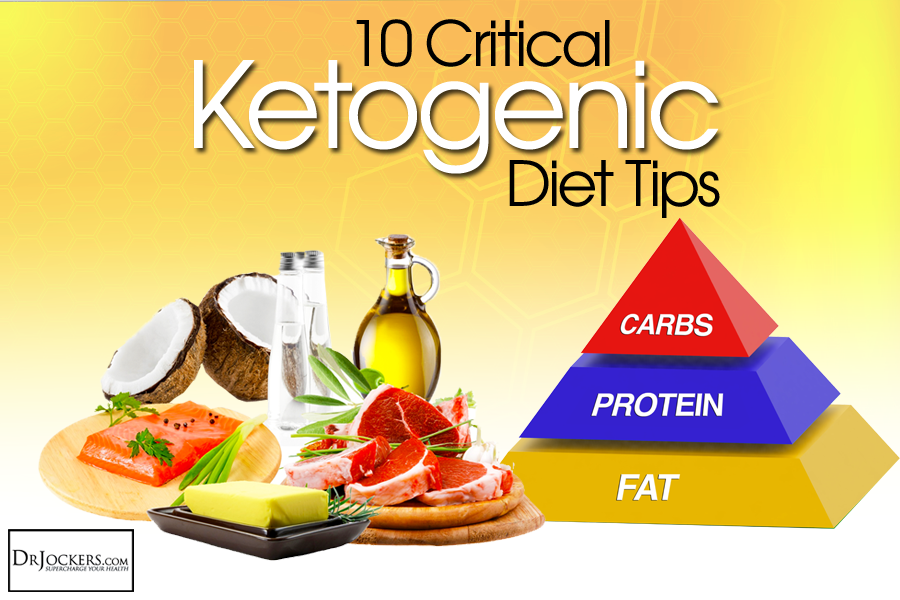
A ketogenic diet is a very low carbohydrate, moderate protein and high fat based nutrition plan. A ketogenic diet trains the individual’s metabolism to run off of fatty acids or ketone bodies. This is called fat adapted, when the body has adapted to run off of fatty acids/ketones at rest.
This nutrition plan has been shown to improve insulin sensitivity and reduce inflammation. This leads to reduced risk of chronic disease as well as improved muscle development and fat metabolism.
I personally recommend a cyclic ketogenic diet for most of my clients where you go low-carb for 3 days and then have a slightly higher carbohydrate day, followed by 3 lower carb days. This cycles the body in and out of a state of ketosis and is beneficial for hormone balance while keeping inflammatory levels very low.
The biggest challenge with this nutrition plan is to get into and maintain the state of fat adaption. Here are several advanced ketogenic diet tips to get into and maintain ketosis.
Turmeric, ginger, leafy greens, beans and berries all have properties that help prevent diagetes.
If you or someone you know is battling diabetes and obesity, here is a great resource to aid their cause: https://go.ithriveseries.com/ 60 speakers in a 9 part video series.
Do you ever do a fire drill at your home?
Do you have a Primary Exit and a Backup Exit in case the Primary one is blocked?
Do you have an Primary and Backup emergency assemply point?
As Jack Reacher says, “Hope for the best, plan for the worst.”
Do you have an ICE (In Case of Emergency) number in your phone contact list?
THIS and pollution deserve our attention more than climate change! If we can get the crazies to stop spraying chemtrails, the greedy to stop destroying and polluting habitat, the depressed to go for a walk instead of popping crazy pills and pissing drugs into the waterways and the awake to enlighten the sleeping, we have a chance!
I received a promotion for some brain nutrient supplements that contains some interesting data that might expand your understanding of why I include certain nutrients in my personal supplement regime and Healthelicious products. Here is the text from the email and the link to the presentation.
In 1921, an Austrian scientist named Otto Loewi abruptly woke up in the middle of the night. He jotted down a few notes on a tiny slip of paper before falling asleep again.
In the morning, he had a sense that he’d written down something important, but he couldn’t decipher his own scrawled message.
The next night, at 3 A.M., the idea returned. He dreamed about an experiment to determine whether chemicals could be transmitted between nerve cells to create a certain physiological effect.
In the morning, Otto got up, went to his laboratory, and performed an experiment on frog hearts — the very same experiment he had dreamed about. Because of his dream, he ended up discovering the first neurotransmitter, one called acetylcholine.
Over the next century, scientists have discovered over 200 unique types of these chemical messengers.
This article explains the importance of maintaining your neurotransmitter health as part of a natural healthy brain protocol.
When you read it, you’ll discover:
Why maintaining normal levels of neurotransmitters in your brain is so critical to your health and well-being…
7 common reasons why you may suffer from an imbalance in your brain neurotransmitters (see how to fix the problem)…
3 key neurotransmitters responsible for your happiness as well as your ability to remain calm, relaxed, and motivated…
Top doctor-recommended nutrients to restore balance to these crucial chemical messengers…
And much more…
When your neurotransmitters are healthy and in balance, you’ll think more clearly, feel less anxious, and enjoy a positive outlook on life.
On the other hand, when neurotransmitters don’t work the way they are supposed to, this can lead to many adverse effects on the body.
Click the link to view a short video on keeping your brain healthy, your mood steady, and your memory intact by balancing your neurotransmitters and other brain functions
Please take five minutes from your busy day to discover why neurotransmitter balance should be a key part of your overall strategy to maintain optimal brain health as you grow older.
To your health,
Jonathan Otto
P.S. How can you fortify your brain cells and neurotransmitters for optimal memory, happiness, mental calmness, and restful sleep — and do it simply and easily?