
Older adults who move earlier in the day and stick to a consistent activity schedule have better heart and lung fitness and walk more efficiently

Tom's Blog on Life and Livingness
Older adults who move earlier in the day and stick to a consistent activity schedule have better heart and lung fitness and walk more efficiently
NEW: Bill Gates blames anti-vaxxers for killing hordes of people outside the US.
“Vaccine skepticism in the US kills more children outside the US because it transfers that skepticism.”
He claims:
• 4 out of every 1,000 kids in the U.S. die when they get measles
• But that number skyrockets to 200 per 1,000 in “the countries we work in”
I had a discussion with a supplier on the subject of powders vs extracts and while I do respect the role of extracts in providing large quantities of a given nutrient that is often more advantageous in remediation of acute conditions, there is another side to the story in general purpose nutrition that I thought you may care to read.
G’day Annie,
Thank you for the lovely acknowledgement!
In my top products I mix over 200 ingredients of the over 400 I stock.
That means in a 6.45 kg batch for a great many of those ingredients I use 10 grams or less.
To use a 10:1 extract means for comparison of the specific nutrient in that extract I need to use only 1 gram in a 6.45 kilo mix.
A 6.45 kilo mix yields 16 x 400 gram tubs, each of 40 serves.
That is 640 individual 10 gram serves per batch.
So there is a strong chance that, despite my best mixing efforts, most individual serves would contain zero of the extract.
The other point I take into consideration is that we presently know so little about our primary food sources that if we use an extract rather than the raw plant we are most likely missing out on a great many nutrients we as yet know nothing about. For instance do you know there are over 40,000 phytochemicals in foods? Of which we know something about 10,00 of them! So just there that means there is more we do not know than there is that we do know!
Then there is the synergistic effect of nutrient combinations. For instance antioxidants taken in combination have a multiplicative beneficial effect on the body.
And lastly, there is the extraction process itself. That may leave chemical residues in the extract.
Hope that helps.
“We’re scanning every corner of the health care system for hidden incentives that corrupt medical judgment. What we’re finding is alarming. Doctors are being paid to vaccinate, not to evaluate. They’re pressured to follow the money, not the science.
We’ve recently uncovered that more than 36,000 doctors had their Medicare reimbursements altered based upon childhood vaccination rates. That’s not medicine. That’s coercion. It’s immoral. It has no place in a constitutional democracy or in a system that claims to protect children.
Medical decisions should be made based upon one thing and one thing only. The well being of the patient. Never on a financial bonus or a government mandate. Patients deserve honest, uncorrupted advice from their doctors. Doctors deserve the freedom to use their training and to follow the science and speak the truth without fear of punishment.
Doctors should be guided by medical judgment and their Hippocratic oath, not by financial incentives or government mandates. That’s what this policy change is about. And it’s just the beginning.“
Across mainstream media outlets and political commentary circles, a persistent narrative has taken hold: Robert F. Kennedy Jr. has been a “disastrous failure” as Secretary of Health and Human Services. The Washington Post recently declared his tenure “a public health calamity” and recently claimed that he may be on the “verge of dismantling US preventative healthcare,” while political opponents have branded him “the most incompetent HHS chief in modern history.” But let’s be real. Is he actually incompetent? Or just incompetent at playing along with the Pharma-funded, revolving-door, “trust-the-$cience” circus that passes for modern healthcare?
Before we engrave that “Worst HHS Chief Ever” trophy, let’s do something radical: look at what he’s actually done.
This article dissects eight seismic shifts Kennedy has engineered, reforms so “disastrous” they’ve:
The outrage is predictable. Because in Washington, the definition of “failure” is disrupting the gravy train. So grab some popcorn! We’re about to audit whether RFK Jr. crashed the system… or just the racket.
And while Bobby has been openly discussing the toxicity of chemtrails, it turns out that DARPA and private contractors have been quietly testing stratospheric aerosol injection (SAI) for decades—dumping tons of aluminum, strontium, and barium into the air to “combat climate change” (read: play God with the atmosphere). Independent lab tests repeatedly find aluminum, barium, strontium, and other heavy metals in rainwater, soil, and even human blood samples—directly under skies heavily affected by chemtrails.
And let’s not forget the most laughable defense: “It’s to save the planet!” Because nothing says “environmentalism” like secretly dumping neurotoxic metals into the air without consent. Still having doubts? Please download this PDF file called HR 2977 “The Space & Preservation Act of 2001.” In this document, the United States Government openly admits the existence of chemtrails.
What spectacular “failure” indeed! Unless, of course, you believe public officials should serve people rather than profits, should value transparency over trickery, and should treat citizens as adults rather than obedient cash cows. The true “calamity” of RFK Jr.’s leadership hasn’t been incompetence, but revelation: he’s ripped back the curtain on a system where “safe and effective” is a marketing slogan, where “conspiracy theories” are tomorrow’s front-page admissions, and where the shrillest critics are invariably those whose schemes he’s disrupted. The establishment’s fury isn’t about failure, it’s about fear. Fear of a public that’s waking up. Fear of a playbook that’s being exposed. Fear of power slipping from the hands of those who’ve abused it for decades.
So let them scream “failure.” Let them wave their discredited studies. History’s verdict is already clear: when the architects of autism denial, thimerosal cover-ups, and “harmless” chemtrails unanimously declare someone dangerous, that someone is almost certainly doing something right. And that, more than any headline or hand-wringing op-ed, tells you everything you need to know about whose interests RFK Jr. has truly been serving. He’s serving YOU.
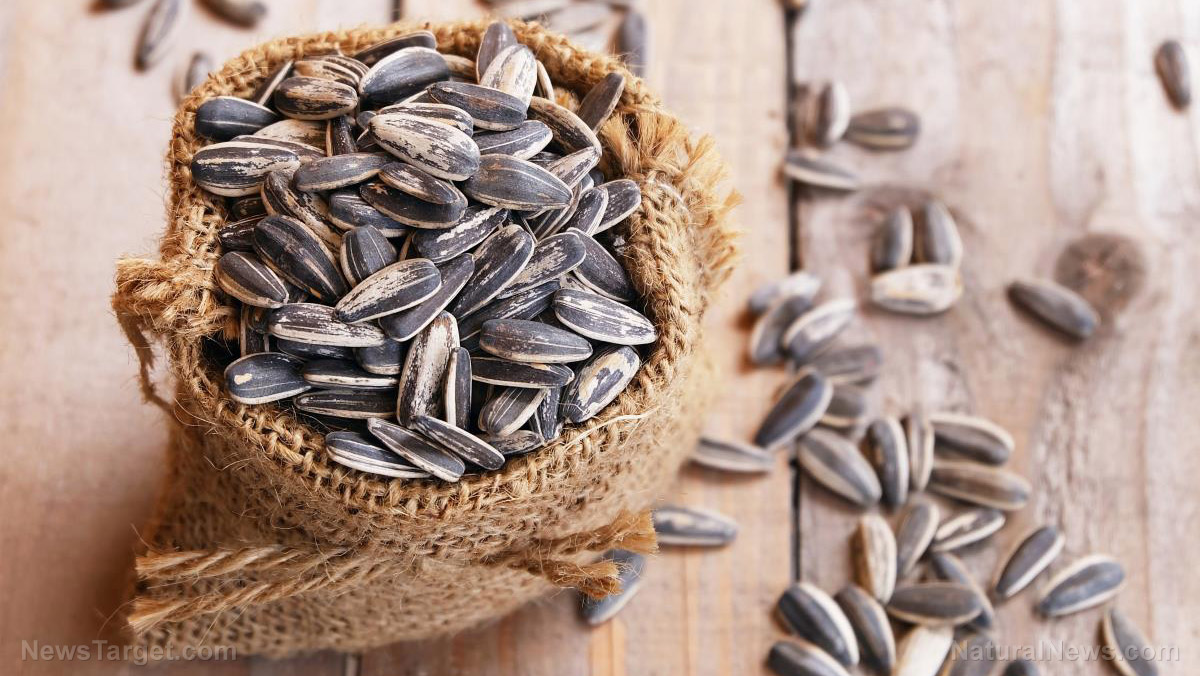
In the diverse world of nuts and seeds, sunflower seeds stand out as a nutritional powerhouse that’s often overlooked. These small, grayish seeds with black-and-white striped shells are far more than bird food or a casual snack — they are nutrient-dense, versatile and increasingly recognized for their role in promoting heart health, brain function and balanced nutrition.
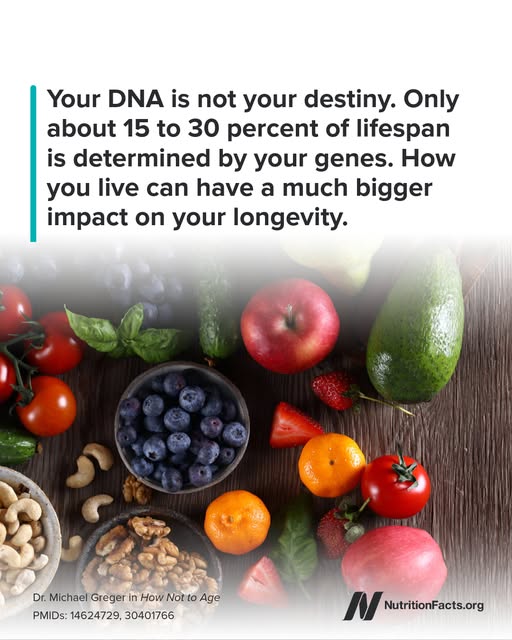
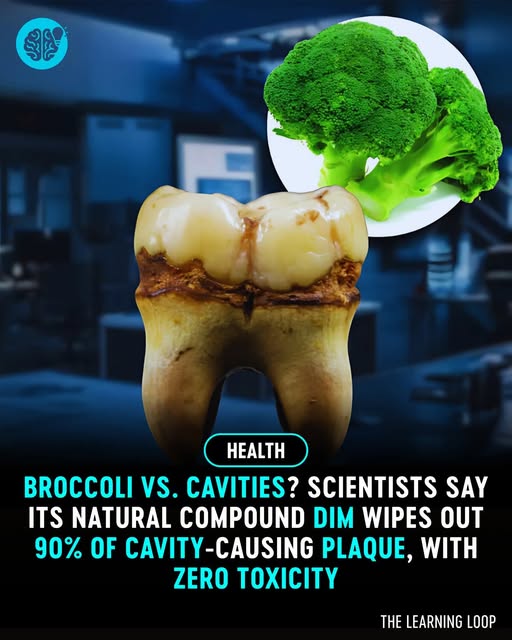
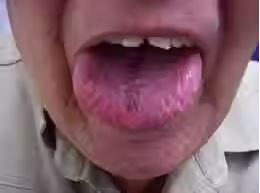
The good news is that you can see your B vitamin deficiencies in your tongue. You can tell how adequate your intake of B vitamins has been by looking at your tongue.
https://sunshinevitamins.com/blogs/news/your-tongue-shows-b-deficiencies

HHS Secretary Robert F. Kennedy Jr. just took aim at a system that has failed Americans for nearly 40 years, the Vaccine Injury Compensation Program (VICP).
https://www.zerohedge.com/medical/rfk-jr-drops-stunning-new-vaccine-announcement