

12 of these are ingredients in my top bars and powders. Check them out for yourself: https://healthelicious.com.au/
Psychiatry Destroying Creativity
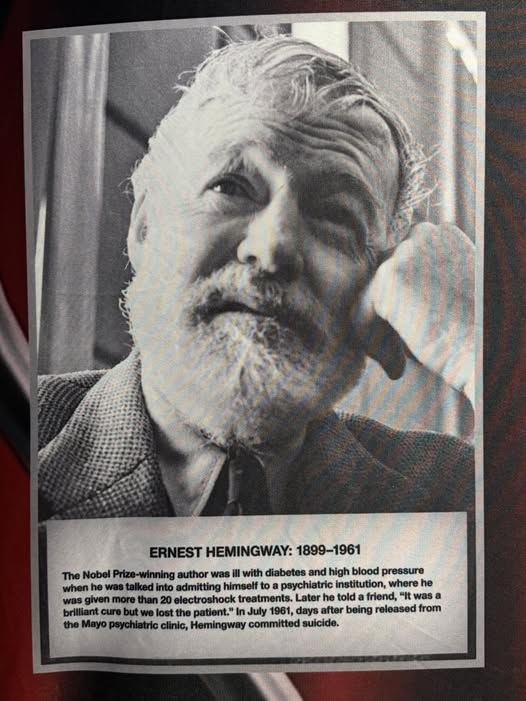
“What these shock doctors don’t know is about writers and such…What is the sense of ruining my head and erasing my memory, which is my capital, and putting me out of business? It was a brilliant cure but we lost the patient.”
—Ernest Hemingway Nobel Prize-winning author
Are You More Than 9 Meals Away From Starving?
I read an article from Jeff Thomas (if interested you can read it at http://www.321gold.com/editorials/thomas/thomas042316.html) wherein he writes, “After only nine missed meals, it’s not unlikely that we’d panic and be prepared to commit a crime to acquire food.“
Given the current declining levels of ethics, morality, civility and stability in society, there is an increasing chance of disruptions in the supply chain that would cause food shortages, to a greater or lesser degree.
Now, while I like to think that if you knocked on my door in need of a feed, that I would be only too willing to welcome you to my table, obviously I do not have the resources to do that for everyone.
So I am asking you to start laying in some extras each week that might enable you to help your family and friends in a worst case scenario. That will take the load off my ability to help others.
This does not need to stretch your budget past breaking point.
As I write this, Coles have a half-price special on brown rice this week, $9.50 for 5 kilos.
They also have brown lentils for the regular price of $5.50 a kilo or red lentils for $4.20 a kilo. And several varieties of canned beans for $1.10 a 420 gram can.
Even if you only spend $5 or $10 a week to lay in a reserve supply of food you are gradually building a potentially life-saving increase in your survival potential.
Just as a further tip, get a glass or hard plastic container in which to store your 5 kilo plastic bag of rice. Otherwise rice weevils can eat through the plastic bag and you don’t want that sort of competition for your rice! LOL!
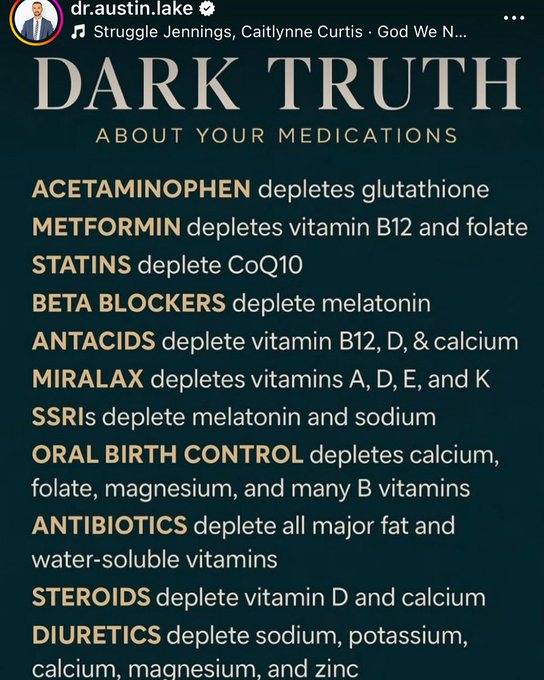
The Dark Truth About Medications
The hardest part of 14 days to flatten the curve is the first two years….

Dr Naomi Wolf At EU
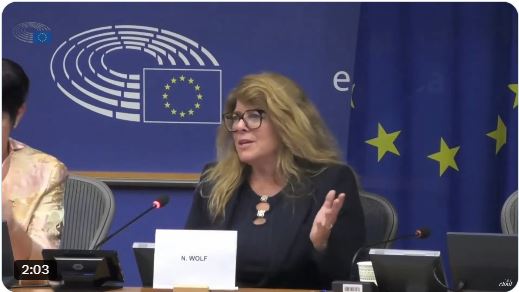
On Sept 06, 2025, the European Union listened to Dr. Naomi Wolf explain why you have noticed personality changes, emotional irregularity and a lack of critical thinking from people vaccinated with the mRNA COVID shot.
According to Wolf, the Pfizer papers reveal that the lipid nanoparticles inside the Pfizer mRNA vaccine are breaching the blood-brain barrier and attacking the frontal cortex of the brain, which is damaging people’s ability to retain memory, control their emotions, and utilize critical thinking.
Don’t Let This Be You!
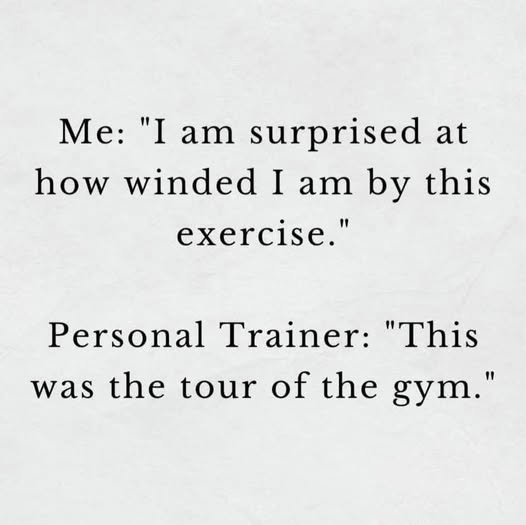
Combined Swindle
L Ruteri, Sourdough, Breast Feeding and Breast Cancer

(Tom: Sometimes I sit here and just shake my head at the amount of information I come across that shows there is more we don’t know than there is that we do know about how many things interact with each other to paint the whole picture.)
Ghosts in Our Cells: Lovers, Ancestors, and the Genetic Memory of Connection
(Tom: I have read previously that women carried data from past lovers but had never seen the research that supports the proposition. This is interesting.)

How Memory, Intimacy, and Food Weave The Hidden Biology of Connection
Have you ever wondered if the echoes of past lovers or mates linger within you? Modern science is uncovering startling evidence that sexual encounters may leave lasting biological traces—and even influence future generations. Ancient cultures and esoteric teachings long hinted that intimacy creates enduring bonds, energetic imprints that persist beyond the moment. Today, emerging research on telegony, microchimerism, cross-generational epigenetics, and cross-species genetic communication is reviving these age-old intuitions in the laboratory.
In this article, we journey through cutting-edge discoveries—from fruit flies to nematode worms, from human cells to plant vesicles—revealing a hidden tapestry of connection. The first lover’s “ghost” in offspring, male DNA lingering in a woman’s body, RNA messages sent from soma to germline, and the century-spanning memory of ancestors: these findings challenge our notions of heredity, identity, and the sacred exchange of sexual energy. Buckle up for a thought-provoking exploration that is both reverent and grounded in real data, illuminating how the most intimate of encounters might echo in biology and spirit long after the embrace.
Telegony: The First Lover’s Lasting Influence
For millennia, people believed that a woman’s previous mates could influence her future children, a concept known as telegony. Aristotle wrote of it, and even the Gnostic Gospel of Philip hinted that a woman’s very thoughts could carry impressions of past partners.¹ The idea fell out of favor in the 20th century, dismissed as a folk myth with no genetic basis. But in 2014, a remarkable study in Ecology Letters revisited telegony—and confirmed it in an unexpected place: fruit flies.
Researchers found that the first male to mate with a female fly could indeed imprint traits on offspring later sired by a different male.² In their experiments, female flies were first paired with a male raised on a special diet (rich or poor), then two weeks later mated with a second male to produce offspring. The second male was the genetic father of nearly all the offspring—yet the body size of those offspring was determined by the diet and condition of the first male.² If the female’s first mate was large and well-fed, her future progeny grew larger; if he was undernourished, her later offspring were smaller—even though the second male provided the genes. The first mate left something in the mother’s reproductive tract that influenced embryo development before any genes got involved.
Crucially, this effect only occurred if actual mating took place. Females merely exposed to a male without mating showed no influence on offspring, implicating a factor in the semen itself.³ The scientists concluded that non-genetic, semen-borne factors from the first male were absorbed by the female’s immature eggs, altering how those eggs later developed after fertilization by another male.² In other words, molecules in seminal fluid—perhaps RNAs, proteins or other epigenetic factors—acted as messengers of the first male’s phenotype.
This discovery “confirms the possibility of telegony” via transgenerational, non-genetic effects.⁴ Offspring phenotypes carried a kind of “phantom imprint” of a prior mate. What was once myth now has empirical support, at least in insects. If such semen-mediated imprinting happens in fruit flies (and other studies hint it may occur in other species⁵), it raises provocative questions: Could a similar phenomenon occur in mammals, even humans? We know, for example, that in some mammals the seminal fluid influences female physiology and offspring health.⁶ Science hasn’t confirmed human telegony—but the fruit fly findings resurrect an ancient idea: that the first partner leaves a lasting mark.
Finish reading: https://sayerji.substack.com/p/the-genetic-afterlife-of-intimacy