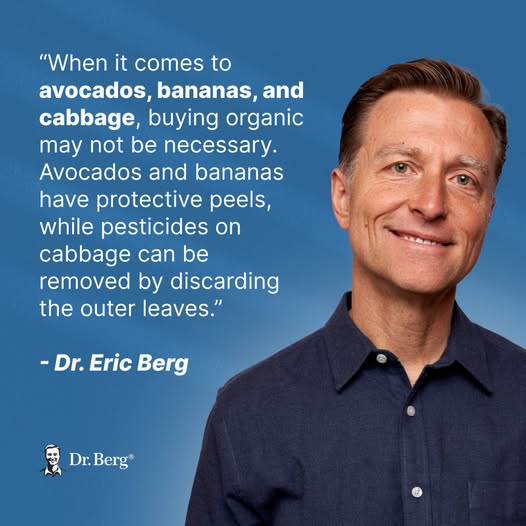
Many people I talk to cannot afford to buy everything organic. In which case it pays to invest your budget where it counts most. Make a list of those fruits and vegetables where organic is highly desirable and another where it is far less important.

Tom's Blog on Life and Livingness
Many people I talk to cannot afford to buy everything organic. In which case it pays to invest your budget where it counts most. Make a list of those fruits and vegetables where organic is highly desirable and another where it is far less important.
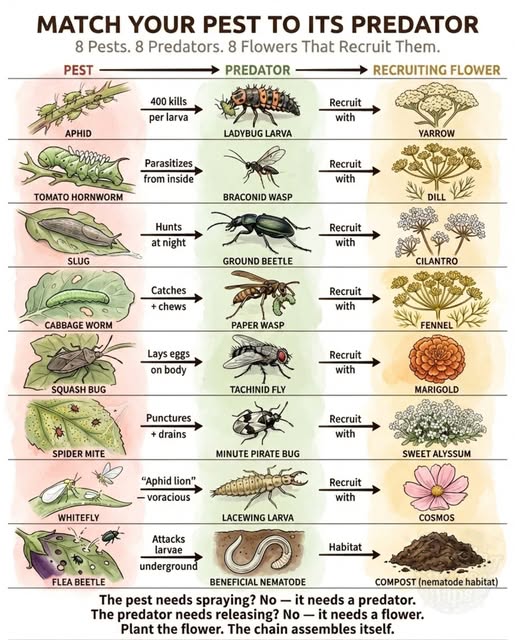
The pest doesn’t need spraying. It needs a predator. The predator doesn’t need buying. It needs a flower.
Plant the right flower and the predator shows up on its own, finds the pest, and does the work for free. The chain assembles itself.
Five chains that work:
– Aphids → ladybug larvae → plant yarrow. The larvae do the killing — hundreds of aphids each. The yarrow keeps the adults around to lay eggs near the colony.
– Tomato hornworms → braconid wasps → let your dill bolt. The wasp lays eggs inside the hornworm. The flowers are the weapon, not the dill leaves.
– Slugs → ground beetles → let cilantro flower. The beetles hunt at night while you sleep. The flowers give them daytime shelter.
– Cabbage worms → paper wasps → plant fennel. The wasps catch caterpillars, chew them into paste, and feed them to their own larvae. One nest near your brassicas catches dozens a day.
– Whiteflies → lacewing larvae → plant cosmos. The larvae have sickle-shaped jaws that drain whiteflies in seconds. The cosmos keeps adult lacewings fed and laying eggs nearby.
One flower per pest. The predator does the rest.
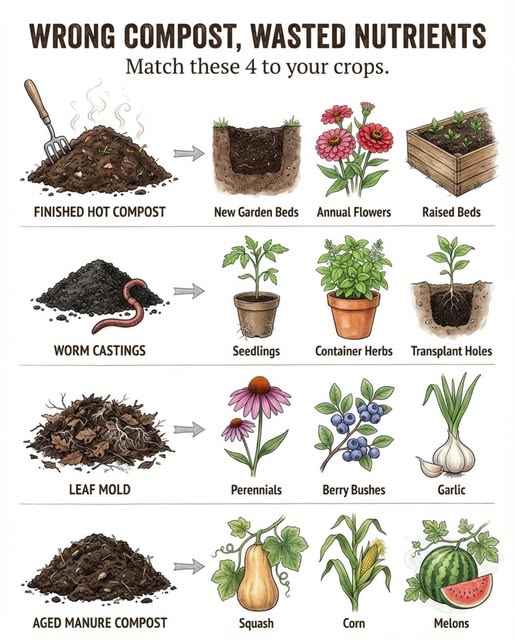
You add the same bag of compost to every bed and assume the soil got what it needed.
It didn’t. Compost isn’t one product. What it started from, how it broke down, and how long it aged all determine what it delivers — and what it can’t.
Four types. Four different jobs. Most gardens need more than one.
Hot compost — the all-purpose base. The sustained heat kills weed seeds and breaks material into stable, balanced soil amendment. Safe for direct contact with any planting. But the heat also burns off much of the nitrogen, so hot compost builds structure and biology more than it feeds. Heavy producers like tomatoes can stall mid-season if this is the only input.
Worm castings — concentrated and fast-acting. More available nutrients packed into a fraction of the volume. Ideal for transplant holes, seed-starting trays, and container refreshes where space limits how much you can add. Broadcasting it across full beds wastes its strength on soil that doesn’t need that intensity.
Leaf mold — almost no fertility, but holds several times its weight in moisture. Decomposed by fungi, not bacteria. It builds the crumbly aerated texture that perennials, berries, and garlic thrive in. Spreading it where heavy feeders need nitrogen is giving them a sponge when they’re asking for fuel.
Aged manure compost — the nitrogen source the others can’t match. Composted chicken, horse, or cow manure delivers the sustained feeding that squash, corn, and large tomatoes demand through a long season. The key word is aged — raw manure needs months of composting before it goes near food crops.

It’s a myth that ground eggshells prevent blossom end rot. Egg shells decompose too slowly to be effective as a calcium fertilizer but they are still a welcome addition to compost as organic matter.
If you want a calcium boost faster than slowly decomposing eggs shells, first crush them into a fine powder. I use the blender, you can also use a pestle and mortar.
Then squeeze a lemon onto the crushed egg shells. This makes calcium citrate. Mix it one part to ten parts of water then water it onto the soil near the base of the plant.

If grocery stores closed tomorrow, most households would run out of food within days. But yours doesn’t have to.
While many foods spoil quickly, some staples can last for years—even decades—when stored properly. These are the foods that resist time, bacteria, and decay.
Here are 31 long-lasting foods worth stockpiling.
31. White Rice
White rice can last for decades when stored correctly. Unlike brown rice, it contains no oils that go rancid. Store it in airtight containers or Mylar bags with oxygen absorbers, in a cool, dark place. Adding dried bay leaves can help deter pests. A large bag can provide weeks of food security.
30. Dry Pasta
Dry pasta is highly durable due to its low moisture content. Transfer it from cardboard packaging into airtight containers to protect it from humidity and pests. Stored properly, it can last 8–10 years or more.
29. Rolled Oats
Oats are extremely versatile and long-lasting. Steel-cut oats last even longer due to lower processing. Keep them sealed in airtight containers with oxygen absorbers. Properly stored, they can remain usable for decades.
28. Dried Corn
A traditional survival food, dried corn stores well due to its low moisture. Whole kernels last longest, while cornmeal has a shorter shelf life. Corn is highly versatile—boiled, ground, or baked.
27. Hardtack
A simple mix of flour and water baked until completely dry, hardtack can last for decades. It’s extremely tough but softens when soaked in liquid. Historically used by sailors and soldiers.
26. Dried Beans
Beans provide protein, fiber, and minerals. Their low moisture and fat content allow long storage. Keep them sealed in airtight containers. Even very old beans remain nutritious, though they may take longer to cook.
25. Dried Lentils
Lentils cook quickly and usually don’t require soaking. They store well for the same reasons as beans—low moisture and low fat. Ideal when fuel or time is limited.
24. Powdered Milk
With water removed, powdered milk resists spoilage. Non-fat dry milk can last up to 20 years when sealed properly. Store in small portions to maintain freshness after opening.
23. Canned Meat
Canned meat is ready-to-eat and shelf-stable. Typically lasts 2–5 years, but safety depends on the condition of the can. Discard any that are bulging, rusted, or damaged.
22. Ghee
Ghee is clarified butter with water and milk solids removed. This makes it far more stable than regular butter. Store sealed, away from heat and light.
21. Coconut Oil
Rich in saturated fats, coconut oil resists oxidation. Stored properly, it lasts 2–5 years or longer and has both culinary and non-food uses.
20. Raw Honey
Honey is naturally antibacterial due to its low moisture and high sugar content. It can last indefinitely. Crystallization is normal—just warm gently to restore texture.
19. White Sugar
Sugar doesn’t spoil because it contains no free water for microbes. Keep it dry and sealed. Even if it hardens, it remains usable.
18. Pure Maple Syrup
Unopened, it lasts for years due to its sugar concentration. After opening, refrigerate to prevent mold. If mold forms, it can often be removed safely.
17. Blackstrap Molasses
Dense and low in moisture, molasses stores well. It also provides minerals like iron and calcium.
16. Salt
Salt is a mineral and does not spoil. Keep it dry to prevent clumping. It’s also essential for preservation and electrolyte balance.
15. Bouillon Cubes
Highly concentrated and salt-rich, bouillon cubes last for years if kept dry and sealed.
14. Soy Sauce
Fermented and high in salt, soy sauce resists spoilage. Keep sealed and away from light. Refrigeration after opening helps preserve flavor.
13. Whole Peppercorns
Whole peppercorns retain flavor much longer than ground pepper. Store whole and grind as needed.
12. Dried Herbs
Dried herbs don’t spoil—they lose potency over time. Keep them sealed, cool, and dark for maximum longevity.
11. Distilled White Vinegar
Highly acidic, vinegar prevents microbial growth. It can last indefinitely when stored properly.
10. Apple Cider Vinegar (with “Mother”)
The “mother” indicates active cultures. Its acidity keeps it stable for years when sealed and stored in a cool, dark place.
9. Pure Vanilla Extract
High alcohol content prevents spoilage. Over time, the flavor can even improve.
8. Baking Soda
A mineral compound that doesn’t spoil. Keep it dry and sealed to maintain effectiveness.
7. Cornstarch
As long as it stays dry, cornstarch remains stable indefinitely.
6. Instant Coffee
Dehydrated coffee resists spoilage. Store in airtight containers to preserve flavor for years.
5. Dark Chocolate (70%+)
Low moisture and high cocoa content make dark chocolate more stable than milk chocolate. Can last 2–5 years if kept cool.
4. Green Tea
Tea doesn’t spoil but loses flavor over time. Store sealed, away from light, heat, and moisture.
3. Popcorn Kernels
Each kernel is naturally protected by a hard shell. Stored properly, they can last for many years and still pop.
2. Hard Candy
Mostly sugar, with almost no moisture. It won’t spoil, though it may become sticky if exposed to humidity.
1. Hard Liquor
High alcohol levels prevent microbial growth.
Unopened bottles can last indefinitely, though flavor may slowly change.
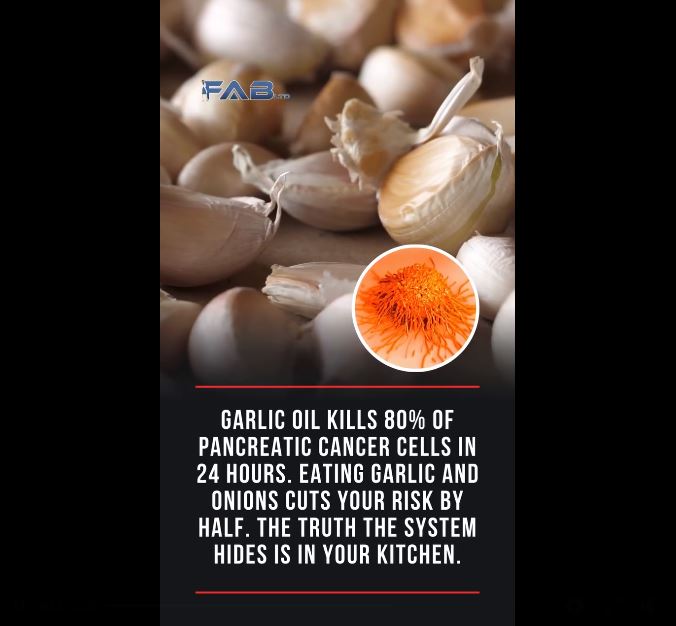
The medical establishment does not want you to know that a simple kitchen staple can decimate pancreatic cancer cells. Laboratory research shows that garlic oil induced apoptosis in over 80% of AsPC‑1 pancreatic cancer cells within 24 hours and inhibited growth of multiple pancreatic cancer lines by more than 70% within 48 hours.
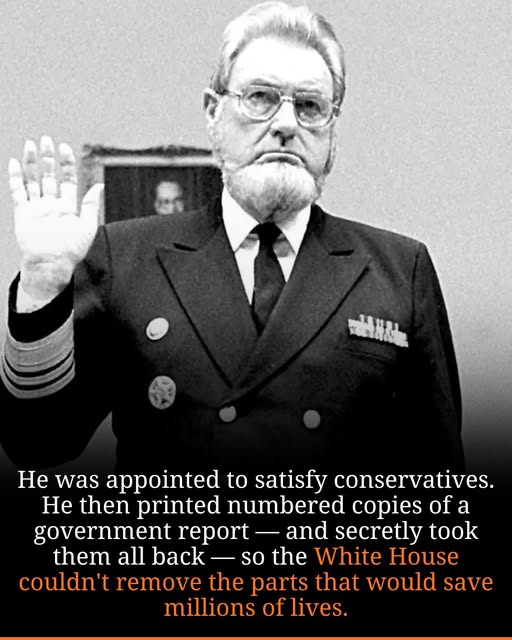
In January 1982, a deeply religious pediatric surgeon from Philadelphia was sworn in as the 13th Surgeon General of the United States.
He had an Amish-style beard, a commanding presence, and conservative credentials that stretched back decades. The religious right celebrated his appointment. Democrats were alarmed. Everyone was certain they knew exactly what kind of Surgeon General C. Everett Koop would be.
They were wrong about nearly everything.
Before Washington, Koop had spent 35 years as surgeon-in-chief at the Children’s Hospital of Philadelphia. He pioneered life-saving techniques for newborns with severe birth defects. He established the nation’s first newborn surgical intensive care unit. He separated conjoined twins when few surgeons believed it was survivable. He was meticulous, demanding, and entirely committed to his patients.
Those qualities didn’t disappear when he put on the Surgeon General’s uniform. They just found a different operating table.
In June 1981, just months before Koop’s nomination, the CDC had reported five unusual cases — young men in Los Angeles dying from a rare pneumonia that attacked weakened immune systems. Within weeks, more cases appeared. A new and terrifying disease was moving through the population, and no one knew how, or why, or how fast.
The Reagan administration’s response was silence.
For his entire first term in office — four years — Koop was prevented from addressing the AIDS crisis. He was not placed on the AIDS task force. Reporters were discouraged from asking him about the epidemic. The nation’s top health officer was being stopped from doing his job, and he later said no one ever gave him a clear reason why.
Then, on February 5, 1986, President Reagan visited the Department of Health and Human Services. In the middle of a routine address, he mentioned almost casually that he was asking the Surgeon General to prepare a major report on AIDS.
Koop happened to be in the room. He took the hint.
He wrote the report himself — at a stand-up desk in the basement of his own home, working alone, late at night, with a few trusted advisors. He visited AIDS patients personally in Washington hospitals. He met with scientists, community organizations, Christian fundamentalists, hemophilia foundations, and gay rights groups. He approached it entirely as a medical question. He refused to approach it as a moral one.
When the report was finished, he knew the danger.
Reagan’s domestic policy advisers were expected to review it — and Koop was certain that any reference to condoms or sex education would be cut before it ever reached the public. So he printed numbered copies of the final draft, distributed them at the review meeting, and then collected every single copy back at the end of the meeting — explaining he was preventing leaks to the media.
It was not about leaks.
The strategy worked. The report went forward without revision.
On October 22, 1986, Koop released the Surgeon General’s Report on AIDS. The 36-page document was written in plain, direct language. It told Americans clearly how AIDS was — and was not — transmitted. It said they could not contract the disease through casual contact. It called for comprehensive sex education beginning in elementary school. It explicitly recommended condom use as a means of prevention.
His conservative supporters were stunned. They had expected a moral judgment on the communities most affected. Instead, they received science.
Koop was burned in effigy. Critics accused him of promoting immorality.
He did not back down.
He explained his position in words that have held up across every decade since: “I am the Surgeon General of the heterosexuals and the homosexuals, of the young and the old, of the moral or the immoral, the married and the unmarried. I don’t have the luxury of deciding which side I want to be on. So I can tell you how to keep yourself alive no matter what you are. That’s my job.”
In May 1988, he went further. He wrote an eight-page condensed version of the AIDS report — a pamphlet called Understanding AIDS — and arranged for it to be mailed to every single household in the United States. One hundred and seven million homes received it. It was the largest public health mailing in American history. The first time the federal government had ever provided explicit information about sexual health directly to the public.
The backlash was immediate and fierce. Religious groups called for his resignation. Politicians were furious. Critics said he had gone too far.
Koop noted that far more children were dying from the disease than from reading a pamphlet.
He did not back down.
He was equally unsparing on tobacco. His 1982 report had attributed 30% of all cancer deaths to smoking. His 1986 report declared that nicotine was as addictive as heroin or cocaine, and that secondhand smoke posed genuine risks to non-smokers — shifting the entire debate from personal choice to public safety. The Reagan White House eventually withdrew its support, under pressure from the tobacco industry.
Koop continued anyway.
He left office in 1989. His popularity had undergone a complete reversal. He had entered as the champion of the religious right. He left as a hero to public health advocates, civil liberties organizations, and the communities hit hardest by AIDS. The same people who had celebrated his appointment were relieved to see him go. The same people who had feared it were sorry to see him leave.
C. Everett Koop died on February 25, 2013, at the age of 96, at his home in Hanover, New Hampshire.
The Associated Press noted that he was “the only Surgeon General to become a household name.” The American Medical Association said that “because of what he did, and the way he did it, he had a dramatic impact on public health.”
He was not an ideologue. He was a surgeon.
He numbered his report copies so the White House couldn’t gut it.
He mailed it to 107 million homes so no one could claim they hadn’t been told.
He chose truth every time he had the option.
And in the decades since, the lives that choice saved cannot be counted.
The year is 1537.
The air at the French siege of Turin is a foul mixture of gunpowder, mud, and the coppery scent of blood.
A young barber-surgeon named Ambroise Paré moves through the chaos of the camp.
He is not a learned university physician. He is a tradesman.
His training came from an apprenticeship, sharpening razors and setting bones.
Now, he faces a new kind of horror.
The arquebus, a primitive firearm, is reshaping warfare. Its lead balls shatter bone and drive filthy cloth deep into flesh.
For centuries, medicine has had one brutal answer for such wounds.
The doctrine comes from the ancient Greeks. It states gunshot wounds are poisoned.
They must be burned clean.
The standard treatment is a cauldron of boiling oil.
Surgeons pour the scalding liquid directly into the open wound.
The scream is considered a sign the procedure is working.
The shock and agony kill as many men as the infection it is meant to prevent.
Paré has been dutifully carrying out this torture.
But on this day, the tide of wounded is too great.
The supply of oil runs out.
He stands over the next soldier, who awaits his turn with the cauldron. The man’s eyes are wide with terror.
Paré has nothing.
He is faced with a choice: do nothing and let the man die, or try something unthinkable.
He remembers an old folk remedy. A soothing salve for burns.
In desperation, he mixes what he has: the yolk of an egg, oil of roses, and turpentine.
He gently dresses the gunshot wound with this cool, unproven paste.
He does not cauterize. He does not burn.
That night, Paré cannot sleep.
He is convinced he has condemned the man to a slow, poisoned death. He expects to find the soldier’s corpse by morning.
At first light, he hurries back to the infirmary.
He finds the soldier alive.
Not just alive, but resting. The wound shows signs of calm.
There is less swelling. Less putrid smell.
The man who received the rose oil salve looks better than the men who endured the boiling oil.
Paré’s mind reels.
This observation, born of simple shortage, challenges everything he has been taught.
For the rest of the siege, he conducts a gruesome, unplanned experiment.
He treats some men with the old way. He treats others with his new gentle dressing.
The results are undeniable.
The men treated with the salve sleep through the night. Their wounds begin to heal.
They suffer less fever.
The men treated with boiling oil writhe in agony. Their wounds grow angry and inflamed.
Many do not survive.
Paré has just proven a 2,000-year-old medical truth is a lethal lie.
He writes, ’I resolved with myself never so cruelly to burn poor men wounded with gunshot.’
This is only the beginning of his rebellion.
He turns his mind to the other great horror of the battlefield: amputation.
The standard method is a butcher’s ballet. A saw cuts the limb.
Then, a red-hot iron is pressed into the bleeding stump to sear the arteries shut.
The smell of burning flesh is constant. The pain is unimaginable.
The blood loss is often fatal.
Paré imagines a different way.
He considers the tailor, who uses a needle and thread. He considers the shepherd, who ties off a cord.
He develops a simple, brilliant idea: the ligature.
Using a needle threaded with silk, he loops and ties off each individual artery before the limb is cut.
When the saw does its work, the vessels are already closed. There is no torrent of blood.
No need for the branding iron.
He invents new tools, like the ’bec de corbin’—a crow’s beak forceps—to gently extract bullets from deep wounds.
His innovations are not born in a quiet university hall. They are forged in the screaming chaos of war.
He serves four kings of France. He tends to the wounds of nobles and common soldiers alike.
And he does something just as revolutionary as his techniques.
He writes his books in French.
Not in Latin, the guarded language of the elite physicians.
He writes so the common barber-surgeon, the man in the field, can understand. He fills his texts with detailed illustrations of his instruments and methods.
He shares knowledge instead of hoarding it.
The establishment is furious. Physicians scorn him as a mere ’barber.’ They call his methods vulgar and dangerous.
But the results speak for themselves. Men live who were meant to die.
Paré’s legacy is not a single miracle cure. It is a new way of thinking.
He teaches the world to observe, to experiment, and to have the courage to discard ancient cruelty when a kinder, better way presents itself.
He stands at the bloody crossroads between medieval torture and modern mercy.
And he chose mercy.
Paré’s famous motto was ’Je le pansai, Dieu le guérit’—’I dressed him, God healed him.’ This humble phrase captured his revolutionary belief that the surgeon’s role was to aid nature’s healing, not to dominate it with violent interventions.
Sources: U.S. National Library of Medicine / The British Journal of Surgery / Science Museum, London
Photo: Wikimedia Commons

Behind closed doors in Brussels, EU regulators are shifting from risk management to risk elimination — putting dozens of widely used botanicals at risk of restriction based on theoretical hazards rather than real-world science.