
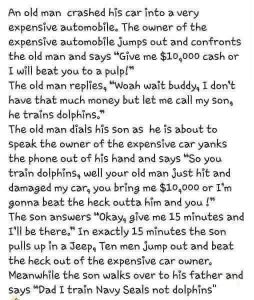
He Trains Dolphins
The New Way To Fight Wars – Let Others Fight Your Battles
This report examines a range of possible means to extend Russia. As the 2018 National Defense Strategy recognized, the United States is currently locked in a great-power competition with Russia. This report seeks to define areas where the United States can compete to its own advantage. Drawing on quantitative and qualitative data from Western and Russian sources, this report examines Russia’s economic, political, and military vulnerabilities and anxieties. It then analyzes potential policy options to exploit them — ideologically, economically, geopolitically, and militarily (including air and space, maritime, land, and multidomain options). After describing each measure, this report assesses the associated benefits, costs, and risks, as well as the likelihood that measure could be successfully implemented and actually extend Russia. Most of the steps covered in this report are in some sense escalatory, and most would likely prompt some Russian counter-escalation. Some of these policies, however, also might prompt adverse reactions from other U.S. adversaries — most notably, China — that could, in turn, stress the United States. Ultimately, this report concludes that the most attractive U.S. policy options to extend Russia — with the greatest benefits, highest likelihood of success, and least risk — are in the economic domain, featuring a combination of boosting U.S. energy production and sanctions, providing the latter are multilateral. In contrast, geopolitical measures to bait Russia into overextending itself and ideological measures to undermine the regime’s stability carry significant risks. Finally, many military options — including force posture changes and development of new capabilities — could enhance U.S. deterrence and reassure U.S. allies, but only a few are likely to extend Russia, as Moscow is not seeking parity with the United States in most domains.
Good News on Platform Censorship!
Boom! Court rules platforms do NOT have a constitutional right to suppress your speech and posts! https://www.youtube.com/watch?v=yA8DaZ5KMZo
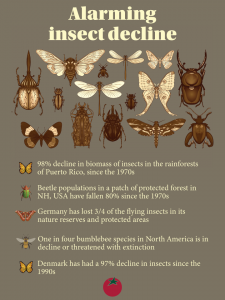
Insect Declines
Personal Revolution Precedes Freedom

Ötzi the Iceman’s Tattoos May Have Been a Primitive Form of Acupuncture
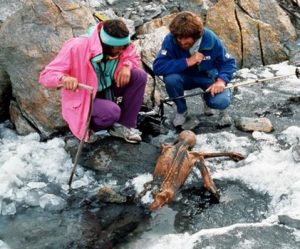
The oldest preserved human body is that of Otzi, a 5300-year-old “wet mummy” that was found still partially encased in glacial ice in northernmost Italy in 1991. Otzi is far older than the Egyptian and Incan mummies, or the peat bog bodies in Northern Europe, and he holds several other records as well:
Oldest intact, preserved human organs
Oldest known tattoos (> 60 of them)
Oldest evidence of acupuncture
And probably, the oldest known murder cover up
Here’s how it likely went down: It was late spring and Otzi was feeling his age of 45 years. He’d recently had acupuncture treatments to relieve pain at the tattooed sites on his lower back, knees and ankles. He’d eaten birch polypore mushroom to ease his ulcers. Otzi’s rotten teeth hurt, and this morning, he’d swallowed poisonous fern bracken to try to get rid of his whipworms. He’d had a fight in the village in which his hand was injured, and he was fleeing to higher ground. At 10,500′ elevation, Otzi’s pursuers caught up with him and shot him from behind. The arrow to the shoulder was a mortal wound, but his enemies finished him off with a blow to the head. To remove evidence, they extracted their arrow, losing the point in the process. Dragging his body to a gully, they threw him in along with his valuable possessions. After covering him with snow and ice, they left.
Little did the killers know that their brutal act had left the world a TREASURE of information.
https://www.livescience.com/63682-otzi-ice-man-took-medical-treatment.html
Love In A Hug

What true love is:
“My parents were married for 55 years. One morning, my mom was going downstairs to make dad breakfast, she had a heart attack and fell. My father picked her up as best he could and almost dragged her into the truck. At full speed, without respecting traffic lights, he drove her to the hospital.
When he arrived, unfortunately she was no longer with us.
During the funeral, my father did not speak; his gaze was lost. He hardly cried.
That night, his children joined him. In an atmosphere of pain and nostalgia, we remembered beautiful anecdotes and he asked my brother, a theologian, to tell him where Mom would be at that moment. My brother began to talk about life after death, and guesses as to how and where she would be.
My father listened carefully. Suddenly he asked us to take him to the cemetery.
Dad!” we replied, “it’s 11 at night, we can’t go to the cemetery right now!”
He raised his voice, and with a glazed look he said:
“Don’t argue with me, please don’t argue with the man who just lost his wife of 55 years.”
There was a moment of respectful silence, we didn’t argue anymore. We went to the cemetery, and we asked the night watchman for permission. With a flashlight, we reached the tomb. My father caressed her, prayed, and told his children, who watched the scene, moved:
“It was 55 years… you know? No one can talk about true love if they have no idea what it’s like to share life with a woman.”
He paused and wiped his face. “She and I, we were together in that crisis. I changed jobs …” he continued. “We packed up when we sold the house and moved out of town. We shared the joy of seeing our children finish their careers, we mourned the departure of loved ones side by side, we prayed together in the waiting room of some hospitals, we support each other in pain, we hug each Christmas, and we forgive our mistakes… Children, now it’s gone, and I’m happy, do you know why?
Because she left before me. She didn’t have to go through the agony and pain of burying me, of being left alone after my departure. I will be the one to go through that, and I thank God. I love her so much that I wouldn’t have liked her to suffer…”
When my father finished speaking, my brothers and I had tears streaming down our faces. We hugged him, and he comforted us, “It’s okay, we can go home, it’s been a good day.”
That night I understood what true love is; It is far from romanticism, it does not have much to do with eroticism, or with sex, rather it is linked to work, to complement, to care, and, above all, to the true love that two really committed people profess.”
Peace in your hearts.
Author: Unknown
Rudolph Steiner On Virii – Not So Fast
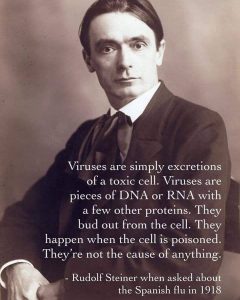
I saw this quote then went looking for verification and found this: https://www.covid19reader.com/is-germ-theory-obsolete/ (Which is itself a worthwhile read.)
Apparently the meme is from Dr Thomas Cowan “based on Rudolph Steiner’s work”.
Poison-Filled Giants