G’day,
The Current Scene
The years 2020 and 2021 were very profitable for some of the very wealthy but horrendous, both financially and emotionally for many. Many actions taken to combat the perceived threat of Covid have produced devastating results. Lowered IQ and speech impediments amongst the youngsters, and among the adults, depression, disabilities, illnesses, injuries, destroyed businesses and avoidable deaths.
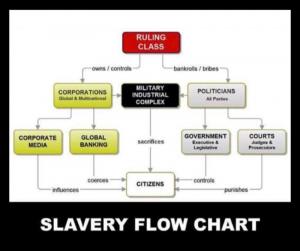
All this while governments restrict our human rights, block our bank accounts over whom we choose to support and plan to usher in draconian control over our lives, movement and spending via a social credit score and digital ID passport.
This tyrannical restriction of human rights is causing, to use a line from the movie Star Wars, “A disturbance in the Force.” Many people feel saddened to the point of hopeless over the devastation they see all around them.
The unfolding global tragedy has caused me to spend a lot of time looking for solutions that would help us individually and collectively.
While I am aware of many good people taking action to slow the spread of destructive influence there is little to no agreement on which all people of goodwill could be rallied to focus their efforts to bring about a major improvement in the current scene.
I have both shared and written articles that have informed of the truth. Some have provided a solution to an element of the problem. But whatever truth or help I created or forwarded, if I asked the question of it, “Will this solve the overall problem?” the answer was never a resounding, “YES!” Not until now have I thought of a solution that helps raise the morale of every individual who applies it, addresses the cause and has the potential to rally all people of good will under one banner. This idea is my attempt to fill that important gap.
Introduction
With that in mind I would like you to very severely critique this article by asking yourself these four questions:
- 1. Do I understand the idea?
- 2. Can I apply this idea in my life?
- 3. Can I share this idea with others?
- 4. If enough of us apply this idea, will it work?
As I see it there are five points of potential failure, which would, each of them alone, prevent this idea from working. Later I’ll cover the remaining four points but the first point of potential failure is that the idea is not understood. So while reading this, if you find something confusing, please, drop me a line so I can help better explain it. Because your survival is important to me. After all, if there is a catastrophe, when the dust settles there is a remote chance you and I might be the only two left standing. So I need you to be as competent as possible to either help prevent that catastrophe or so we are competent enough to rebuild after it.
So, if you have a better idea, please share it with me, I am all ears!
Even if we do not pull off the eventual win, the big upside of this program is that, if done, your life and the lives of those around you will have been improved, perhaps greatly, with no or little cost to you! Just a little discipline to apply the idea and some communication about the idea from you to others. If you are interested in what I perceive to be some of the advantages of this program, I have listed them here:
https://www.bringorder.com/Advantages.html
The Idea
OK. With that introduction out of the way, let’s get into it.
We hear the word ’order’ from an early age. We get orders from our parents. We get asked for our order at restaurants. We give lunch orders at school. We order drinks. We do online shopping orders.
Here I want to use the definition of the word ’Order’ as ’the logical or comprehensible arrangement of objects in space or events in time’ coming from tassein, ’to arrange’.
When we put order into an area we arrange it to make it right – logical or in correct sequence or tidy.
The best example might well be the familiar opposite of order – an untidy teenager’s bedroom with clothes and other objects strewn all over the floor. You may have even used or heard the expression, “Your room looks like a bomb hit it!” as a war zone is an obvious and dramatic disorder, the opposite of order.
With every action they take, every person produces order or disorder every minute of every day. Someone in a distracted moment makes a clumsy effort to pick up a cup, drops and breaks it. This is disorder. A broken cup is particles not arranged logically, it can no longer be used and requires time to be spent cleaning it up that could be better used elsewhere. Cleaning it up is putting in order.
Thus it can be readily seen that good intentions, intelligence and competence are productive of order while on the other hand, malice, ignorance and incompetence produce disorder. So the amount of or lack of order in a person’s environment is a useful indicator of their intelligence, competence and motives.
This also points up as highly desirable objectives the maintaining of one’s good intentions and the increasing of one’s intelligence and competence.
Order is also productive of harmony. Most people feel more calm in ordered surroundings and somewhere between a little and a lot on edge in untidy or disordered environments. A volcano or war zone are extreme examples of disorder and are not harmonious. In fact, the closer you are to them, the more likely they are to be deadly. So that brings up another point. Disorder is more likely to hinder your survival and be deadly than is order.
A sense of order also includes prediction. Trains running on time, people doing as expected, goods arriving when advised, services being delivered as requested, all these things are productive of a sense of order.
Another example of order is a person producing something and able to enjoy or spend the fruits of their labour.
An example of disorder is when they are robbed of what they have produced.
Order is when you elect a representative to government who votes on legislation with your interests first in mind.
Disorder is when your elected representative puts the interests of his campaign contributors above yours.
Order is when you are free to pursue your constructive goals and purposes with no restriction on your human rights.
Disorder is when someone from as low as the bully in the playground to as high as a tyrant dictator in charge of a country, restricts your human rights.
In fact, if you took a look around society and identified everything to which you objected, I am sure you could readily identify that those situations were disordered, not ordered.
So you could make a very long list of order versus disorder opposites. Here is a very small list of what could be expanded to pages but you get the idea. As a matter of fact, your greater understanding of the idea might come from thinking up a few additions to this list for yourself!
| Order |
Disorder |
| On-time |
Late |
| Neat |
Disheveled |
| Whole |
Broken |
| Complete |
Incomplete |
| Truth |
Lies |
| Peace |
War |
| Love |
Hate |
| Clean |
Dirty |
| Understood |
Misunderstood |
| Certain |
Confused |
The Reason Why – Two Classes of People
The reason we have so much disorder in society is not by accident. Apparently 75% of the population are majorly constructive and 25% majorly destructive. The constructive 75% are trying to do beneficial things for themselves and others. They are working to produce order.
People are not either all good or all bad. There is an old poem:
There is so much good in the worst of us
And so much bad in the best of us
That it ill behooves any of us
To talk about the rest of us!
But some have a majority of constructive characteristics and some have a majority of destructive characteristics.
The 25% with mostly destructive intentions are hell bent on creating chaos or disorder. Their plans and actions have the effect of upsetting everyone else – of creating confusion, uncertainty, war, crime and insanity for their real or fancied protection, financial gain or increased power. The gross level of disorder they produce is very upsetting/destructive for individuals, families, groups, organizations, whole countries, birds, animals, plants and the planet. It is, in fact, insane.
But of course most of them don’t confess their true nature by admitting that they have evil intentions.
A robber you meet in a back alley on a dark night is what I call an honest thief. He is not pretending to be something he is not. He is very easy to classify as one of the 25%. Not all of the 25% are that easy to so classify.
For instance, there are no honest thieves in government or corporate. All those thieves are liars and conmen who try to convince you their skullduggery is for your own good.
So to hide their true, destructive intentions, the destructive among us lie and claim they intend good. To judge accurately their motives don’t listen to them, look at their past actions and products. On close inspection you will find lack of genuine production and disorder in abundance.
If the end result of their insane purpose to harm or destroy and the resulting actions they take is disorder, how do we counter that?
Just as an aside, one quick little exercise you can do is to identify the external source of any disorder in your life. Ask yourself the question, “What is causing me stress?“ then ”Who is the cause of that situation.“ You might feel a whole lot better by just accurately answering those two questions! The next is obviously, “What can I do to reduce the stress this situation is creating for me?” Which is another way of saying, “What will bring more order into this scene?”
The Goal
A civilization of free beings enjoying unrestricted their unalienable rights, living in harmony with themselves, their fellows and their environment.
The Plan
To bring a progressively larger and larger amount of order into so many lives until the ideal is reached – a tipping point where, planet-wide, order completely overwhelms disorder and we have a sane, productive society. We each start small and close to home with disorders that are easily confronted and handled. We bring order in our immediate zone of influence then expand out to friends, relatives and communities on an increasing speed and scale of magnitude. We collectively increase the amount of order we bring to a wider and wider sphere until eventually enough disorder has blown off and we have attained our objective.
The Details
While I agree that non-compliance with illegal laws, protest marches and truckers convoys can be effective tools in raising awareness, especially when the media is little more than a propaganda arm of the government, anything that produces disorder only adds more disorder into an already disordered scene. That is not what we want.
When you bring order into a scene, disorder manifests and blows off. Example: You walk into a messy storeroom and decide to tidy it. In the process it might look a whole lot worse than when you started before you finally bring order to it but if while working on it you ignore the fact that it looks disorderly and ignore how uncomfortable that makes you feel but persist in bringing order, at the end it looks neat and tidy and you have earned your pat on the back.
Same in relationships. You might have a relationship with someone that, while not in outright conflict, is nowhere near optimum. You decide to bring a higher level of order or harmony to the relationship. In the process of bringing up and handling disagreements there might be considerable disorder manifest before you both have things worked out so you are happier with each other and the relationship is better.
So bringing order requires that one must have the ability to confront disorder without being put off or distracted by it. One must be able to keep bringing order. This is a learned skill.
When someone says or does something that upsets you it produces disorder in your mind. If your marital partner dates another person the mental upset (disorder) is over a broken agreement (also a disorder). Of course you are always in control of how you respond to the situation… …unless you are not, in which case that is another disorder.
Here are some more examples of order and disorder. You might be pleasantly surprised at realising how much order you already bring into your immediate environment! All that despite never having consciously thought of it as ’bringing order’.
Area One – Own Person
| Disorder |
Order |
| Unwashed Hair and Body |
Clean Hair and Body |
| Dirty, Broken Fingernails |
Clean, Trimmed Fingernails |
| Dirty or Worn Clothes |
Clean, Tidy Clothes |
| Teeth Need Repair |
Teeth In Good Condition |
| Upset and Unhappy |
Calm and Happy |
Area Two – Home Environment
| Disorder |
Order |
| Messy Room |
Clean Room |
| Kitchen Contains Dirty Dishes |
Dishes Cleaned and Put Away |
| Leaky Taps |
Plumbing in Top Shape |
| Broken Fixtures and Fittings |
All Fixtures and Fittings in A1 Condition |
| Paint Missing, Flaky or Faded |
Paint Surfaces A1 Condition |
| Messy Car Interior |
Clean Car Interior |
| Dirty Car Exterior |
Clean Car Exterior |
| Messy, Untidy Storage Areas |
Clean, Tidy Storage Areas |
| Overgrown Lawn |
Mowed and Trimmed Lawn |
| Weedy, Overgrown Garden |
Weeded Garden, Trimmed Edges and Plants |
Area Three – Family
| Disorder |
Order |
| Conflicts In Family |
Cooperating Harmoniously With Aligned Goals and Purposes |
| Disputes Over Tasks |
Each Person Knows and Performs Responsibilities |
Area Four – Work Environment
| Disorder |
Order |
| Untidy, Disordered Work Space |
Clean, Ordered Work Space |
| Unfinished Production Cycles |
Production Up To Date, Not Backlogged |
| Unanswered Communications |
All Communications Up To Date |
| Unread Material Unordered |
Unread Material Sorted and Prioritized |
| Elements of Job Unknown |
Total Certainty and Control Over All Functions of Job |
| No Trained Replacement |
Fully Trained Replacement |
| Upsets With Colleagues |
Good Working Relationships With Colleagues |
| Upsets With Customers |
Good Working Relationships With Customers |
| Upsets With Suppliers |
Good Working Relationships With Suppliers |
| No Hat Write-Up For Job |
Up-To-Date and Complete Hat Write-Up For Job |
Area Five – Personal Survival
| Disorder |
Order |
| No Food Reserves |
6 Months Food Reserves |
| No Cash Reserves |
2 Years Cash Reserves |
| No Emergency Plan |
Written and Drilled Emergency Plan |
| No ’Escape To’ Safe Location |
Agreed Upon Safe House |
Area Six – Social Sphere
| Disorder |
Order |
| Upsets With Neighbours |
Good Relationships With Neighbours |
| Neighbours Not Known |
Neighbours Known and On Speaking Terms |
| No Close Personal Friends |
3 or More Close Personal Friends |
| Not Actively Helping A Group |
Actively Helping One Or More Groups |
As you increase the scope and scale of bringing order to a wider and wider area you might benefit from specialized training (for instance a communication course so people better understand you and you them). As you progress through attaining order for the items on this list you will find your morale comes up, your perception of your own cause level rises and your self-respect and the respect of others for you also rises.
Your Review
Back to the four questions I started with. Now that you have read the article, please ask yourself these questions:
- 1. Do I understand the idea?
- 2. Can I apply this idea in my life?
- 3. Can I share this idea with others?
- 4. If enough of us apply this idea, will it work?
1. “Do I understand the idea?” Has this article adequately communicated the idea such that you understand it and feel comfortable sharing it? I hope so. (If not, let me know.)
2. “Can I apply this idea in my life?” I suspect if you were to track all you did in a day you would be pleasantly surprised at how much order you are already bringing to your environment. What I hope to have done here is increased your level of appreciation for the importance of bringing order and inspired you to do more and share it.
I believe this program is something each of us with our present capabilities can start to implement on a personal level and see small, immediate results. As a consequence it will have helped each of us focus on a solution to the planetary ills instead of being fixed on and the adverse effect of the problems. As we become more expert at it and expand our skills at producing more order in our chosen area, our sphere of control and influence will naturally expand until we hit the limit of our skills and competence. When that happens, get in touch with me for solutions to that too!
3. “Can I share this idea with others?” I hope we can each share it with others and encourage them to do likewise. If, for some reason you feel uncomfortable sharing it, drop me a line and let me know why. I will do my best to create something you feel you could share.
4. “If enough of us apply this idea, will it work?” Will this program work to bring more order? I believe so. As I was creating this article I looked at a great many actions and observed that all those that were creative or constructive fall under the umbrella of bringing order. All those that were counter-productive or destructive fell under the label of producing disorder.
The critic might look at the fact that to erect a new inner city housing project you have to destroy some slums but the overall net result is more order, despite the step of destruction to bring it about. Just like you need to cut down a few trees to build a log cabin. The optimum level of order in this scenario would be to replant seeds or saplings at least as many to replace the trees you cut down, if not a few more.
Your Evaluation
Now if it has taken me 69 years of living and observing life, 40 of those as a student of philosophy, to conceive this idea it would be unrealistic to expect you to fully comprehend it in two minutes. Especially since one has a tendency to value his own creations more highly than those of others.
If you disagree that bringing order is a good idea, just forget this and move on.
If you are unsure about the idea or you think I might possibly have stumbled onto something, let’s try this out and see if it works for you.
Firstly, on a scale of zero to 10 where zero is completely unhappy and 10 is top level happy, write down a number for how you feel at present.
For the next 48 hours be more conscious and deliberate in your bringing of order. My guess is that you will find an enormous percentage of your time is spent bringing order into your environment. Over the next two days do this:
You could probably gain enormously by starting each day by asking the question and listing the answers to, “What am I going to accomplish today?”
And for every situation you face, “What product do I want to accomplish here?” with an eye on whether or not that would produce more order or disorder.
Once you have listed all the things you know you have to do, perhaps a higher level question to ask for each zone of operation, “What could I do that would bring the most order into this area?”
Then, either as you go through the day or at your breaks, do this:
Note times when you successfully brought order and validate yourself for doing so.
Note times when you should have brought order but didn’t and the consequences.
Note times when you tried to bring order but either did not have the right tools or communication skills or technical skills to do so. Make a note of those so you can ask me for a recommendation.
Note times when you did not have the communication lines necessary to bring order.
Note times when despite having the good intention and the intelligence to try to bring order, you did not have enough authority, force or power to bring order.
After 48 hours, reevaluate how you feel according that same scale of zero to 10 where zero is completely unhappy and 10 is top level happy. Jot down the number for how you feel now. Compare the two. Did focusing on bringing order raise or lower your happiness level?
The Action Plan
Now you have some personal experience with the idea, reread this article and see if it makes more sense.
If it makes good sense to you, I encourage you to make the decision to apply it. I recommend you start practicing it. As the old saying goes, ’Practice makes perfect!’ Once you get some wins from applying it, start sharing this article and your wins with others.
Level 1 – Practitioner
Someone who applies it personally to their own person, personal, home and work environments.
Level 2 – Disseminator
A person who applies it at Level 1 and tells others about it with a view to helping others and getting a wider zone of order in their environment.
Level 3 – Coach
A person who performs level 1 and 2 functions and also spends some time each week to help others be a better bringer of order.
Level 4 – Consultant
A person who is a paid professional bringing order to the lives of individuals and the activities of organizations.
I can foresee some people getting so much satisfaction from doing this that they will want to make it their career and consult individuals in organizations on how to bring more order into their activity so that the enterprise can expand and be more productive and satisfying. What a win-win-win situation that would be!
The Potential Failure Points
As I wrote earlier in the article, I see five points of potential failure:
- 1. The idea is not understood (therefore it will seem inadequate to the task) or
- 2. The idea is understood but as seen as being too simple (as are many fundamental truths),
- 3. The individual lacks the ability or discipline to apply it.
- 4. The idea is grasped but the amount effort required to get enough people aboard may seem too overwhelming to attain the end goal so the individual does not apply or share it.
- 5. Too few people pass on the idea so it fails to gain enough traction to accomplish the primary goal of a salvaged civilization.
So for immediate wins and eventual success, having understood it, all we need to do now is maintain our discipline to apply it and continue to communicate it to others.
The Pitch
Your intention is what makes things happen. You bring into being that on which you put your attention.
A painter intends to paint a picture. He puts his attention on creating a picture, does the required actions and the result is a piece of art.
Same with a sculptor, a farmer, a bricklayer, a plumber, an electrician, an architect, in fact anybody who has an idea then does the actions necessary to bring into being that of which they thought is creating a future.
There is something magical, even miraculous that happens when a group of people put their intention towards a common goal.
If enough of us put our attention onto creating order in our life and environment and helping others to do the same then we have a chance at creating a future in which we can be happy and of which we can all be justly proud.
Now for the fifth and final question, “Will you make a start on it?”
I think it would be very easy to under-estimate the power of many people applying this idea and very difficult to over-estimate the beneficial results of a great many people doing it.
I am told there are close to 8 billion people on planet Earth at present. The 75% constructive of those adds up to 6 billion people. If those 6 billion were to start well within the boundaries of what they could easily confront and handle, then progressively increase the amount of order they produce in their environment, maybe getting some training along the way, I estimate we would get to a tipping point where the ever-expanding sphere of order would overwhelm the disorder. And doing it fast enough we might have pulled this civilization out of its present death spiral.
And that, my friends, is something I would like to see!
If you have a win on reading or applying this I would love to hear: info@bringorder.info
To your success,
Tom Grimshaw
info@bringorder.info
P.S. If you are able to translate this page into another language I am sure many who speak that language would appreciate your efforts.