

No Place For Fear
A New European Identity
(In a newsletter from Michaela Glöckler…)
Dear Friends of ELIANT,
“We are all players on board the ship of our earth and we cannot allow it to be destroyed. There will be no second Noah’s Ark”, said Mikhael Gorbachev in his book Perestroika (restructuring), that he wrote after becoming the general secretary of the communist party in 1985.
The sub-title of his book held great promise: The Second Russian revolution, a new Political Framework for Europe and the World. For the generation that experienced how Gorbachev’s words were immediately put into practice, it was little short of a miracle – the Cold War with its remorseless arms race, which for years had held Europe in the grip of fear was brought to an end. The path was then open for a possible re-unification of Germany and a new European order. The soviet state collapsed, restriction-free travel to Russia became possible and enthusiastic Russian tourists could be encountered throughout Europe
When reporting his death on 30th August 2022 the German weekly newspaper Die Zeit called Gorbachev “an exceptional historical phenomenon”. While the west profited greatly from Gorbachev’s political engagement, in his own country it brought few lasting benefits and at the end of his life he was obliged to watch as the chasm between West and East was deepened and further ripped apart.
How did Gorbachev try to bridge this chasm during his period in office? What was his vision?
Gorbachev’s Vision
In his book Perestroika Gorbachev addressed himself to his compatriots and to citizens across the world with the words: “I have written this book because I believe in your healthy common sense”. Building a bridge between East and West, a common European home that is self determining and at peace – that was his vision! And then he opened the gates unbelievably wide. This was so unexpected and sudden that that politicians in Germany and the USA could at first not believe it. Will he really allow the Germans to decide for themselves whether to join the western alliance or after unification to become a neutral state like Austria and Finland – the option which Gorbachev recommended but did not demand? During negotiations in Moscow and the US, Helmut Kohl and his foreign secretary Genscher as well Bush senior and the then secretary of state Condoleezza Rice, thought they had not heard aright – he had to repeat himself three times! Only then did they believe that he meant what he said and would grant strategic autonomy to Germany and eastern Europe – unconditionally!
The new way of thinking
He truly wanted the Cold War to end and have no new fronts. He sought a new way of thinking, a form of democratic socialism without enemies, a new social order that would allow the world’s peoples and especially European countries to live together peacefully: “The countries and peoples of the world are very diverse and it is good that they are. It is an incentive to compete. If the dialectic unity of opposites is understood, this belongs to the concept of peaceful coexistence”.
No more war
He saw that the only way to escape the arms race and the danger of war was to “develop international relations in a more humane way”.
His hope was: “If leading politicians could recognise and then implement this approach it would be a great triumph for reason (….) In the approaching 21st century we want freedom to rule everywhere in the world (….) We have set out on this road and encourage other countries and nations to follow suit”. He was not deflected from this goal despite all the resistance and humiliation that he met also in his home country, in the years that followed. In 2017 he thus called upon the world once more to “See reason and renounce war!” And again in September 2019 with his best seller What is at stake now – my Appeal for Peace and Freedom. In 2014 his autobiography Everything has its time – my life appeared and in 2001 and 2015 the two books he dedicated to Russia with the hope that his own people could be won over to the new way of thinking.
In his deliberations on Christendom or Europe Novalis wrote: “Just have patience, it will, the holy age of eternal peace must come.” The enthusiasm for such an ideal can be experienced with Gorbachev but also patience and the recognition that such a goal can only be reached when it is living and actively realized in many people. In relation to the war in Ukraine such ideals may seem childishly naive. The unbearable consequences of war however demonstrate that an ‘exceptional historical phenomenon’ like Gorbachev is needed – someone who from a place of inner freedom, decides to step out of the games of power and retribution. Negotiations leading to peace – inspired by human values – then become possible.
In the hope that Mikhail Gorbachev’s thoughts regarding our common European home continue to live on.
With warm greetings from the ELIANT Team
Michaela Glöckler
Shop Local Use Cash

Don’t Be A Cashless Slave

How Can I Make It Better?
If you are looking for a place to start, here is one suggestion: https://www.bringorder.info/English.html
Wise Words From A Baseball Coach
John Markl writes:
I promised myself years ago, every time I saw this I would re-post. Rings true EVERY. SINGLE. TIME…. Here goes!!!
Most people won’t take the time to read this all the way to the end. I hope that you will.
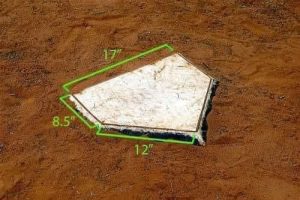
17 INCHES” – you will not regret reading this an excellent article to read from beginning to end. Twenty years ago, in Nashville, Tennessee, during the first week of January, 1996, more than 4,000 baseball coaches descended upon the Opryland Hotel for the 52nd annual ABCA’s convention.
While I waited in line to register with the hotel staff, I heard other more veteran coaches rumbling about the lineup of speakers scheduled to present during the weekend. One name kept resurfacing, always with the same sentiment — “John Scolinos is here? Oh, man, worth every penny of my airfare.”
Who is John Scolinos, I wondered. No matter; I was just happy to be there.
In 1996, Coach Scolinos was 78 years old and five years retired from a college coaching career that began in 1948. He shuffled to the stage to an impressive standing ovation, wearing dark polyester pants, a light blue shirt, and a string around his neck from which home plate hung — a full-sized, stark-white home plate.
Seriously, I wondered, who is this guy? After speaking for twenty-five minutes, not once mentioning the prop hanging around his neck, Coach Scolinos appeared to notice the snickering among some of the coaches. Even those who knew Coach Scolinos had to wonder exactly where he was going with this, or if he had simply forgotten about home plate since he’d gotten on stage. Then, finally …
“You’re probably all wondering why I’m wearing home plate around my neck,” he said, his voice growing irascible. I laughed along with the others, acknowledging the possibility. “I may be old, but I’m not crazy. The reason I stand before you today is to share with you baseball people what I’ve learned in my life, what I’ve learned about home plate in my 78 years.”
Several hands went up when Scolinos asked how many Little League coaches were in the room. “Do you know how wide home plate is in Little League?”
After a pause, someone offered, “Seventeen inches?”, more of a question than answer.
“That’s right,” he said. “How about in Babe Ruth’s day? Any Babe Ruth coaches in the house?” Another long pause.
“Seventeen inches?” a guess from another reluctant coach.
“That’s right,” said Scolinos. “Now, how many high school coaches do we have in the room?” Hundreds of hands shot up, as the pattern began to appear. “How wide is home plate in high school baseball?”
“Seventeen inches,” they said, sounding more confident.
“You’re right!” Scolinos barked. “And you college coaches, how wide is home plate in college?”
“Seventeen inches!” we said, in unison.
“Any Minor League coaches here? How wide is home plate in pro ball?”…………“Seventeen inches!”
“RIGHT! And in the Major Leagues, how wide home plate is in the Major Leagues? “Seventeen inches!”
“SEV-EN-TEEN INCHES!” he confirmed, his voice bellowing off the walls. “And what do they do with a Big League pitcher who can’t throw the ball over seventeen inches?” Pause. “They send him to Pocatello !” he hollered, drawing raucous laughter. “What they don’t do is this: they don’t say, ‘Ah, that’s okay, Jimmy. If you can’t hit a seventeen-inch target? We’ll make it eighteen inches or nineteen inches. We’ll make it twenty inches so you have a better chance of hitting it. If you can’t hit that, let us know so we can make it wider still, say twenty-five inches.’”
Pause. “Coaches… what do we do when your best player shows up late to practice? or when our team rules forbid facial hair and a guy shows up unshaven? What if he gets caught drinking? Do we hold him accountable? Or do we change the rules to fit him? Do we widen home plate? “
The chuckles gradually faded as four thousand coaches grew quiet, the fog lifting as the old coach’s message began to unfold. He turned the plate toward himself and, using a Sharpie, began to draw something. When he turned it toward the crowd, point up, a house was revealed, complete with a freshly drawn door and two windows. “This is the problem in our homes today. With our marriages, with the way we parent our kids. With our discipline.
We don’t teach accountability to our kids, and there is no consequence for failing to meet standards. We just widen the plate!”
Pause. Then, to the point at the top of the house he added a small American flag. “This is the problem in our schools today. The quality of our education is going downhill fast and teachers have been stripped of the tools they need to be successful, and to educate and discipline our young people. We are allowing others to widen home plate! Where is that getting us?”
Silence. He replaced the flag with a Cross. “And this is the problem in the Church, where powerful people in positions of authority have taken advantage of young children, only to have such an atrocity swept under the rug for years. Our church leaders are widening home plate for themselves! And we allow it.”
“And the same is true with our government. Our so-called representatives make rules for us that don’t apply to themselves. They take bribes from lobbyists and foreign countries. They no longer serve us. And we allow them to widen home plate! We see our country falling into a dark abyss while we just watch.”
I was amazed. At a baseball convention where I expected to learn something about curve balls and bunting and how to run better practices, I had learned something far more valuable.
From an old man with home plate strung around his neck, I had learned something about life, about myself, about my own weaknesses and about my responsibilities as a leader. I had to hold myself and others accountable to that which I knew to be right, lest our families, our faith, and our society continue down an undesirable path.
“If I am lucky,” Coach Scolinos concluded, “you will remember one thing from this old coach today. It is this: “If we fail to hold ourselves to a higher standard, a standard of what we know to be right; if we fail to hold our spouses and our children to the same standards, if we are unwilling or unable to provide a consequence when they do not meet the standard; and if our schools & churches & our government fail to hold themselves accountable to those they serve, there is but one thing to look forward to …”
With that, he held home plate in front of his chest, turned it around, and revealed its dark black backside, “…We have dark days ahead!.”
Note: Coach Scolinos died in 2009 at the age of 91, but not before touching the lives of hundreds of players and coaches, including mine. Meeting him at my first ABCA convention kept me returning year after year, looking for similar wisdom and inspiration from other coaches. He is the best clinic speaker the ABCA has ever known because he was so much more than a baseball coach. His message was clear: “Coaches, keep your players—no matter how good they are—your own children, your churches, your government, and most of all, keep yourself at seventeen inches.”
And this my friends is what our country has become and what is wrong with it today, and now go out there and fix it!
“Don’t widen the plate.”
Scales of Ability
Was thinking about our fellow man and came up with a couple of scales:
Correctly address wrongs with workable solutions
Correctly identify the source of wrongs
Observe that something is wrong
Feel something is wrong
No clue
Helping things go wrong
Making things go wrong
Planning and causing destruction
Can’t complete actions
Can’t start actions
Can’t think of solutions to problems
Can’t identify correct source of problems
Can’t label
Can’t observe facts
Looking around, it seems that a great many people need to be helped to a higher level of ability for us to live in a better world!
Turn Out People Who Love Learning
A partial truth. There are many bodies of knowledge that are universally applicable. The knowledge of how to communicate, how to maintain lasting relationships, how to tell who to trust and who not to trust, just to name three on a personal level.
And that’s not going into how to organize any activity for optimal production, how to effectively evaluate personnel production, how to revert a declining organization or how to bolster one that is booming so it does not crash.
A Solution?
Many of us have had difficulty over the last three years of getting the truth we can readily observe through to people but that truth is so far removed from their thinking as to be unbelievable to them. They have so little confront of evil and been overloaded with lies to the point where they have taken on the colour of the enemy.
And the last three years has been only phase 1 of their nefarious plans. Worse is to come. Much worse unless we out-create it.
So I have spent quite a bit of time wondering how we do better at getting through to the majority of people, not just the awake, and activate them as a force for good because we are going to need
1. all shoulders to the wheel and
2. as few on the opposing side as possible.
So I have thought long and hard to come up with the undercut that we can communicate to them upon which they will agree. And I think I have found it.
Their personal freedoms.
Many aspects of the draconian measures over the last three years have curtailed individual freedoms. Lockdowns, travel restrictions, social distancing and the currently being rolled out 15 minute cities all restrict our freedom to move as spelled out in the United Declaration on Human Rights.
People will not protect rights they don’t know they have. So the first step is to educate them that they have rights.
Then set an example they can emulate by sharing the story of human rights far and wide and decrying abuses of them. Hopefully when they see you exercising courage in your defence of Human Rights it will increase their willingness to do so too.
The plan is simple
Get Educated
Get Courageous
Get Active
Here’s where you can get educated: https://www.tomgrimshaw.com/tomsblog/?p=45562
Probably best not to mention to them anything of the past three years as that could activate their desire to be right so they will become defensive. Just say, “Hey, saw an interesting video the other day. Thought you might like it.” Or some such.