Vegemite was originally promoted as a healthy food for children. Is Vegemite good for our kids though? It is a question I am continually asked by the Additive Free Kids Community. As a result, I have decided to blog about the reasons why if you want happy little ‘vegemites’ I would not feed them Vegemite!
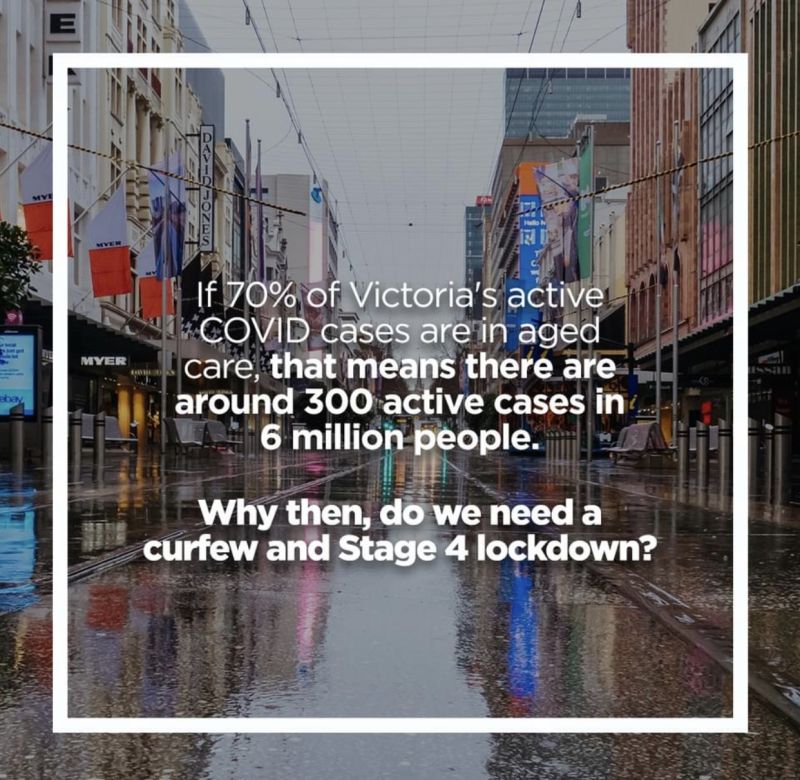
Why indeed! Because it has nothing to do with stopping deaths and everything to do with increasing government control of the population. Read and understand the Omnibus Bill already passed by the lower house in Vioctoria to understand the level of tyranny to which Andrews and his cohorts have sunk.
Adrian Gualano writes:
The Omnibus bill currently trying to be passed will give police (and non police public servants) the authority to arrest someone they “think” is likely to commit a crime. Courts.will have the power to detain your children for up to 30 months.
To everybody with children, this is the ultimate wake up call.
And yes of course this is an initiative of Dan Andrews , what other politician wants to take away your freedoms and break up your families?
This is not about health anymore.
If you don’t agree with the proposed bill, I suggest you start bombarding your MP’s with phone calls and emails ASAP. Find out who your upper house members are via the Parliament Victoria website and harass them like a telemarketer. https://www.theaustralian.com.au/business/legal-affairs/victorias-covid19-omnibus-legislation-an-astonishing-attack-on-democracy/news-story/018937689c5b12f84a3e3187bda77b53
This article should’ve been entitled: “we screwed up immunology for the past 7 decades by focusing solely on antibodies, (so we could sell billions of dollars worth of vaccines) but now we’ve been forced to spill the beans about what constitutes real immunity.”
Then there was this little tidbit:
“ When researchers tested blood samples taken years before the pandemic started, they found T cells which were specifically tailored to detect proteins on the surface of Covid-19.”
Errrr…how could that be for a brand new “novel” virus that was supposedly created in some bats recently?? Yet another little factoid that doesn’t fit in with their little made-up story.
Sunshine, selenium and vitamin C are the answers. Plus some good food choices and exercise. This is what activates and invigorates the T cells and your system as a whole. Give them enough time and science eventually gets caught up with what the “alternative” crowd has been saying for the past several decades.
(Tom: This piece of the jigsaw puzzle explains why so many are completely unaffected by COVID-19 and why it hits the older folks harder.
I have read elsewhere that antibodies are not necessary for the body to mount an effective defense against a pathogen, that people had been observed who did not succumb to other illnesses yet had no antibodies to that pathogen.
Considering the whole thrust of a vaccination is to force the body to create antibodies to the pathogen causing the illness against which they seek to protect, this discovery effectively pulls the rug out from underneath that strategy.
It also adds credence to the viewpoint that it is not the pathogen that is the problem, it is the environment of the body – whether or not the body is in a sufficiently high state of operation that it can easily defeat pathogens.)
The article: https://www.bbc.com/future/article/20200716-the-people-with-hidden-protection-from-covid-19
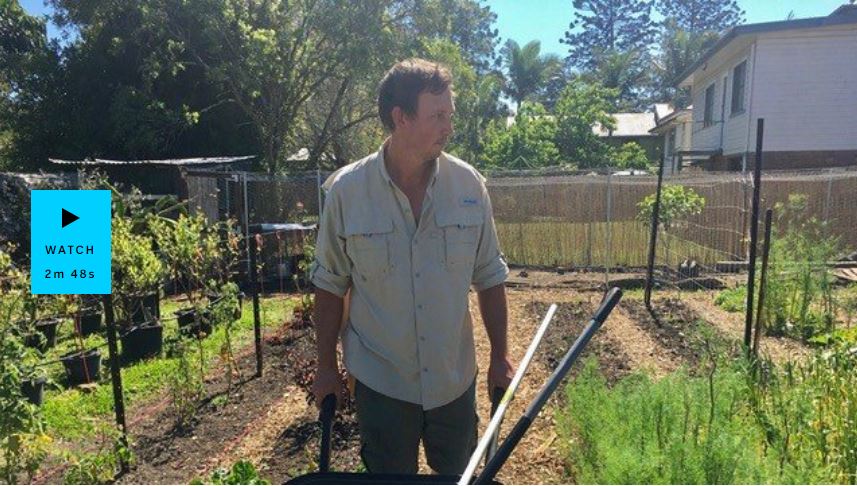
In the backyard of his 500-square-metre rental property, biologist James Stanistreet has created a garden capable of feeding his family of four — and many more.
Key points:
A student biologist says his average-sized backyard is large enough to feed a family
He says all elements of a garden have an important role to play, even weeds
A garden is most productive when you care for all aspects of the ecosystem
Chicken and ducks fertilise and carry out pest control on neat rows of vegetables and fruit trees while native bees set to work on pollination.
Mr Stanistreet said his northern New South Wales garden produces more than enough for his family, the rest he trades with neighbours or sells at the local farmers’ market.
He is completing a Bachelor of Science at Southern Cross University in Lismore, focussing on the symbiotic association between fungi and tomato plants, and how advancing that knowledge can help minimise the use of industrial nitrogen.
When not in the laboratory he works his day job — designing, building, and planting ‘agroforests’ for private landholders that can incorporate everything from cabinet timbers to commercial-scale food production or native revegetation.
He has devoted years to understanding plants and using this knowledge to create his thriving back yard food bowl.
“A lot of what this garden is about is testing out ideas and seeing what can happen when we change what we do and put different things into practice.”
Weeds not the enemy
Mr Stanistreet said he uses cover crops, such as clover and other ‘weeds’, to fix nitrogen to the soil rather than relying on manufactured chemicals.
“You don’t see weeding in nature, yet trees grow very strong and healthy and it is because there is that organic matter and each plant has a role to play,” he said.
“What humans see as a weed it’s not just something trivial, it is something that the environment requires. It has a place and a role and it’s been developed over millions of years.
“Unfortunately we just weren’t able to see that in the past. Now we are really focussing on them and saying ‘okay, what is their role? What do they do?'”
Mr Stanistreet lets many of his crops go to seed, producing flowers that attract bees and hover flies to pollinate the garden, and wasps to eat pests including aphids.
“You have to remember you are looking after a whole ecosystem here,” he said.
It also allows him to collect the seed for the next crop, which he does by hanging the plant upside down over a large bowl and shaking it once the plant is dry.
He rotates his crops to deprive a ready food source for parasitic nematodes — bugs that live in the soil and can destroy a plant’s root system.
He keeps his garden beds at 70 centimetres wide because a lot of tools are made at that width, with a 30cm walkway between beds.
Each bed is topped up annually with woodchips that will decompose and add nutrients to the soil.
Between crops in any one bed he will add 100 litres of manure, 200 litres of compost, along with regular additions of fish and seaweed emulsions.
To keep costs down he makes his own compost, collects seaweed from the beach, and has a worm farm to produce castings and tea for the garden.
Find more local news
Tell us your location and find more local ABC News and information
Fantastic fowl
Ducks and chickens share Mr Stanistreet’s backyard coop, but the birds play very different roles in the garden.
When a crop is finished and a bed needs to cleared and fertilised, he fences it off and puts the chickens to work scratching it up.
The ducks are often left to roam the garden, picking off the slugs in the morning and other insects that would otherwise attack the produce.
The chickens are given kitchen scraps and garden trash, while their bedding and manure gets composted and returned to the garden beds.
“It is a closed system in many ways and these animals certainly help with that,” he said.
Mr Stanistreet said although his biology degree is helping him with the theory, anyone can use whatever space they have in their yards to grow food.
“Just get a seed of anything and find some soil and just start,” he said.
“If you can start with one seed and one plant it will grow from there.”
He said he loved everything about gardening.
“It brings you back to nature, it reminds you that you are a part of the Earth with the plants and the animals, and it is a system,” he said.
“When you grow your own food you know where it comes from and it just tastes better.”
(Tom: Based on my experience in NSW Health I can vouch for the predominant attitude described in this report:) “It all seems to be a “goat of escape” and “kicking the bucket” games where everyone is absolutely horrified to leave a slightest chance of him/her to be held accountable. Everyone is absolutely obsessed by and preoccupied solely by finding ways and developing strategies and creating policies oriented purely on passing accountability on and responsibility to someone else.” https://www.sabhlokcity.com/2020/09/message-received-from-a-registered-nurse-in-victoria-total-communism-in-the-health-system/
By keeping healthy children under quarantine, we are cruelly depriving them of the in-person free play and social interaction that are critical to their development and emotional well-being.
(Tom: It is well past time to end the lockdown. Kids almost never get COVID-19 and world-wide there has not been a single instance of student to teacher transmission of it identified.)
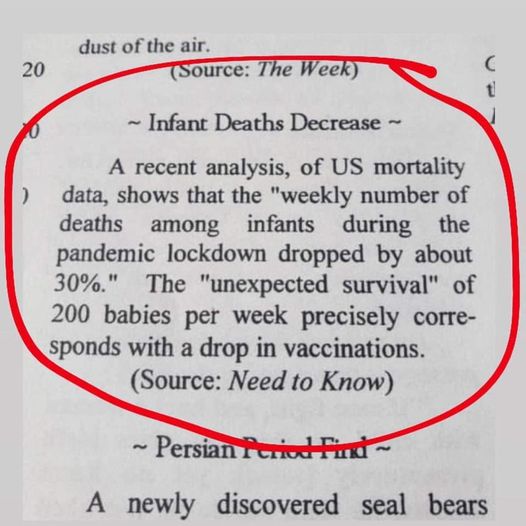
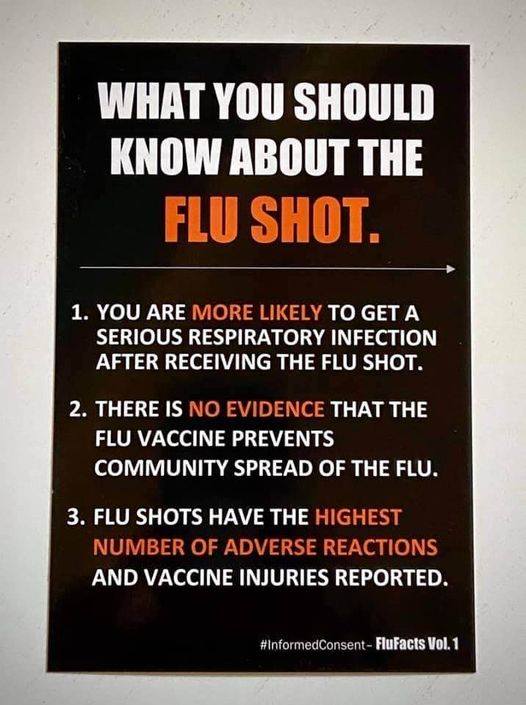
The ingredients in vaccines compromise your body’s immune system. Do your homework before you accept any vaccine for you or your loved ones. Here is a starting point: https://www.tomgrimshaw.com/tomsblog/?p=3835