Friday Hope: An Inexpensive, Readily Available Daily Dietary Endothelial Support Protocol

In addition to the supplementation we have discussed over the years, it is also important to keep in mind that simple dietary inclusions can also help tip the scales in our favor when it comes to protecting ourselves from the ravages of SARS-CoV-2 and its Spike Protein. As all readers of this Substack know, the Spike Protein is extraordinarily pathogenic – especially towards the Endothelium. Of course, it only makes sense to take every step we can to protect it. Today I would like to discuss three foods we can enjoy daily that can help protect our Endothelium. They can conveniently be incorporated into breakfast, lunch, and dinner.

Finish reading: https://open.substack.com/pub/wmcresearch/p/friday-hope-an-inexpensive-readily

Interstitial Space

Interstitial Space

THE GHOST ORGAN THAT WAS ALWAYS THERE.
Imagine opening a 2015 anatomy book You’ll see skin, then fat, then muscle. All packed up like solid dense layers. Now throw that book away.. I was wrong.

Until very recently, histologists (scientists who study tissue) prepared samples by drying them and fixing them in microscopes. By doing so, they destroyed the actual structure. The spaces were collapsing.

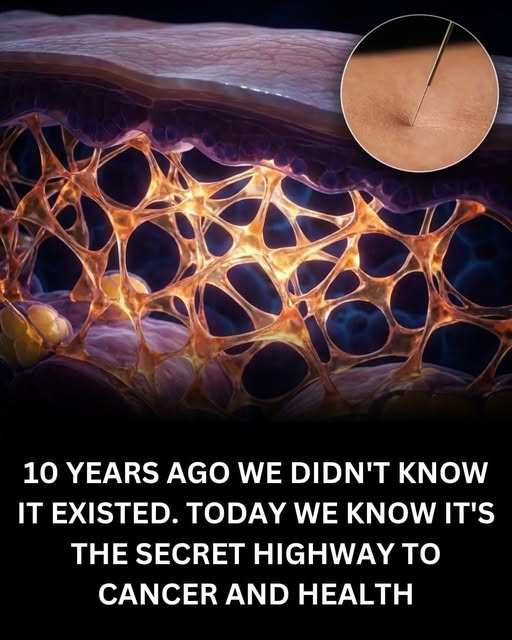
In 2018, thanks to new live endomicroscopy technologies, we discovered Interstition.

We ain’t “solid”. Underneath your skin, covering your arteries, your lungs, and your muscles, there is a massive network of interconnected compartments filled with liquid. It’s like a global hydraulic damper. A highway of fluids that connects everything to everything.

Why is this revolutionary in 2026?

The route of metastasis: It has been found that cancer cells often don’t travel through blood or lymph initially, but rather use these “highways” of the interstice to move quickly between tissues. Understanding this is changing oncology.

Validation of Ancestral: For thousands of years, Traditional Chinese Medicine spoke of “Meridians” or energy channels (Qi) that did not correspond to nerves or veins. Western science was mocking. Today, many researchers propose that the Interstition, with its high electrical conductivity thanks to the fluid rich in electrolytes, could be the physical anatomical base of those meridians. Acupuncture needle doesn’t poke a nerve; it stimulates the facial/interstitial network, sending mechanical signals throughout the system.

Your body is a continuous hydraulic system. The stiffness in your ankle can affect your neck because the fluid network is the same. The “stagnation” of fluids that the Ancients spoke of now has a scientific name.

Keeping this organ healthy is vital. How? Hydration and Movement. The interstition needs you to move to pump its fluids. If you stay still, it becomes sticky, dense, and toxic.

You’re 70% water, but that water ain’t stuck in a bucket. It’s flowing through a sacred, complex architecture that we’re just beginning to understand.

To keep your interstition fluent and avoid morning stiffness:
Hydration with Electrolytes: Water alone isn’t enough. Interstitial fluid is rich in salts. Add a pinch of sea salt to your water.

Bounce (Rebounding): Gentle jumps or oscillatory movements help move interstitial fluid better than static cardio.

Myofascial Release: Using foam rollers helps rehydrate these compressed layers of tissue.

Source: Scientific Reports, “Structure and Distribution of an Unrecognized Interstitial Space in Human Tissues”. / Updates 2025 on Fascial Research.

Fake Chocolate Warning

Fake Chocolate Warning

“Lab-grown chocolate is coming to shelves in 2027. Oreo, Cadbury and Toblerone are already funding the Israeli biotech producing it because a lab is cheaper than a farm”

“Cadbury has been quietly replacing your chocolate — This dairy milk isn’t legal chocolate in 27 countries, the cocoa butter was replaced with vegetable fat, a cheap blend of 6 industrial oils. What remains is diluted with polyglycerol — Soon even that gets replaced, you’ll be eating cells grown in a pharmaceutical tank”

Cadbury Dairy Milk (in the UK and many markets) has included vegetable fats (like palm and shea) alongside cocoa butter for years. UK/EU regulations allow up to 5% non-cocoa vegetable fats in chocolate if it meets minimum cocoa solids (20%) and other standards.

In America standards are much lower

– For milk chocolate specifically: Only 10% chocolate liquor, 12% milk solids, and 3.39% milk fat are required

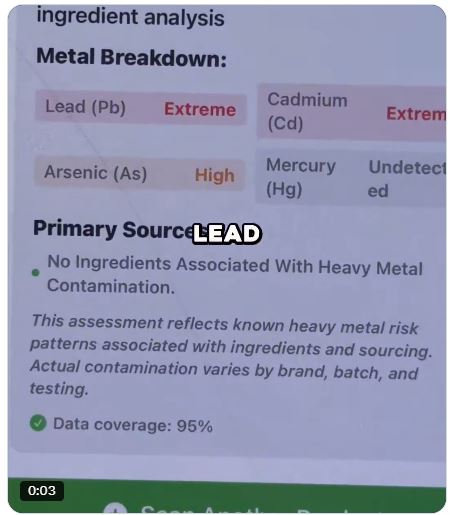
“Exposer flagged lead in cadmium traces with an ultra processing warning”

Click to view the video: https://x.com/WallStreetApes/status/2030663365123875158?s=20

CIA Coverup

CIA Coverup

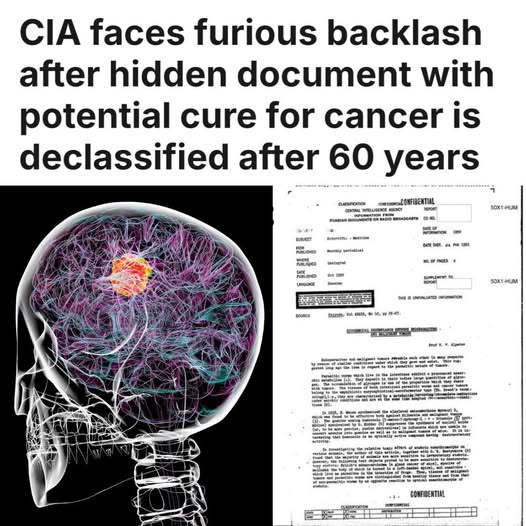
Declassified 1951 CIA Report Shows Strong Similarities Between Parasites and Cancer—This Points Directly to Treatments Like Ivermectin

A declassified CIA document from February 1951 was marked CONFIDENTIAL and remained classified until 2014. It summarizes a 1950 Soviet scientific paper and outlines clear biological similarities between malignant tumors and certain parasites, including intestinal worms.
Both thrive in low-oxygen conditions.
Both store large reserves of glycogen.
Both produce energy efficiently with very little or no oxygen present.

The report highlights several key points:
• Tumors and parasites function as “aerofermentors.” They generate energy effectively in oxygen-poor settings and survive in nearly oxygen-free environments. This matches the low-oxygen cores commonly seen in solid tumors and the oxygen-limited conditions inside the gut where many parasites live.
• Early experiments tested compounds designed to target parasites and discovered they also impacted tumors. Examples include:
– Myracyl D, which treated parasitic infections such as bilharzia and demonstrated activity against malignant tumors.
– Guanozolo, which blocked nucleic acid production essential for DNA and RNA, slowing growth in both microbes and mouse tumors.
– Different mirror-image forms of Atebrin affected tumor tissues and parasites differently than healthy cells, indicating altered receptors in diseased states.
• Additional shared characteristics include unusual purine metabolism, modified proteins, and possible unique antigens that may contribute to cancer development.

These observations show that treatments effective against parasites can cross over to cancer because of the shared biology.
This directly aligns with the known actions of ivermectin, a powerful antiparasitic drug.

Laboratory studies and animal models demonstrate that ivermectin:
• Stops cancer cells from growing and spreading.
• Triggers programmed cell death in cancer cells.
• Blocks new blood vessel formation that tumors need to grow.
• Interferes with critical cancer signaling pathways.
• Enhances the effectiveness of chemotherapy in resistant cancer cells.

These effects appear across models of breast cancer, colorectal cancer, lung cancer, pancreatic cancer, ovarian cancer, and many others.

Current developments strengthen the case:
• In early 2026, the National Cancer Institute confirmed they are conducting preclinical laboratory studies on ivermectin’s ability to kill cancer cells, driven by accumulating evidence and strong public interest. Results are expected soon.
• Early human trials have begun combining ivermectin with immunotherapy agents for metastatic triple-negative breast cancer, evaluating safety and initial signs of effectiveness.
• Peer-reviewed scientific reviews present ivermectin as a low-cost compound with a well-established safety profile at approved doses, making it a strong candidate for further cancer research.

This 1951 document, kept secret for over 70 years, combined with the growing body of modern research on ivermectin, shows that the metabolic weaknesses shared by parasites and cancer cells have been recognized for decades.

Affordable antiparasitic approaches that exploit these exact vulnerabilities are now under serious scientific scrutiny.

The implications are clear and urgent.

Simple, accessible strategies that target these shared biological features deserve immediate large-scale investigation.

CoQ10 Benefits

CoQ10 Benefits

Congestive heart failure (CHF) is a major global health problem and one of the leading causes of morbidity and mortality worldwide. Coenzyme Q10 (CoQ10), also known as ubiquinone, is a lipid-soluble antioxidant that plays an important role in mitochondrial energy production by participating in the electron transport chain for ATP synthesis. Because the heart requires a large amount of energy, it contains high concentrations of CoQ10, and reduced levels of this compound have been associated with increased severity of CHF. This relationship has led researchers to investigate whether supplementation with CoQ10 could improve cardiac function and clinical outcomes in patients with heart failure.

A meta-analysis published in The American Journal of Clinical Nutrition evaluated randomized controlled trials examining the effects of CoQ10 supplementation on patients with CHF.
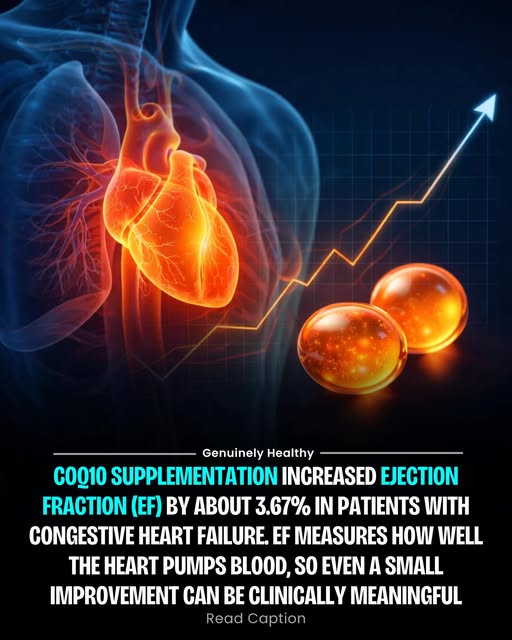
The analysis included 13 studies involving 395 participants and assessed outcomes such as ejection fraction (EF) and the New York Heart Association (NYHA) functional classification. Results showed that CoQ10 supplementation led to a pooled mean increase of approximately 3.67% in ejection fraction, indicating improved heart pumping ability. Although a slight improvement in NYHA functional class was observed, the change was not statistically significant. Overall, the findings suggest that CoQ10 supplementation may provide benefits for patients with heart failure, particularly in improving cardiac function, although further large and well-designed studies are needed to confirm these effects.

Tsk, tsk tsk… …What’s Up Doc?

Bugs Bunny Was Right

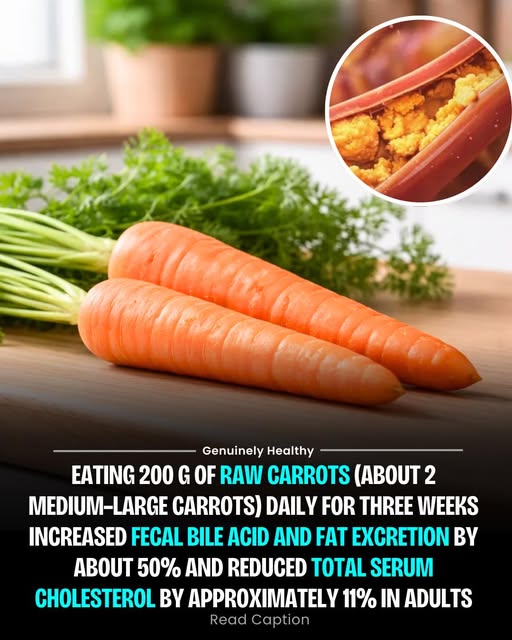
A study published in the American Journal of Clinical Nutrition investigated how eating raw carrots affects blood lipids and colon function. In the study, adults consumed 200 g of raw carrots (about two medium–large carrots) every day at breakfast for three weeks. Researchers found that this dietary change reduced total serum cholesterol by about 11%. The results suggest that regularly eating raw carrots may help support heart health by lowering cholesterol levels in the blood.

The study also showed improvements in digestive function. Eating raw carrots increased fecal bile acid and fat excretion by about 50% and increased stool weight by around 25%. These changes suggest that carrots may help the body remove more bile acids and fats through stool, which can contribute to lower cholesterol levels. The researchers also noted that these effects persisted for about three weeks even after participants stopped eating the carrots, indicating a lasting impact on metabolism or gut bacteria.

PMID: 474479

Fasting-Body AND Brain

Fasting-Body AND Brain

Most people try intermittent fasting because they want to lose weight. What they don’t realize is that some of the most compelling research on fasting has nothing to do with body fat.

It’s about what happens inside the skull.

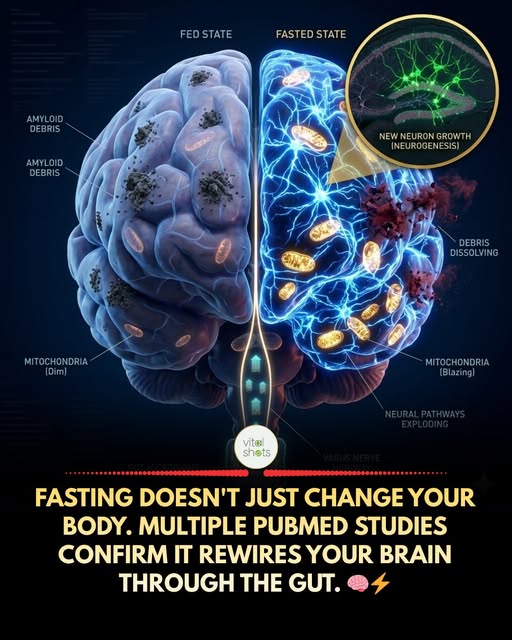
A 2025 review published in PubMed (PMID:41356819) lays out the case in detail: intermittent fasting protects the brain through the gut-brain axis, not just through direct metabolic effects. When you fast, your gut microbiome composition shifts within days. Akkermansia muciniphila and other protective bacteria thrive during fasting windows. Short-chain fatty acids like butyrate rise. Intestinal barrier integrity improves. And from there, the brain feels it.

The mechanisms are specific. Fasting increases BDNF (brain-derived neurotrophic factor), often called “fertilizer for neurons,” which promotes hippocampal neurogenesis and synaptic plasticity. It reduces neuroinflammation via autophagy, a cellular “cleanup” process that clears damaged proteins including amyloid-beta, the same compound associated with Alzheimer’s progression. A separate 2025 paper (PMID:39798403) reviews evidence showing IF improves cognitive function in people with mild cognitive impairment, with the strongest mechanisms involving BDNF, CREB signaling, and reduced inflammatory cytokines in the brain.

One important nuance: duration matters significantly. Research from the gut-brain axis review indicates that short-term fasting protocols (around 8 weeks) are most effective at restoring gut barrier integrity and reducing systemic inflammation. Longer protocols (12+ weeks) begin to show more measurable effects on neurotrophic factors and actual cognitive performance. The two effects stack, which means consistency over time is more powerful than intensity in any single week.

The gut connection is what makes this genuinely new territory. For decades, fasting was studied almost entirely as a metabolic intervention. The idea that it works partly by growing better gut bacteria, which then signal the brain to repair and regenerate, reframes what we thought we understood about how lifestyle changes affect mental clarity, mood, and neurological resilience.

KEY FASTING PATTERNS STUDIED IN HUMANS
16:8 (16 hours fasting, 8 hours eating window) most common and sustainable protocol
5:2 (normal eating 5 days, very low calorie 2 days) studied specifically in older adults with insulin resistance (PMID:38901423)

Time-restricted eating aligned with morning light (earlier eating window) appears superior for circadian-based brain benefits
What does your current eating window look like? And have you ever noticed a difference in mental clarity or mood on days when you extended the fasting window?

Sources:
PMID:41356819 (IF and brain health via gut-brain axis, PubMed 2025).
PMID:39798403 (IF and neurocognitive disorders, PubMed 2025).
PMID:38901423 (IF in older adults with insulin resistance, PubMed 2024).