
Martha Gellhorn, The Only Woman At D-Day

Martha Gellhorn

She wasn’t supposed to be there of course. She was meant to be in relative safety, sitting on a transport barge in the English channel with all the other journalists. But the previous evening, Martha Gellhorn had boldly boarded a hospital barge with her press credentials and the story that she was there to interview nurses. It was a sham, of course, but it got her onboard, where she found a bathroom and locked herself in. She spent a miserable night, horribly seasick, but when she crept out of her hiding place the next morning, she had a front-row seat to one of history’s greatest moments – the invasion of Normandy, June 6, 1944. Thousands of ships and 160,000 men faced the great cliffs as tons of bombs rained from overhead. It would be perhaps the greatest news story of all time, but Martha found that it wasn’t her skill as a writer that was needed. The sea was filled with dead and wounded soldiers, and she leapt into action, helping wherever and however she could. At nightfall, she waded ashore with the medics and found herself on Omaha Beach, a stretcher-bearer with blistered hands, soaked to the skin with sea water and exhaustion. She would labor through the night, the daring she had known the night before transformed into bravery as she followed the mine sweepers. In the days to come, Martha Gellhorn would leave that place a different person; no longer an observer of history, but a participant…the lone woman in the D-Day invasion. Heroism sometimes arrives on a wave of opportunity, and we either rise or we don’t.

Credit: Beloved Children of the Holocaust
US Ranchers

US Ranchers

I’d like to be a fly on the wall in several meetings I anticipate happening to try and slow or stop this!

You have never talked to a mere mortal.

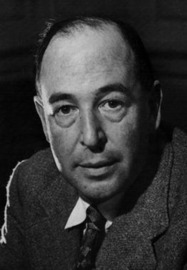
CS Lewis
‘It is a serious thing to live in a society of possible gods and goddesses, to remember that the dullest and most uninteresting person you talk to may one day be a creature which, if you saw it now, you would be strongly tempted to worship, or else a horror and a corruption such as you now meet, if at all, only in a nightmare.
All day long we are, in some degree, helping each other to one or other of these destinations.
It is in the light of these overwhelming possibilities, it is with the awe and circumspection proper to them, that we should conduct all our dealings with one another, all friendships, all loves, all play, all politics.
There are no ordinary people.
You have never talked to a mere mortal.
Nations, cultures, arts, civilization—these are mortal, and their life is to ours as the life of a gnat.
But it is immortals whom we joke with, work with, marry, snub, and exploit—immortal horrors or everlasting splendors.’
CS Lewis.

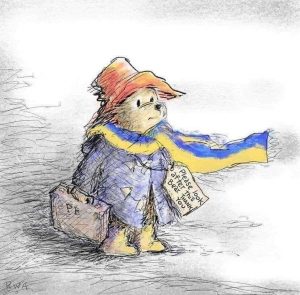
Paddington Bear

Paddington Bear

In the late 1930s-1940s, Michael Bond, author of Paddington Bear, saw Jewish refugee children (Kindertransport children) walking through London’s Reading Station, arriving in Britain escaping from the Nazi horrors of Europe.

Mr. Bond, touched by what he saw, recalled those memories 20 years later when he began his story of Paddington Bear. One morning in 1958, he was searching for writing inspiration and simply wrote the words: “Mr. and Mrs. Brown first met Paddington on a railway platform…”

“They all had a label round their neck with their name and address on and a little case or package containing all their treasured possessions,” Bond said in an interview with The Telegraph before his death in 2017. “So Paddington, in a sense, was a refugee, and I do think that there’s no sadder sight than refugees.”

Paddington Bear – known for his blue overcoat, bright red hat, and wearing a simple hand-written tag that says “Please look after this bear. Thank you,” Paddington embodies the appearance of many refugee children. His suitcase is an emblem of his own refugee status.

“We took in some Jewish children who often sat in front of the fire every evening, quietly crying because they had no idea what had happened to their parents, and neither did we at the time. It’s the reason why Paddington arrived with the label around his neck”. — Michael Bond

Michael Bond died at 91 in 2017. The epitaph on his gravestone reads “Please look after this bear. Thank you.”
Please look after all the young Bears in Ukraine and around the world. – David Lundin